





Kingmaker and Lover of Mesopotamia: A Century Since the Passing of “Al-Khatun” Gertrude Bell
 Kate Merkel
July 14, 2026
Kate Merkel
July 14, 2026
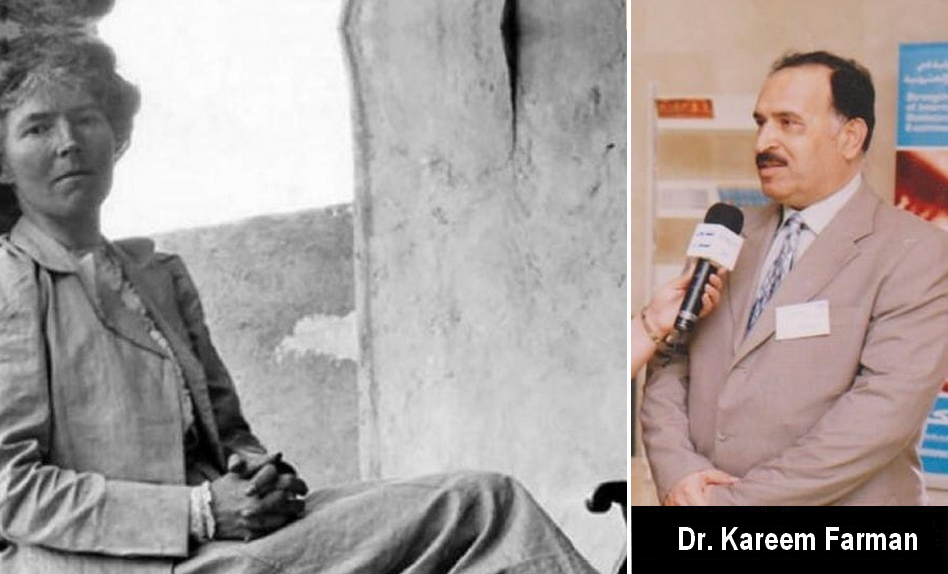
By Prof. Dr. Kareem Farman* I have spent months preparing this academic article for publication in the Arab and foreign press, drawing on more than ten important sources concerning the roles and character of this woman whose work in Iraq remains fertile ground for research and scrutiny, apart from ideology and preconceptions.
In this article I review the academic and professional biography of Gertrude Bell (1868–1926), exploring her intellectual background before she settled in Baghdad, and I address her pivotal roles as advisor to the British High Commissioner and her contributions to drawing the borders of modern Iraq and founding the Iraq Museum. I also wanted the article to spark scholarly debate about the historical controversy surrounding her identity — caught between “espionage” and an emotional attachment to Mesopotamia — coinciding with the hundredth anniversary of her death in 1926.
- Academic Formation and Field Experience Before Baghdad
Gertrude Bell was not merely a passing colonial official; she drew on a solid intellectual foundation that later shaped her political tools:
Academic distinction at Oxford University: Bell graduated in Modern History with first-class honors, becoming the first woman to achieve this at Oxford.
-Archaeologist and field historian: She led extensive excavation expeditions across the Middle East, documenting the “Ukhaidir” fortress in Iraq and numerous Byzantine sites in Turkey.
-Linguistic and cultural erudition: She mastered Arabic, Persian, Turkish, and German, which gave her a deep understanding of the tribal and social structures of the region.
-Desert traveler and explorer: She undertook six major journeys across the Arabian Peninsula between 1892 and 1914, making her an indispensable geographic advisor to British intelligence.
- Her Expeditions and the Engineering of the Modern Iraqi State
Bell’s travels in and around Iraq were tied to drawing the geopolitical map of the region. Her most important achievements and roles can be summarized as follows:
-Comparative field tours: Bell traveled through Hail, Jerusalem, Damascus, Baghdad, and Basra, gathering precise demographic and geographic data on the tribes.
-The most powerful political advisor: She held the position of Oriental Secretary to the British High Commissioner, Sir Percy Cox, in Baghdad.
- Shaping the 1921 Cairo Conference: She played a decisive role alongside T.E. Lawrence (Lawrence of Arabia) in persuading Britain to install King Faisal I as monarch of Iraq.
- Founding the Iraq Museum: She laid the first foundation stone of the Iraq Museum in Baghdad in 1923 and took charge of antiquities administration to protect Mesopotamia’s heritage from looting.
- The National Library: She contributed to establishing the Peace Library (“Maktabat al-Salam”) in Baghdad, which later became the Iraqi National Library.
- The Historical Dilemma: Was She a Spy or a Lover of Iraq?
The question of “Al-Khatun’s” identity remains a matter of academic debate requiring objective analysis, split between the intelligence dimension (espionage) and the emotional and human dimension (love of Iraq).
On the side of motive and function, she worked officially for the Arab Bureau in Cairo and gathered intelligence in service of the British war effort, yet she devoted her final years to defending Iraq’s independence and protecting its antiquities from Western ambitions.
On the side of political vision, she used her tribal relationships to entrench British influence and helped suppress the 1920 Revolution through diplomatic channels, yet she also opposed the policy of “direct annexation” to British India, siding instead with the option of a national Arab government in Baghdad.
As for her final destination and fate: she was part of the colonial machinery that divided the legacy of “the sick man” (the Ottoman state), yet she chose not to return to Britain, opting instead to live — and to die of an overdose of sedatives — in Baghdad in 1926.
- Analysis of the Secret Correspondence Between Gertrude Bell and T.E. Lawrence
The correspondence exchanged between Gertrude Bell and T.E. Lawrence (whether direct letters or their joint reports to the Arab Bureau in Cairo) is a key to understanding British diplomacy in the Middle East. These documents, preserved in the archives of Newcastle University and the British Library, reveal specific strategic features:
- First meeting and intellectual affinity: The two first met before World War I at the archaeological excavation site of Carchemish. Their early correspondence reflected mutual admiration for each other’s linguistic abilities; in a letter to her mother in 1911, Bell described Lawrence in terms suggesting he possessed remarkable insight and a rare understanding of the spirit of the desert.
- Intelligence collaboration in Cairo (1915–1916): Joint secret reports point to the interlocking nature of their roles — Bell supplied Lawrence with detailed maps and precise demographic distributions of the tribes of northern Arabia and Iraq, while Lawrence used this data in the field to help drive the Great Arab Revolt.
- The “Hashemite Throne” debate in the Cairo Conference correspondence (1921): Letters exchanged behind the scenes of the conference revealed their fierce joint push to install Prince Faisal bin Hussein as king of Iraq, with Bell writing in a secret cable that she and Lawrence were acting as a single bloc, pressing with all their strength to convince Churchill that the Hashemite option was the only guarantee against chaos in Mesopotamia at the lowest military cost to British interests.
- Shared disillusionment and the tragic ending: In the early 1920s, their letters took on a shared somber tone regarding the empire’s “broken promises.” As Lawrence withdrew from public view, Bell, in her final letters to him, expressed her sense of isolation in Baghdad and the mounting criticism of her policies from British generals and local powers — correspondence that preceded her tragic death.
Academic conclusion: Bell was not a conventional spy seeking personal gain, but rather a colonial strategic mind who put her genuine, knowledgeable passion for the East in service of her empire — a passion that gradually transformed into an emotional and fateful bond with Iraq that transcended the boundaries of political duty.
A Century Since Her Solemn Departure
In July 1926, Baghdad bid farewell to “Al-Khatun” in a solemn official funeral led by King Faisal I along with state leaders and dignitaries, and she was buried in the British Cemetery at Bab al-Muadham in the heart of Baghdad.
Today, a hundred years after her death (1926–2026), history stands witness that the map whose first lines Gertrude Bell helped draw still pulses with life despite all the geopolitical storms. Years ago, at Jawaharlal Nehru University, I took an interest in studying her political role and the extent to which her influence left its mark on modern Iraqi history through the roles she undertook and their reflection on the structure of Iraq’s political system. Yet one must not overlook the other, human dimension of her personal life. It is true that she was a spy, but in the end, what prevailed in her was the human being — a lonely woman who loved Iraq. Her grave, standing in Baghdad, is not merely the final resting place of an English traveler, but tangible testimony to the birth of the modern Iraqi state with all its complexities, its colonial entanglements, and its national aspirations. Bell’s academic legacy in the Iraq Museum and in antiquities remains the strongest monument to her memory, transcending political controversy to prove that she loved the Tigris and Euphrates until her very last breath.
*The author is a writer and academic from Iraq.
References
Arabic References
- Bell, Gertrude (archival compilation). Letters of Miss Bell: Diplomacy, Geography, and Antiquities in Iraq (1917–1926). Translated and annotated by Ja’far al-Khayyat. Beirut: Dar al-Hamra, 1993. (A core work containing the daily letters Bell sent to her family from Baghdad.)
- Al-Nafisi, Abdullah Fahd. The Role of Gertrude Bell in British Policy Toward Iraq (1914–1926). Beirut: Dar al-Nahar Publishing, 1980. (A critical study analyzing the intelligence and political dimensions of “Al-Khatun.”)
- Al-Wardi, Ali. Social Glimpses from the History of Modern Iraq (Volumes 5–6). Baghdad: Al-Irshad Press, 1972. (Examines the sociology of relations between Miss Bell, tribal leaders, and King Faisal I.)
- W.H.I. Bleach. Kingmaker: Gertrude Bell and the Founding of the Iraqi State. Translated by Mustafa Ne’man al-Hilali. Baghdad: Dar al-Ma’mun, 2011.
English References
- Bell, Gertrude (2000). The Letters of Gertrude Bell (Selected and Edited by Lady Bell). New York: Benjamin Blom.
- Howell, Georgina (2007). Gertrude Bell: Queen of the Desert, Shaper of Nations. New York: Farrar, Straus and Giroux. (One of the most precise modern biographies unpacking the overlap between her personal, academic, and political life.)
- Wallach, Janet (1996). Desert Queen: The Extraordinary Life of Gertrude Bell: Adventurer, Adviser to Kings, Ally of Lawrence of Arabia. New York: Anchor Books. (A pivotal book focusing on her relationship with Lawrence of Arabia and the Cairo Conference.)
- Newcastle University Library. The Gertrude Bell Archive. Online Research Database. Available at: https://gertrudebell.ncl.ac.uk/. (The UNESCO-recognized digital archive containing all photographs, diaries, and handwritten letters.)
- Tripp, Charles (2007). A History of Iraq, Cambridge: Cambridge University Press. (An excellent historical context illustrating Bell’s impact and political engineering on the structure of the contemporary state.).