






By Professor Kareem Farman:
When you visit Damascus, you see with your own eyes the embrace of thought, civilization, and history. Then Damascus herself — City of Jasmine, in the full majesty of her history, in the loftiness of Mount Qasioun and the flow of the Barada — rises to honor the foremost poetess of the Arabs, the last of the great giants of verse, of the letters and lines we hum in our daily lives.
When the Sun of the Gulf Meets the Minarets of the Levant
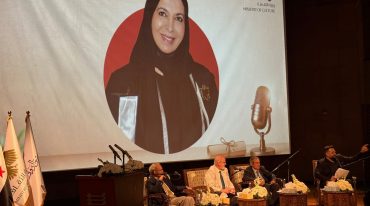
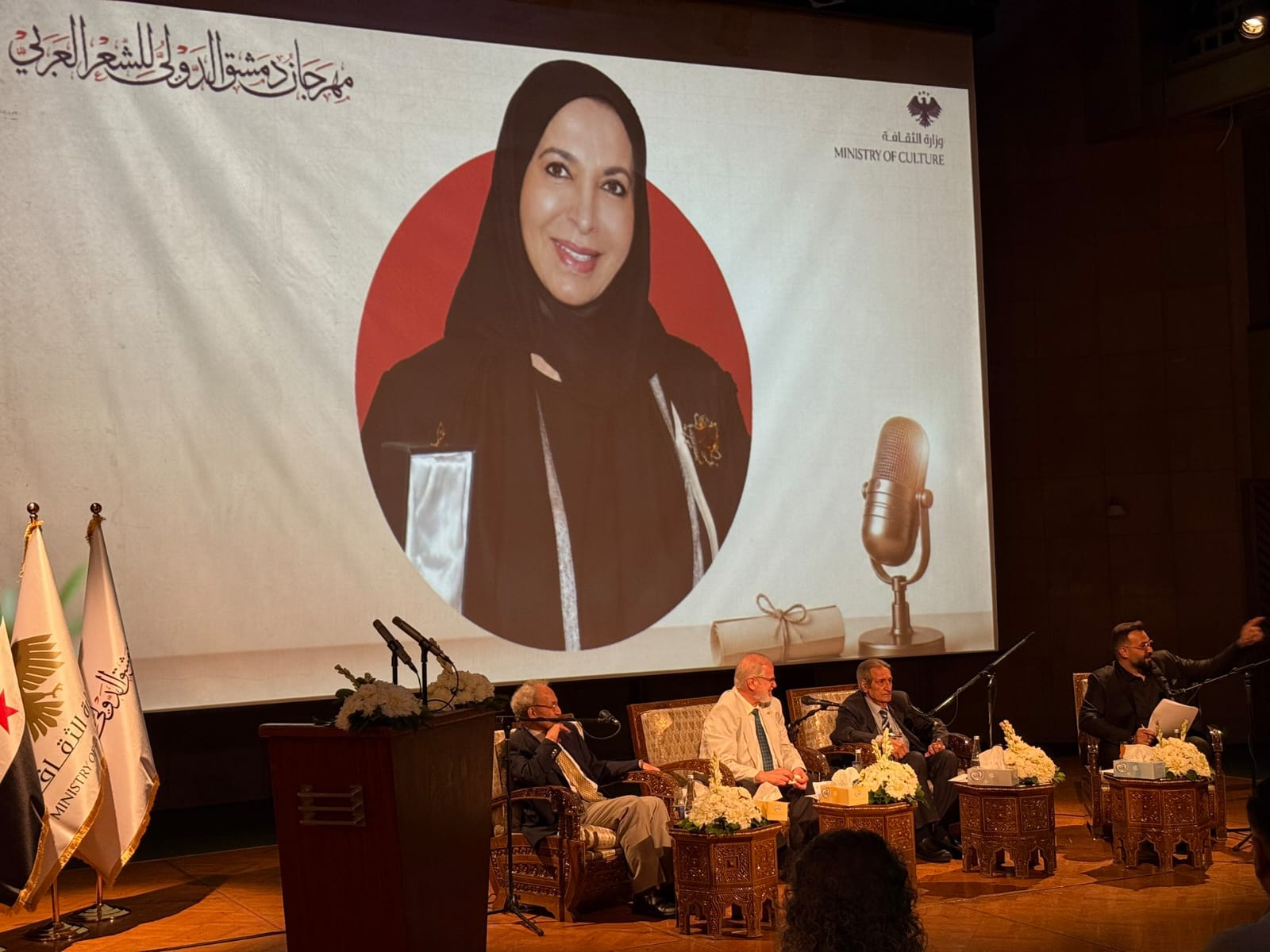
When the sun of the word rises from the shores of the Gulf to stand directly over the minarets of Damascus, history ceases to be a chronicle confined to its pages, and becomes instead an eternal embrace between the cradle of civilization and the wellspring of creativity. In the heart of the Levant, where the stones of the Umayyad Mosque call out to you, Qasioun hails you, and the ancient houses embrace you, the most radiant image of cultural fidelity was made manifest. The capital of the Umayyads honored the custodian of the Arabic letter, the great poetess Dr. Souad Mohammad al-Sabah, at the Damascus International Festival for Arabic Poetry.
This tribute was far more than a passing protocol: it was a recognition of a creative journey that shaped the conscience of a nation and an affirmation of the deep bonds joining Kuwait and Syria within the cultural space of Arabism.
The Sun of the Arabs: The Last Giant of a Beautiful Age
In Dr. Souad al-Sabah, the Levant beheld an extension of the age of greatness — an age fragrant with revolution and beauty. The Syrian Minister of Culture captured her extraordinary standing in words that said it all: “Souad al-Sabah is the sun of Kuwait and the sun of the Arabs.” And indeed, she is that very sun whose rays have never once set upon the causes of her nation — bearing the title “Custodian of Arabism,” befitting her loyalty and her legacy; “Champion of Palestine,” for whom she has contended with both tears and ink; and “Poetess of Homelands, Love, and Beauty,” who has washed away the wounds of the Arabic tongue with her words. Today she stands as the last of that generation of giants, the poets of the beautiful age, whose verses still walk with pride along the paths of identity.
Readings in the Book of “the Poetess of the Arabs”
The celebration was accompanied by a critical discourse worthy of the honoree’s stature. A major symposium was convened, centered on the poet’s experience and cultural journey, bringing together an elite circle of leading Syrian critics and literary figures who approached her creative legacy with profound insight. This was reflected in the contributions of Prof. Dr. Mohammad al-Tahhan, Dr. Nizar al-Ani, and Dr. Fayez al-Dayah, moderated by Dr. Issa al-Masoudi — together forming an intellectual gathering worthy of “the Poetess of the Arabs,” probing the depths of her singular human and national voice.
A Message from the Levant: A Recognition of the Genius of Place, and the Distinctive Taste of This Tribute
In her heartfelt message, brimming with love and longing — delivered on her behalf by Dr. Ali al-Masoudi, Director of the Souad al-Sabah House for Culture and Creativity — the poetess poured her very soul into the inkwell of the Levant, speaking as one enthralled: “I am overjoyed to be, once again, in Damascus — in the very heart of Arab memory, the city where, as you cross the streets, you feel you are crossing centuries, where civilization walks beside you and the Arabic language greets you clothed in its most radiant garment.” Dr. Souad captured the meaning of this celebration when she affirmed that being honored in Damascus carries a different flavor, a taste all its own, saying: “This tribute in Damascus holds a different meaning. Awards delight any person, but in the city of the Umayyads they carry another taste altogether — the taste of a capital that carried the message of civilization to the world.” For the word defeats ruin.
A Prophecy of Rising, and Hope Restored
Her words came as an affirmation of the poetess’s eternal faith in the power of the word and its capacity to endure in the face of storms, summoning the beautiful memories of Syria’s cultural evenings past: “I remembered Damascus in its seasons of poetry, in its evenings of culture, and in friends who believe that the word can defeat ruin, and in the poem, which has always been one of the means of defending life.” This is the visionary insight of “the Sun of the Arabs,” who saw in the return of the spirit to Syria the return of hope for the nation as a whole, greeting the future with these decisive words: “Today, as I watch Syria reclaim her health and open her windows once more to life, I feel that Arab hope has not been slain — that it resisted mightily at the moment of death, until the moment of rising finally came.”
The Fortresses of Culture Stand Unyielding; the Nation of Poetry Was Born to Endure
The enduring truth this tribute holds up to history’s mirror is this: capitals may fall ill, borders may have their political features redrawn, and wars may bring down rooftops — yet the “fortresses of culture” remain impervious to collapse. The embrace of Damascus and Souad al-Sabah stands as living proof: Arab identity is no slogan chanted in the corridors of politics — it is a pulse that flows through the veins of poetry.
A people who gave the world Abu Tammam, al-Mutanabbi, al-Ma’arri, and Zenobia cannot, today, be incapable of writing its own future. The great shock to all who wager on death is that Damascus did not honor Souad al-Sabah for a past now gone — it honored her for a declaration made to the whole world, from atop the pulpit of the Umayyads: a nation that possesses the sun of biography and the light of poetry is a nation born to endure, and it shall not die!