






Reflecting on the course of modern history and the process of nation-building invites us to pause with profound appreciation before those deeply human moments that shape a nation’s collective memory and strengthen the bonds of patriotism. With the passing of former Chief of Staff of the Kuwaiti Armed Forces, Lieutenant General Ali Mohammed Al-Mu’min, Kuwait bids farewell not only to an exceptional military commander and a wise diplomat, but also to a remarkable figure whose life embodied enduring loyalty across generations and reaffirmed the values of mutual respect and gratitude among those who have dedicated themselves to serving the nation.
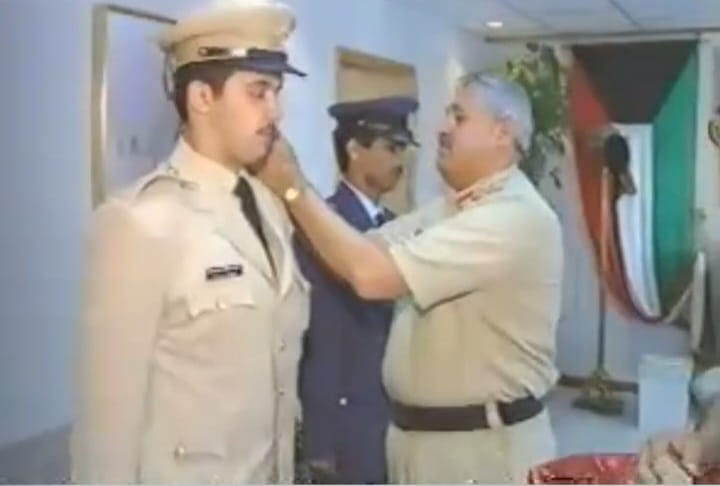
In 1996, following his graduation from the prestigious Royal Military Academy Sandhurst, Lieutenant Sheikh Mubarak Abdullah Al-Mubarak Al-Sabah was honored by Lieutenant General Ali Al-Mu’min, who personally presented him with his military insignia. On that memorable occasion, the late commander transcended ceremonial protocol with words that forged a powerful bridge between past and present. Addressing the young officer, he said:
“Lieutenant Mubarak holds a special place for me, because many years ago I stood exactly where he stands today before his father, Sheikh Abdullah Al-Mubarak, who was then the Commander-in-Chief of the Army.”
These moving words encapsulated decades of shared history and reflected the enduring spirit of Kuwait’s military tradition—a tradition founded upon loyalty, remembrance, and honoring the pioneers whose vision laid the foundations of the nation.
By recalling that moment, Lieutenant General Al-Mu’min was paying tribute to the formative era of Kuwait’s state-building and to the extraordinary legacy of the late Sheikh Abdullah Al-Mubarak Al-Sabah, widely regarded as the principal architect of Kuwait’s modern defense and security institutions. He transformed the Public Security Force into the nucleus of a professional national army, laid the foundations of the Kuwaiti Air Force and military aviation, championed the education and overseas training of young Kuwaiti officers, and combined firm leadership with compassion while playing a pivotal role in advancing Kuwait’s educational, cultural, and sporting renaissance during the pre-independence era.
Lieutenant General Ali Al-Mu’min leaves behind a distinguished legacy defined by honorable military service and statesmanlike diplomacy, fulfilling his duty to his country with unwavering integrity, humility, and quiet dedication. As we remember both his words and his example, we are reminded that Kuwait was built by men who sought neither prestige nor personal gain, but devoted themselves wholeheartedly to the service and advancement of their homeland.
May Allah have mercy upon Lieutenant General Ali Al-Mu’min and reward him abundantly for his lifelong service to Kuwait. May He also have mercy upon Sheikh Abdullah Al-Mubarak Al-Sabah, the founding architect of Kuwait’s armed forces. The unbroken chain of loyalty linking the nation’s pioneering generation with those who followed will forever remain a guiding light for future generations, inspiring love of country and selfless sacrifice.
The noble character of Sheikh Mubarak Abdullah Al-Mubarak is reflected most vividly in the sincerity with which he honors the memory of his former military commander, Lieutenant General Ali Al-Mu’min. It is a genuine expression of loyalty that reminds us that only the truly noble recognize and repay the debts of gratitude. How could it be otherwise for a man raised under the guidance of Sheikh Abdullah Al-Mubarak—whose life exemplified leadership, discipline, and vision—and nurtured by his mother, Umm Al-Khair, the distinguished poet Dr. Suad Al-Sabah, a woman celebrated for her literary legacy, generosity, and humanitarian spirit ?
As the classical Arab poet wisely observed: “Some acts of loyalty are, in themselves, the finest form of tribute.”
May Allah have mercy upon Sheikh Abdullah Al-Mubarak Al-Sabah and Lieutenant General Ali Al-Mu’min.

Source: Distinguished Iraqi academic Prof. Dr. Kareem Farman