









After deciding to cancel her June trip with friends to Dubai when the emirate became the target of Iranian strikes, Lorna Davis was determined to find a new summer vacation elsewhere for the group.
Davis, who lives in London, began looking into fares for alternative breaks in destinations such as the Maldives, Mauritius and Bali. But she was stunned when she saw how expensive the flights were.
“Prices have gone up…” Davis tells CNN Travel. “At this moment, prices are so high.”
Undeterred, she reasoned that options closer to home would be cheaper, and researched vacations to Greece, but Davis found that even here, the prices were higher than usual, and continuing to go up.
“I’ve been looking all day to try to book something before they hike again.”
As summer gets closer, Davis says that fares keep getting higher and she’s running out of feasible options.
“I’m not sure what is going to happen now,” she adds, stressing that she’s “still trying” but getting increasingly disheartened.
Nearly two months after the United States and Israel began their attacks on Iran, the conflict is having a significant impact on the travel industry, and millions of travelers like Davis are facing uncertainty about the summer escape they’ve been looking forward to all year.
Booking site Expedia said it had seen travelers altering their behavior because of rising costs, with preferences moving away from popular or longer-haul destinations.
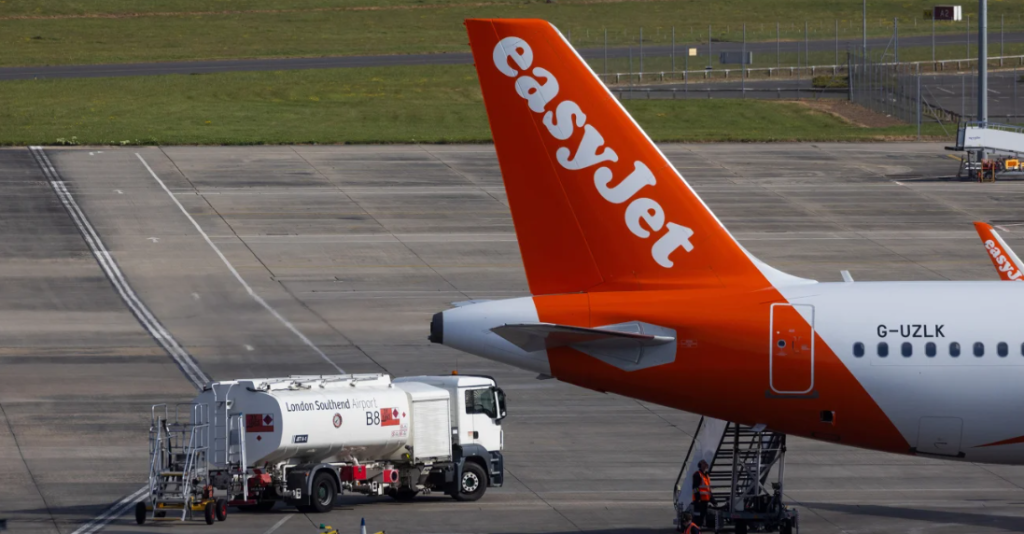
Air ticket prices have been rising as the war causes disruption to fuel supplies and forces up airline running costs. Many carriers are now canceling services no longer deemed profitable.
The rising costs and uncertainty are forcing some to forgo long-haul trips in favor of closer and more affordable destinations. Even those planning self-drive vacations are having to rethink their summer as pump prices also continue to soar.
Chris Ratcliffe/Bloomberg/Getty Images
“There’ll be higher fares, less capacity and less people traveling this summer than expected,” said Dan Akins, an economist from aviation consulting firm Flightpath Economics. “So, none of it is good for the travel industry.”
It’s no mystery why costs are increasing. With the Strait of Hormuz, the main conduit for about 20% of the world’s oil and natural gas, closed to commercial traffic, supplies of jet fuel and gasoline have become disrupted.
rbi id ipsum a neque viverra iaculis. Curabitur lacinia elit a tortor suscipit rhoncus. Vestibulum libero ante, consectetur non fringilla eget, mattis vel nibh. In aliquet urna nisi, nec auctor ex mollis eget. Duis vel vehicula nunc, et consectetur nisl. Nulla nec tortor eu odio ultricies bibendum sit amet non odio. Phasellus eu sem eros. Nulla tincidunt turpis quis facilisis aliquam. Nullam a sapien finibus, accumsan lacus a, sodales augue. Nam molestie purus nec dui pellentesque lacinia. Pellentesque eget augue non elit fringilla hendrerit.
Pellentesque posuere ac libero a gravida. Pellentesque massa nisi, bibendum ut orci ut, tempus fringilla leo. Integer sed varius lectus. Maecenas vel justo congue, tempor nisi quis, tempus velit. Nunc at leo in tellus laoreet consequat. Aliquam tempus vel purus vel posuere. Aliquam porta, lacus ut fermentum consequat, sapien arcu fringilla mi, vitae pretium ex enim a tortor. Cras mattis arcu vel nisi faucibus porta.
cnn