





Stylish Celebrity Houses – Which Celeb House Is Your Vacation Dream Home?
 Allison Brooks
May 24, 2026
Allison Brooks
May 24, 2026
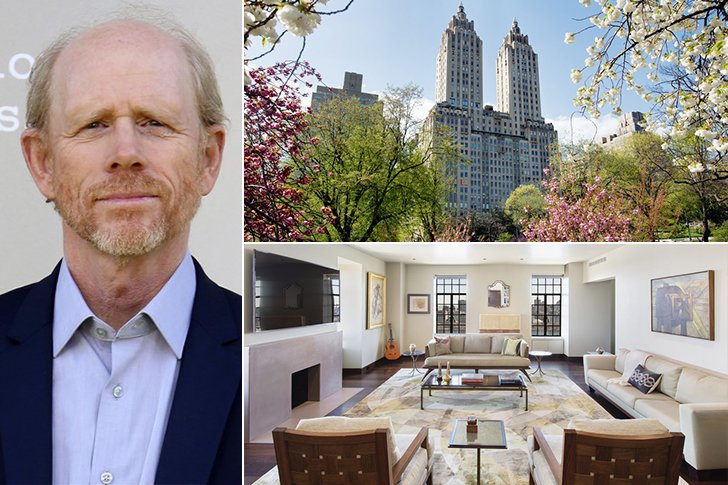
Ron Howard – $12.5 Million, Manhattan
Ronald William Howard is an actor who is blessed with the great genes of acting. Making his debut as a child artist when he was just two years old, he continues to remain a popular name even at the age of 66 years. His long-standing career earned him a fortune of $160 million, which makes it possible to get all the luxuries in the world.
Ron Howard, the famous actor-director, put his Manhattan apartment at the Eldorado up for sale in 2017. The asking price: $12.5 million. Most people would need a home loan to buy it. The 1930 apartment on Central Park has an Art Deco-style, situated in two towers. The place boasts three bedrooms, a dining room, a library, a fireplace in the living room, and a laundry room. The Eldorado has a concierge, doorman, playroom for children, and fitness facilities. Three months after listing it, the Howards dropped the price to $11.5 million. In 2018, it remains in the market.
Kirk Douglas – $3.5 Million, Palm Springs
Kirk Douglas was a popular actor, philanthropist, writer, producer, and director who needs no introduction. He rose to fame with the movie The Strange Love of Martha Ivers and was an overnight star. Kirk Douglas had an immensely successful career for six long decades which gave him a wealth of $61 million at the time of his demise. While most wealthy people pass on their wealth to their kids, Kirk Douglas left all his fortune to a charity.
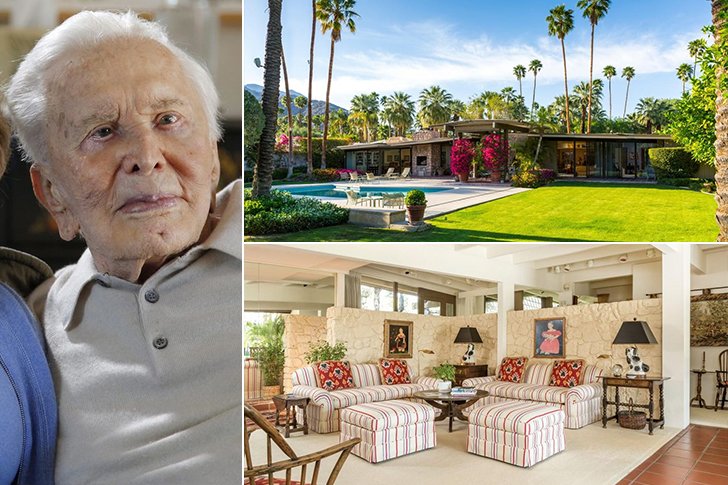
When it comes to retirement investments, the late Kirk Douglas had made a pretty impressive one after buying this incredible mansion in Palm Springs back in the ’50s. For some reason though, he ended up selling it in 1999 for $1.3 million. The 4,000-square-foot home is situated right next to one of Leo DiCaprio’s houses, and it offers five bedrooms, eight bathrooms, a foyer, a kitchen with a contemporary breakfast bar, two master suites, a wet bar, a tennis court, a pool and many more. In 2016, it was reported that it’s then-owner had listed the house for $3.5 million, and a while later, it was eventually sold.
Brad Pitt – $60 Million, France
William Bradley Pitt, the man who stole a million hearts when he appeared on screen has had a successful career since 1987. He is the recipient of two Academy Award and two Golden Globe Awards, and an Emmy. However, these awards were not just for the brilliant actor that he is, but also for his stint as a producer. The 56-year-old actor has a net worth of $300 million.
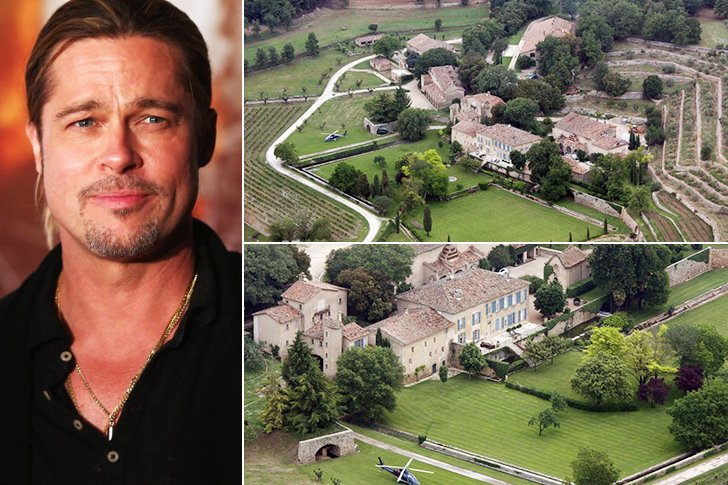
Brad Pitt and Angelina Jolie sadly are no longer one of Hollywood’s biggest power couples, but they used to share many gorgeous properties together. The most luxurious one was a home in Europe, which actually wasn’t even a house, but a castle! This French chateau cost them $60 million! It included 35 bedrooms and many acres of land. There was even a private vineyard so the couple could enjoy the fruits of their own land. For many, it may be a dream, but these stars have the bank accounts to actually make it happen. Can you imagine owning a castle in France?
Julia Roberts – $4.5 Million, New York
Julia Roberts may have an enormous fortune too, but unlike Kidman, she only went for one home. The star of Mona Lisa Smile and Pretty Woman loves the Big Apple, as is shown by her real estate investments.
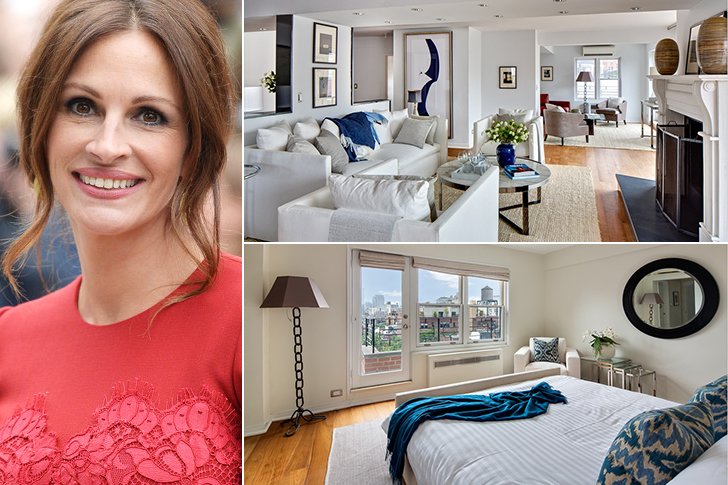
She used to own a lovely Manhattan apartment, but now only has a house in the city. Her New York home boasts stunning vistas over the city, as well as a fireplace to cuddle up next to in winter. The property features modern design and artworks throughout. A classy lady, that Julia Roberts!
Adele – $9.5 Million, Beverly Hills
Adele Laurie Blue Adkins MBE or just Adele, this beautiful lady has a voice that’s impossible to ignore. She is a recipient of 15 Grammy Awards from the 18 nominations that she received. Isn’t that incredible? Is it us or has Adele’s checking account been extremely healthy of late? She has a net worth of $190 million from her immensely successful career. She is just 32 years old, so we are sure that this wealth will increase significantly in the years ahead.
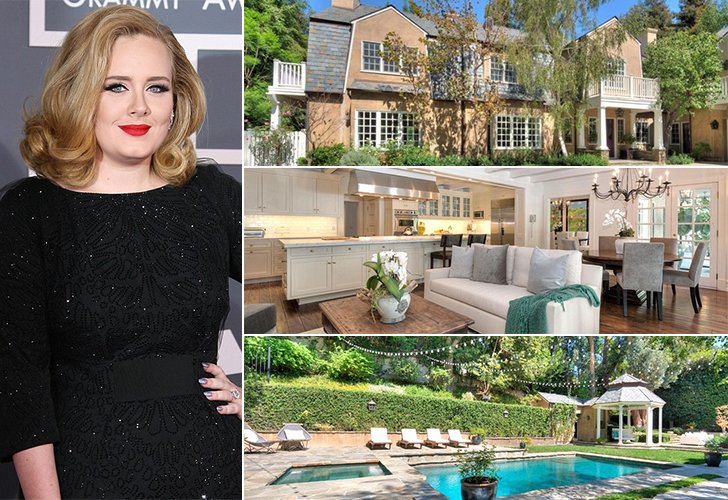
The Multi-Grammy-Winner Adele recently purchased a $9.5-million home, sitting on 6,500 square feet in Hidden Valley, Beverly Hills. It has four bedrooms, two baths, two living rooms, and two dining rooms! The master bedroom has a breathtaking walk-in closet, too. Adele has been working on a new studio album since 2018, but any more details about it haven’t yet been disclosed.
Bruce Willis – $9 Million, New York
Bruce Willis is famous for his appearances in Die Hard and Pulp Fiction. Walter Bruce Willis is one of those few people who are blessed with the genes of entertaining others. He is a prolific actor, singer, and producer who has found success in every aspect of his career and life. The 65-year-old actor is the proud owner of a $200 million wealth.
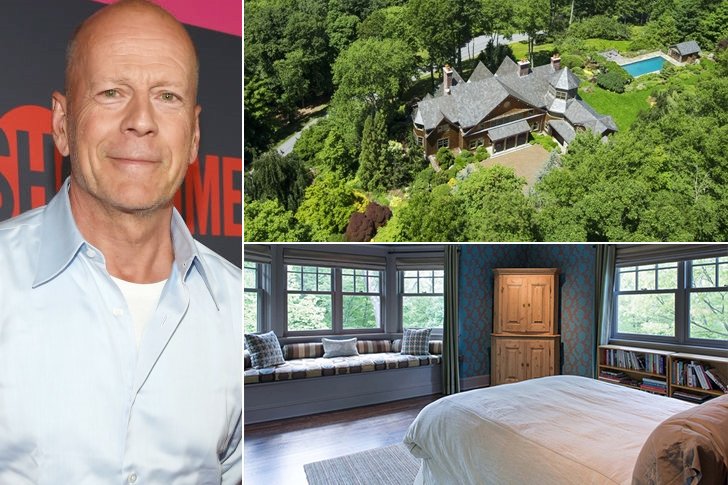
His successful films spiced up his bank account so Willis now has the fortune to spend.it on all that his heart desires. The actor owns a gorgeous $9 million home surrounded by trees and nature in Bedford. We’re sure he didn’t need to take out a mortgage for the property, which features a huge basement purely for wine storage. It also has advanced safety measures and sports facilities for tennis and swimming. The place also has three additional residences, so there’s always space for the family to come to visit.
Leonardo DiCaprio – $1.75 Million, Belize
When you are discussing the most dynamic actors of Hollywood, the name of Leonardo DiCaprio is bound to crop up. Leo has dabbled in all sorts of genres like drama, crime, biopics, period, and romance and has excelled in all of them. To name a few of his fabulous works, we have to mention Revolutionary Road, The Revenant, The Wolf of Wall Street, and Once Upon a Time in Hollywood.
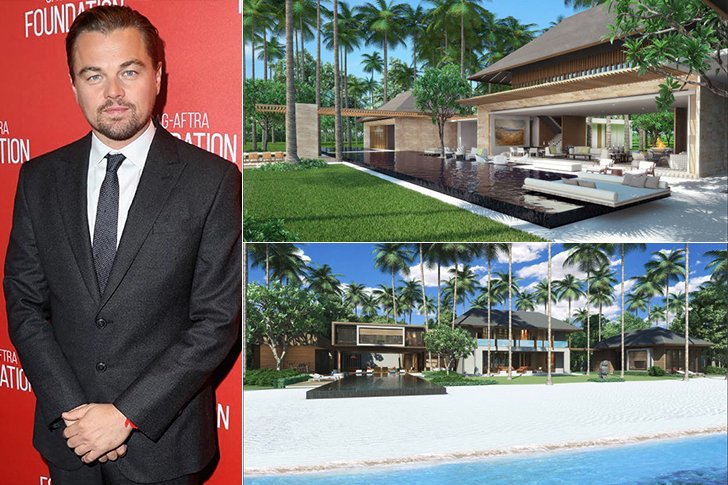
Leonardo bought himself a 104-acre isle known as Belize’s Blackadore Caye in 2005. In fact, DiCaprio made an investment of millions in turning his own isle into a private paradise with 36 residential homes and 36 villas which will be sold at $5 million each. We bet DiCaprio’s checking account will be much healthier once the houses start selling like hotcakes! On that note, DiCaprio must make a great real estate agent when he gets tired of acting.
Mark Wahlberg – $30 Million, Beverly Hills
Mark Robert Michael Wahlberg is a popular restaurateur, producer, actor, and former rapper who needs no introduction. He is popular by his former stage name Marky Mark. Since his debut in 1989, he has been part of numerous movies and television shows. The 49-year-old actor walked down the aisle with the beautiful model Rhea Durham in 2009 and together the couple has a great life!
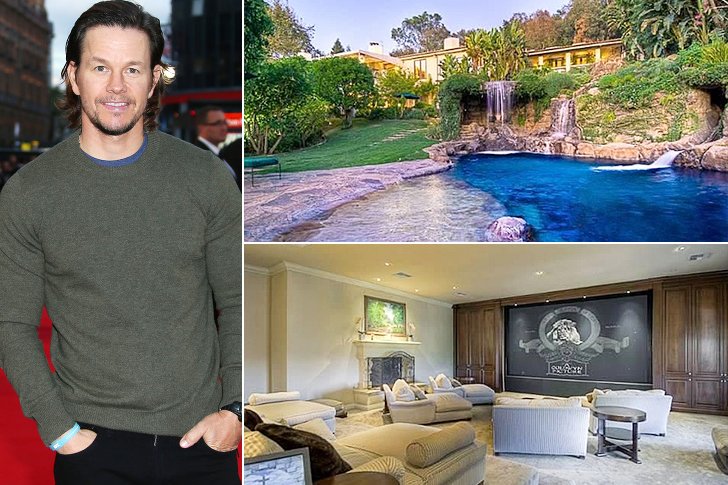
Boogie Nights’ actor Mark Wahlberg currently has a net worth of about $255 million, so a $30 million mansion was just a minor expense for him. His property is located in sunny Beverley Hills and features 7 bedrooms, so he can have lots of wild parties with overnight guests. There is also a private cinema and a viewing platform to oversee the whole place. The actor can stay fit in his own weights room and basketball field or in his own boxing gym. A pearl of the house is the huge pool, with a waterfall, a slide and a romantic cave – all in gorgeous green surroundings.
Clint Eastwood – $9.75 Million, California
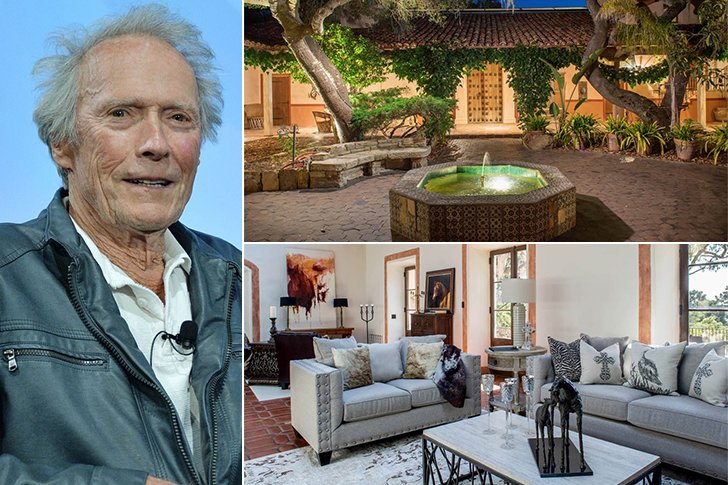
Hollywood legend Clint Eastwood listed his breathtaking Pebble Beach house in 2017 with a $9.75-million price tag. His gorgeous estate was designed in the 1920s by Clarence Tantau and it features six bedrooms and seven bathrooms. Apart from this, the new owner can admire the house’s thick walls and hand-crafted ironwork, as well as the stunning ocean views. This is hardly the only real estate that Eastwood owns since he is loaded. An actor, filmmaker, and a cultural icon, Eastwood continues to grow his fortune. In 2018, he produced and starred in the crime film, The Mule.
Angelina Jolie – $24.5 Million, Los Feliz
Angelina Jolie is not just a pretty face, but also an immensely talented actress, filmmaker, and humanitarian. Besides winning the hearts of her fans, she also went on to win numerous awards. This includes three Golden Globes and an Academy Award. Her massive popularity as an actress made her one of the highest paid actresses of all times for many years. She was married thrice and has six children of whom she had adopted three while the rest are biological.
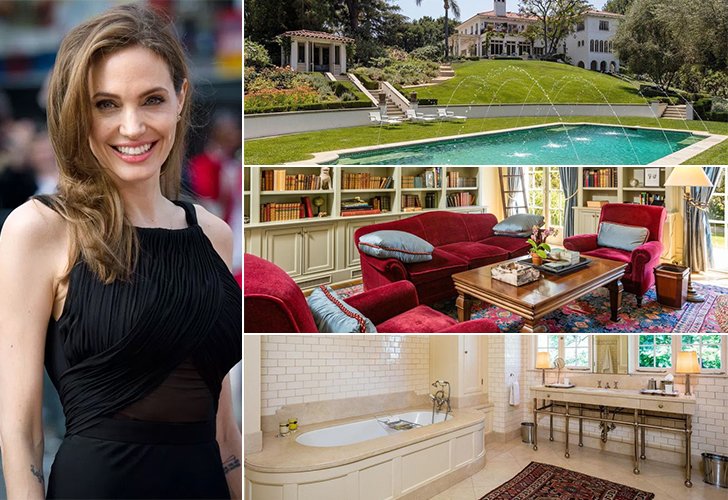
After splitting from Brad Pitt, actress Angelina Jolie acquired a glamorous home called Los Feliz in Laughlin Park. The mansion consists of six bedrooms, an updated kitchen, and a dining room. The deluxe house gives you that cozy and affluent feeling that only comes from staying in 5-star luxury hotels (no wonder Angelina loves it so much!). And adding to its seamless beauty, the mansion has an outdoor pool and a studio surrounded by gardens!
Beyonce & Jay-Z – $45 Million, LA
One of our favorite power couples in Hollywood, Beyoncé, and Jay-Z have quite a powerful bank account, too. Shawn Corey Carter (that’s Jay-Z) is one of the top-grade rappers, record producer, songwriter, and a businessman. On the other hand, partner Beyonce is an equally talented singer, songwriter, dancer, actress, and filmmaker. Thanks to ‘Destiny’s Child’, the lead singer slowly attained fame, right since the 1990s.
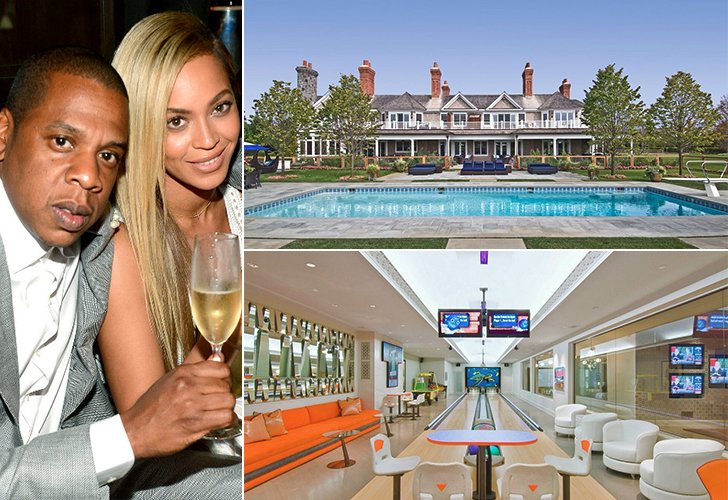
With Beyonce’s net worth of $265 million and Jay-Z’s net worth of $610 million, the couple’s joint bank account is estimated at $875 million. Since the money is not an issue, they decided to treat themselves. And are now the proud owners of a $45 million mansion that has 123 rooms, 14 bedrooms, and 27 bathrooms, a swimming pool, and a tennis court. We sure hope they have reliable home insurance as well! Luxury in every sense, we say.
Ryan Seacrest – $50 Million, Los Angeles
Ryan John Seacrest is a popular radio and television show host besides being a producer. He rose to fame by hosting the popular reality television show American Idol. Ryan Seacrest is the favorite of many star hosts and has a huge fan base. He is famous for his personality, his quirky character, and his energetic hosting skills. In the U.S., his name is a household one, and he has a bank account balance to prove just how successful he is! As a host of American Idol, the show isn’t the same without Seacrest.
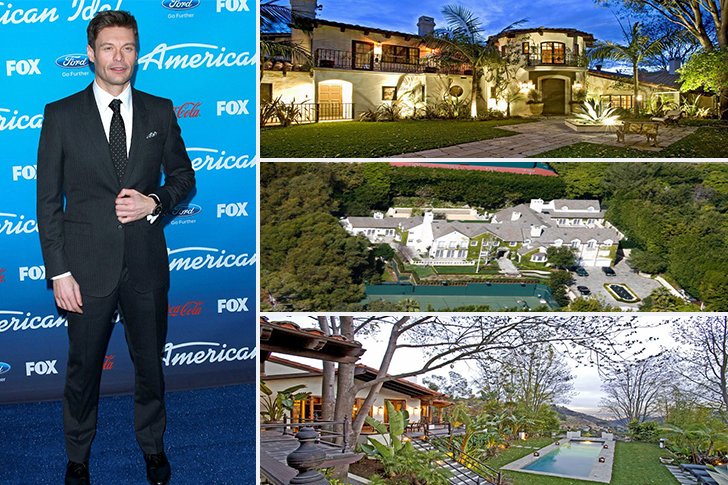
Seacrest happens to be the owner of an exquisite $50 million estate situated in Los Angeles. The construction of the house was way back to the 1970s. The mansion is what you can truly call as a stately villa. It has been home to stars like Richard Dreyfuss and Kevin Costner. The home possesses resort-like quality and does feel like a getaway. Looking at the pictures, we are sure that it’s a perfect home for a celebrity like Ryan Seacrest.
Meg Ryan – $10.9 Million, Soho
Margaret Mary Emily Hyra is a popular actress and producer who is popular by her stage name Meg Ryan. She made her debut in 1981 and has since then been a household name. The 58-year-old actress has a net worth of $80 million from her four-decade-long career. She walked down the aisle with Dennis Quaid in 1991 and had two children from her marriage. Sleepless in Seattle star Meg Ryan might not be as hip as she was a decade ago, but she knows how to pick her luxury homes!
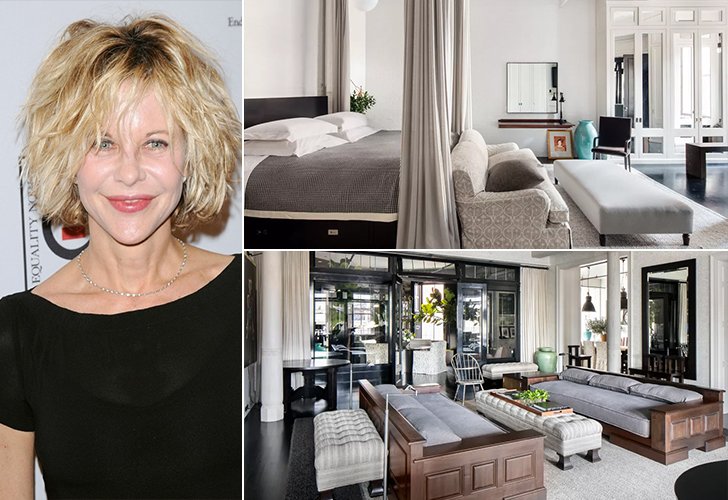
The trendy Soho deluxe house she owns kills it in terms of style, as it is her most recently renovated project as an interior designer. The property sits on 4,100 square feet, having 13 windows, eight closets (a girl gotta have space for her clothes, right?), a master bedroom, 40-foot gallery, an ebony wooden floor, and floor-to-ceiling French doors.
Wesley Snipes – Est. $4.1 Million, Alpine, NJ
Wesley Trent Snipes is a man of many skills. He found great success as an actor, producer, director, author, and martial artist. Wesley Snipes is a name to be reckoned with within the industry. Over the years, various roles in blockbuster movies have given him enough fame, recognition, and wealth, too. His role as Blade in the Blade trilogy catapulted him to immense popularity, and he has several more films up his sleeve.
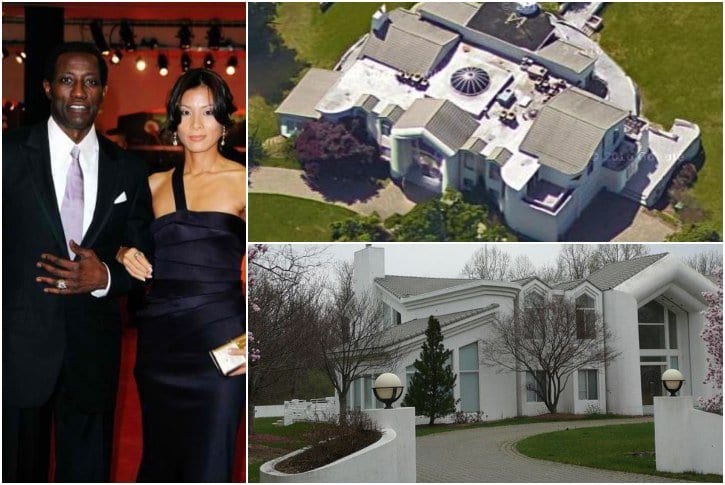
All his professional success translated into great popularity, awards, and a massive fan base globally. His fortune now stands at $10 million, which makes it possible for the 58-year-old actor to afford all the luxury in the world.Because of the kind of money he has, Snipes and his better half could easily upgrade their house whenever they want. In fact, they sold off their New Jersey home for more than $4 million recently. This implies that they probably have more than enough to purchase an even better house to call their own!
Jesse Watters – Price Undisclosed, Long Island
After taking up the job of a production assistant with Fox News, Jesse Watters’s hard work and determination made him rise to the top in no time. He earns millions now as the channel’s political commentator. You might have seen him conducting on-street interviews for the much popular The O’Reilly Show. Aside from that, he is popular to co-host another famous show, The Five.
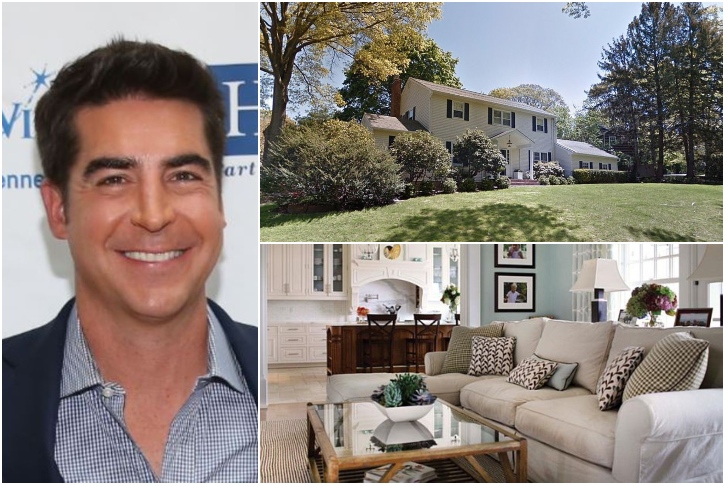
His enterprising career has helped him accentuate his earnings and gradually, Watters has laid his hands on a number of luxurious properties across the United States. His Long Island property is surely one of those. It’s said that Jesse used to live there along with his former wife, Noella Watters, until their divorce in 2017.
Laura Ingraham – $1.3 million, Woodley Park
Political commentator and popular talk show host Laura Ingraham has been in the showbiz for a long time now. It doesn’t come as a surprise that she can afford a great lifestyle and buy lavish houses and cars.
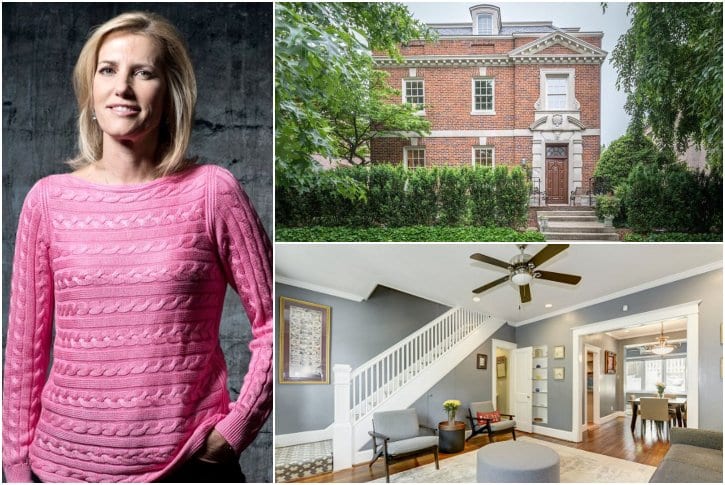
Her show, The Ingraham Angle, and her magazine, LifeZette, are quite popular. Her experiences range from working as a speechwriter for presidents like Ronald Reagan to talking about government policies and writing books — Ingraham has done it all. She also loves investing in real estate and hence sold off her Woodley Park house for $1.3 million. She probably invested in a move lavish house afterward!
Dana Perino – Price Undisclosed, South Carolina
Dana Perino came to prominence after her position as White House Secretary during the presidential reign of President George W. Bush, between the years 2007 to 2009. Perino is recognized as the second woman to have landed the position after Dee Dee Myers, who worked during the presidential reign of Bill Clinton. Perino has been building a healthy sum in her bank account over the years.

Dana’s studied at the University of Illinois-Springfield and Colorado State University-Pueblo. She officially resides in New York, but she s also attached to a piece of the estate in palmetto Bluff in South Carolina. The estate sports blue water, Spanish mosses, and marsh grasses, with living oak trees around it, making for a perfect retreat from the hustle and bustle of city life.
Ann Coulter – $577K, New York
Ann Coulter, the renowned conservative political analyst, and commentator is widely popular across the globe. Ann Hart Coulter is now 58 years old and has a wealth of $8.5 million to her credit. Her massive wealth makes sure she lives a stylish life. She bought her own pad in her home city of New York in 2016. Reports claimed that she spent $577K on it, a price much smaller than the one sellers originally asked for.
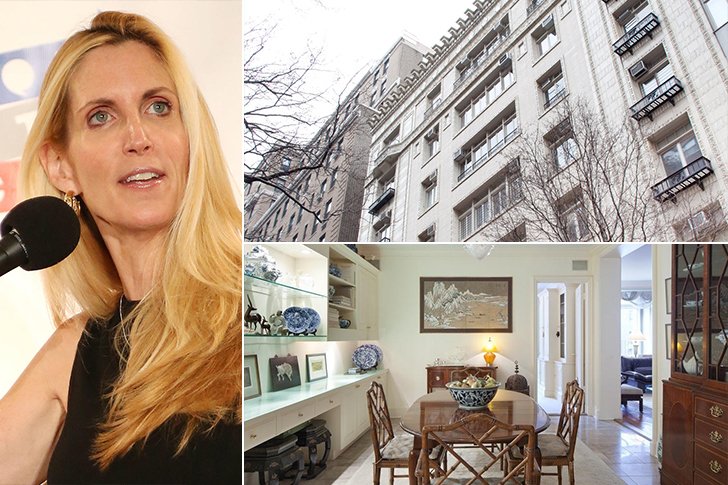
Coulter’s house is 1,400-square-foot big, and it also includes a wooden fireplace, contemporary décor, and pretty high ceilings to top its elegance. Coulter owns another place pretty close to this one, so this wasn’t the first investmentshe had made in the area. Going by the pictures, we can confidently say that the house has all the comforts the author might desire. This makes it the right place for her to retire at the end of a long tiring day.
Megyn Kelly – $585K, Virginia
Born as Megyn Marie Kelly, the popular journalist and attorney has been a part of every household for several decades now. She found great fame within a short period and that went on to increase her fortune too. Her wealth now stands at $30 million. She made sure to secure her future by making great investments.

Kelly had acquired a beautiful new home in the early 2000s within the Stonegate community of Virginia, paying $585K for it. When a new job opportunity came along in New York in 2004, she wasn’t able to sell it until 2013, and she did so at a loss of $70K, not benefiting from her investment. That new job was to be a news anchor for Fox News, where she became famous. In 2017, she landed a job as a talk show host on NBC News, on Megyn Kelly Today, but lost it in October 2018, allegedly due to some comments she had made concerning Halloween and blackface that were deemed controversial.
Al Roker – Estimated $3 Million, Manhattan
Al Roker is a journalist, weather forecaster, television personality, and author. He is currently the weather anchor on NBC’s Today. In 2014, he set a Guinness World Record for an uninterrupted live weather report by reporting for 34 hours. Hopefully, Al’s latest health problems with his knee won’t prevent him from enjoying his sanctuary to the fullest.
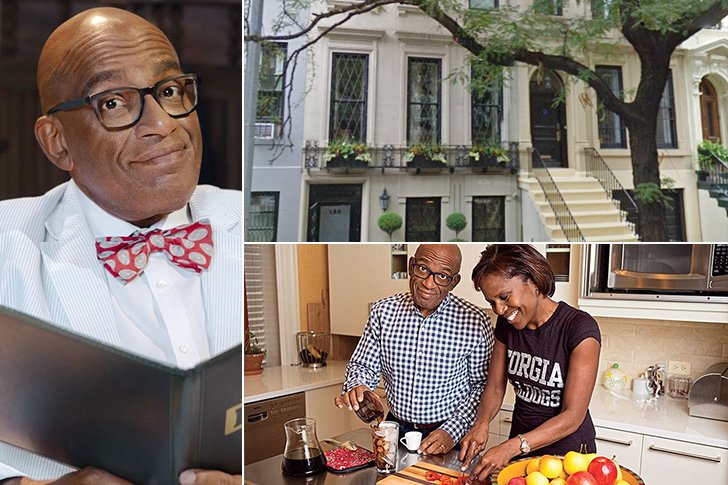
America’s most prominent weatherman, Al Roker, doesn’t hold back when it comes to a luxurious lifestyle. He now lives in a Manhattan townhouse in the city’s Upper East Side with his wife Deborah Roberts and their children. Roker’s contemporary residence has five floors and a backyard where he can relax during his time off. Just imagine that his kids have an entire floor all to themselves! Roker and Roberts have opened their doors to many magazines, showcasing their home’s beauty. Their house had cost Roker about $3 million.
Kimberly Guilfoyle — Est. $4.5 Million, The Hamptons
Who doesn’t love a house in the Hamptons? But then again, only the rich and famous can afford one in this area. And Kimberly Guilfoyle just joined the bandwagon! Her new investment in a Hampton house is the talk of the town. She was previously married to California governor Gavin Newsom.
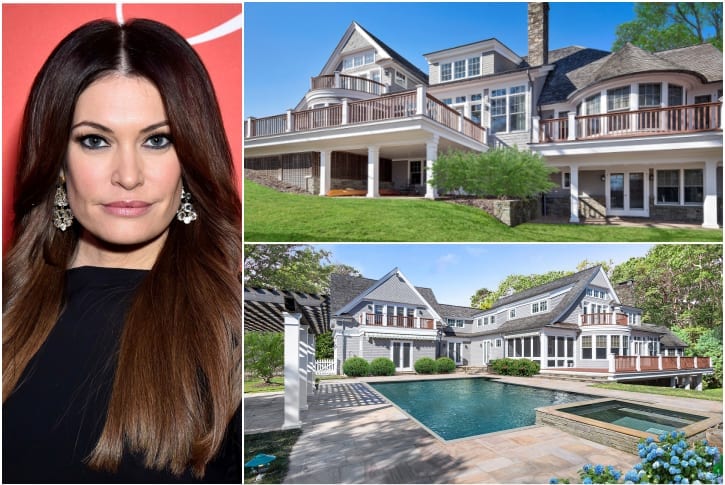
But she has moved on since then and is happy with her life now. She had started her career as an attorney and then became a journalist. However, in 2018, she left it for her other passions. The waterfront Hampton house looks like it might be a great place to unwind and relax for her. We’d sure love to have the privilege of relaxing here!
Rush Limbaugh – $65 Million, Palm Beach
Rush Hudson Limbaugh III was a radio personality, an author, a former television show host, and a political commentator. He had been a part of every American household with the radio show The Rush Limbaugh Show, that’s been on the air since 1988. Now it seems like the show will come to an end because of the celebrity’s passing because of complications from lung cancer. Rush Limbaugh’s work as a radio host had resulted in tons of bucks for him.
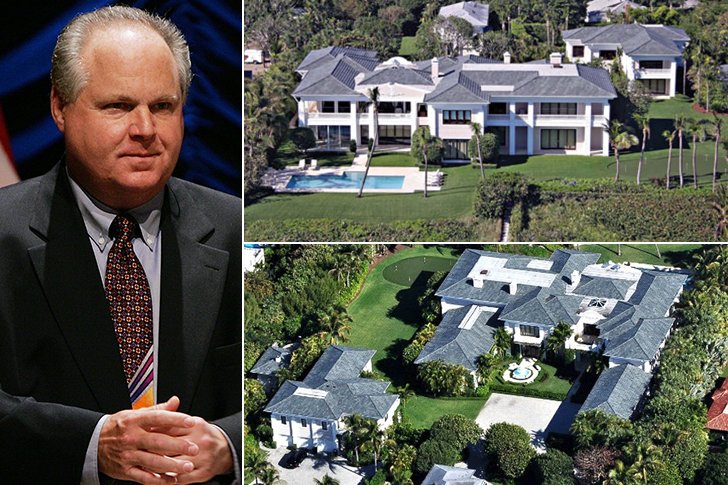
So where did he go when he wanted to escape all the political drama? To his super-extravagant Palm Beach property, of course! It offered him 24,000 square feet of luxury, coming with a lavish main house and four smaller buildings for guests. It also features a big garage with vehicles his guests can use (and his $450K Maybach in it as well).
Wolf Blitzer — Est. $1.34 Million, Bethesda, Maryland
Wolf Isaac Blitzer is a famous author, news anchor, and journalist who needs no introduction. He is now a name to be reckoned with in the world of media journalism. He has been with CNN for years and is respected by his colleagues and fans. Wolf Blitzer has also won several awards and accolades for his work. Being the lead anchor of the show The Situation Room, Blitzer has an important role to play.
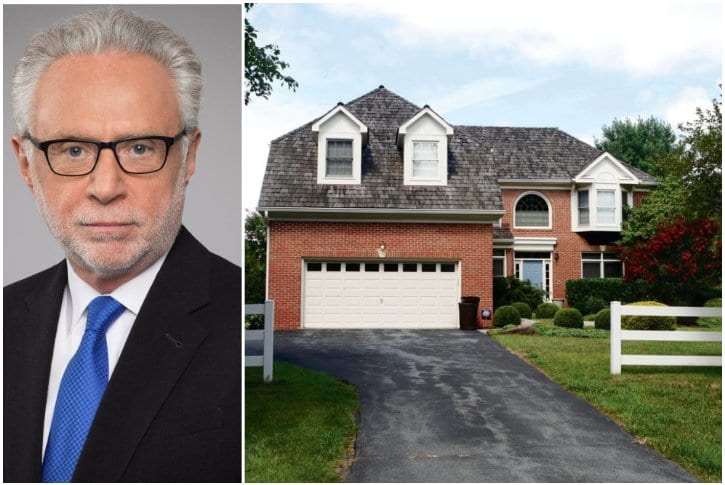
The 72 years old journalist has a net worth of $16 million. His fortune continues to increase as her salary stands at a whopping $5 million per year. Apart from work, Blitzer is not much interested in other kinds of investments for he has stayed in the same house since 1989. The house in Bethesda, Maryland holds several memories for the Blitzer family. Though he had bought the house for much less, it would cost about $1.34 million today.
Dana Bash – Est. $690,000, Washington DC
Born as Dana Ruth Schwartz, she rose to fame as a journalist, chief political correspondent, and anchorwoman for CNN. She is now 49 years old, and continues to look way younger than her age. She is now a household name and has earned a lot of fortune from her successful career. Her wealth now stands at $6 million. CNN chief correspondent, Dana Bash, chose a home near the House of the Senate, which has been her work assignment for more than nine years.

Bash lives with her son to her ex-husband, John King, who is also a correspondent of CNN. She purchased the house in 2007 from an interior designer and kept the incredible design and pieces. Bash fell in love the first time she saw it. The house has a swimming pool, a beautiful patio, and a vast outdoor garden. Bash first went to Washington DC to attend her college classes at George Washington University. Since then, she did not leave DC until she finally became a political correspondent for CNN right after college.
Meghan McCain — Price Unknown, Los Angeles
Meghan McCain might be Senator John McCain’s daughter, but she prefers to bank on her own talents to be successful in life. The co-host of the show The View, she is a well-known writer and journalist who has a great reputation in the media industry.

Her home which has eclectic decor speaks of her tastes. The decor can be considered rustic chic, we think, and it is a perfect fun place for entertaining. The loft-style apartment is actually a 1927 Hollywood building. Though it has just one bedroom, the decor and history make up for that!
Sam Champion – Est. $2.25 million, East Hampton, New York
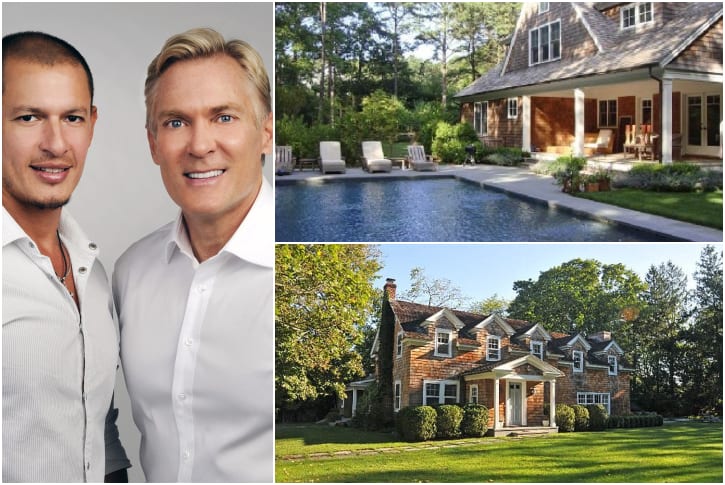
Sam bought this house to live in it and not to make a profit off of it as a real estate investment. At least, that’s what’s being made clear by the fact that it sold at almost the same price for which it was bought all the way back in 2007. Sam Champion wouldn’t really notice any lost money, of course, since he’s one of the best anchors in the country. His appearances on 23.5 Degrees and Good Morning America have pretty much secured his future, and all he needs to do is to ensure that he’s living the way he wants now. He’s 57 years of age with a long career ahead of him!
Anderson Cooper — Est. $3.1 Million, The Hamptons
Anderson Hays Cooper is a famous American journalist who began his career in 1990. Since then, until now, he continues to enjoy great popularity across the world. Popular TV personality Anderson Cooper set a precedent among the LGBTQ community when he became the first gay moderator for the presidential debate between Hilary Clinton and Donald Trump.
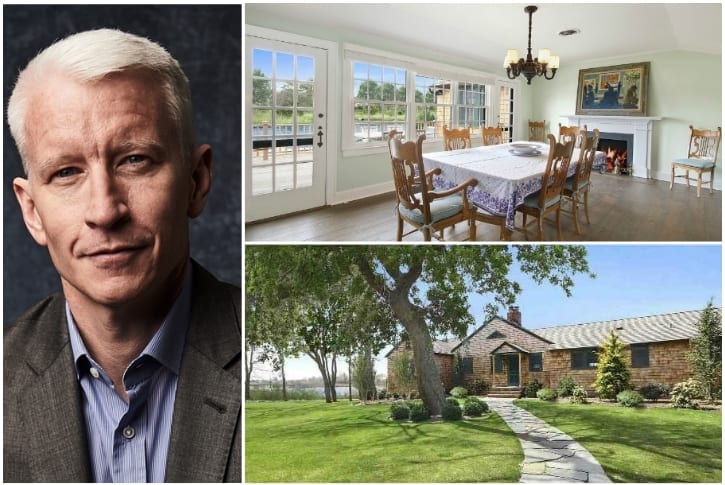
He has a huge fan following because of his show, Anderson Cooper 360 Degree. It has also helped him become very rich and avoid bankruptcy throughout his career. The 53-year-old has a fortune of $200 million which gives him all the luxuries he sets his eyes on. He had a lovely holiday home in Hamptons that he sold off for $3.1 million recently. The English-style cottage was a great place to unwind for Cooper, but he finally decided to sell it. With that money, Cooper can definitely afford a better and more luxurious holiday home anywhere in the world!
Katie Couric – $7.9 Million, New York
Katherine Anne Couric is a popular television journalist, author, and presenter who needs no introduction. She is now 63 years old and has a net worth of $75 million. With retirement not on the cards any time soon for this journalist, we are sure Katie Couric’s wealth will continue to increase in the years ahead too. She has made some great financial investments from her fortune.
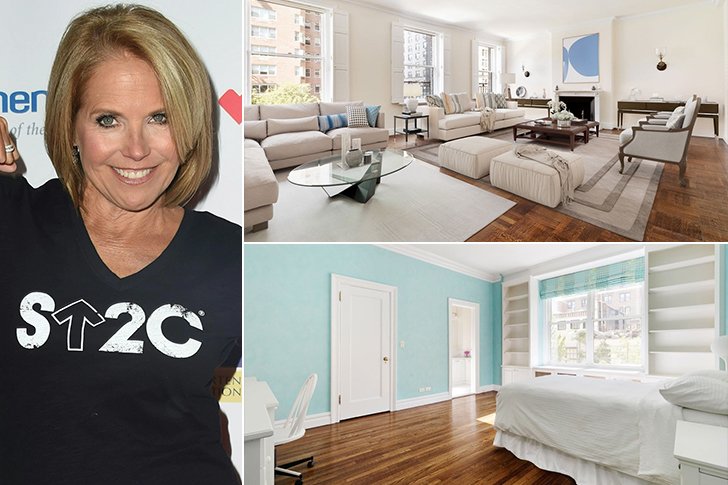
When talking about real estate, everything depends on the location. Katie Couric’s former apartment is a testament to that. With 5 bedrooms and 4-and-a-half bathrooms, one of the selling points of this apartment worth over $7 million is its privileged location. Sitting on Park Avenue at the Upper East Side of Manhattan, New York, the place is perfect. Katie knows this very well as she raised her children there and lived for 20 years in the place. However, in 2016, the Television Hall of Famer and award-winning journalist decided that it was time for a change.
Dylan Dreyer – $2.3 Million, New York
Dylan Dreyer is a popular meteorologist and weather anchor who works at NBC News. She is seen on Weekend Today and Today, as well as on MSNBC as she rotates and fills in with other colleagues like Sheinelle Jones, Carson Daly, and Al Roker. Dylan joined NBC in 2012 and is featured on their NBC Nightly News and The Weather Channel.
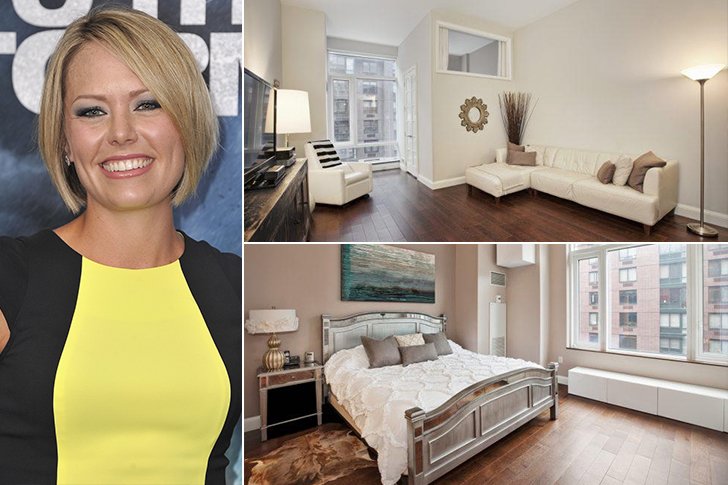
Her career began in 2003 and, besides weather programs, she also hosts Earth Oddesey with Dylan Dreyer, which is an educational nature broadcast program on NBC. She bought this apartment in Battery Park City, New York, in 2016 for $2.3 million. It has two bedrooms, two bathrooms, a home office, and a baby room. Doesn’t this seem like the perfect home for a star like Dylan Dreyer?
Katie Piper – Price Undisclosed, London
The TV presenter, philanthropist, and a contestant on Strictly Come Dancing Katie Piper lives in a luxury London mansion that she shares with her children and her husband. Katie, a mom of two, loves spending time at home which is perfectly styled and features glamorous furniture.

Apart from the stunning and chic home decor, the cozy house is also filled with books and toys of course since Katie has two daughters. There is wooden flooring in the dining room with a white dining table in the middle while the kitchen is very spacious. In 2018, Katie released a book titled From Mother to Daughter: The Things I’d Tell My Child.
Julianne Hough – $2 Million, Hollywood Hills
Julianne Alexandra Hough is a popular singer, actress, songwriter, and dancer who needs no introduction. She rose to fame by joining the cast and winning two seasons of Dancing with the Stars. She walked down the aisle with Brooks Laich in 2017. Together they have a net worth of $40 million!
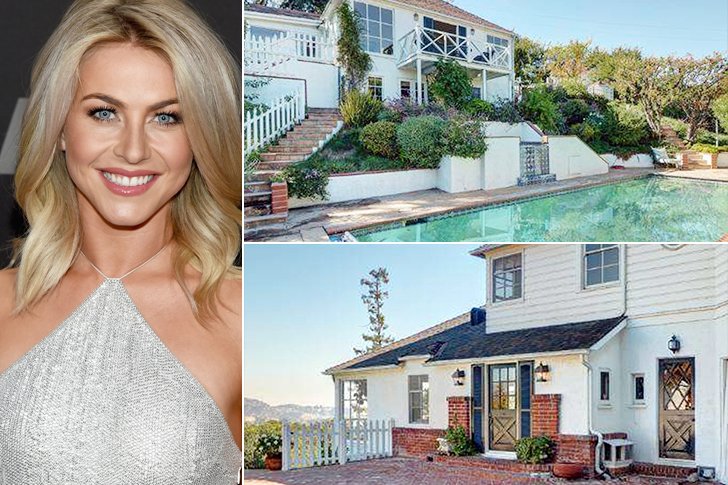
Is there anything Julianne Hough can’t do? She is an amazing dancer, can act as well and has done a great job as a TV presenter. The Dancing With The Stars champion certainly knows a thing or two about real estate as well. She made a great investment in this country-style cottage in the Hollywood Hills. Her husband Brooks Laich and their pets can settle down here and enjoy the view. It’s definitely a house you can call home, and we hope she can enjoy spending her time there.
Jay Leno — Est. $13.5 Million, Newport
You don’t need us to introduce Jay Leno to you, do you? He has always popular for his luxury lifestyle and his love for cars. We don’t actually blame him as the guy is filthy rich and can afford to splurge money on things he loves with all his heart. The same can be said when it comes to choosing a nest for himself and his philanthropist wife, Mavis, whom he married in 1980. He has acquired a Newport property for an approximately $13.5 million.
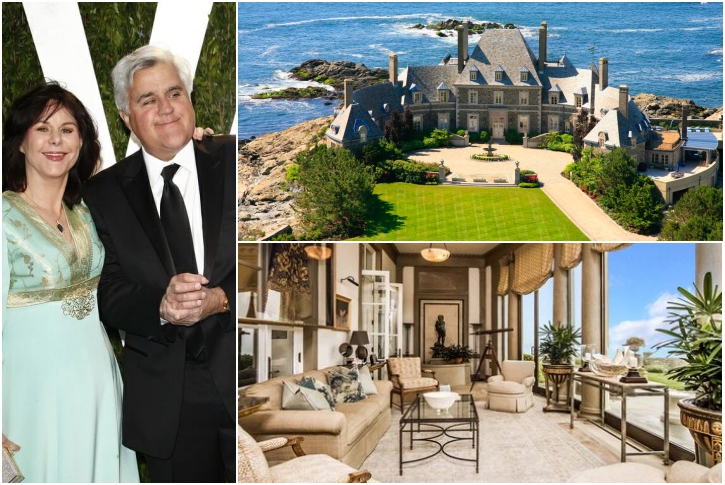
There is a lot to talk about the house, but we would like to put light on its salient features which include a tennis court, a carriage house, a garden, and 12 bedrooms. The lavish interiors left us awestruck, and with such a home to enjoy, Jay and Mavis will certainly have the time of their lives in this property.
Steve Harvey – Est. £2.8 Million, Georgia
Steve Harvey is a star host from America, and he also happens to be a comedian. He sports an estimated net worth amounting to £40 million! He sure has managed to build himself up quite a fortune through a dating site, films, and TV shows. It shouldn’t surprise anyone, then, that he lives in an opulent home.
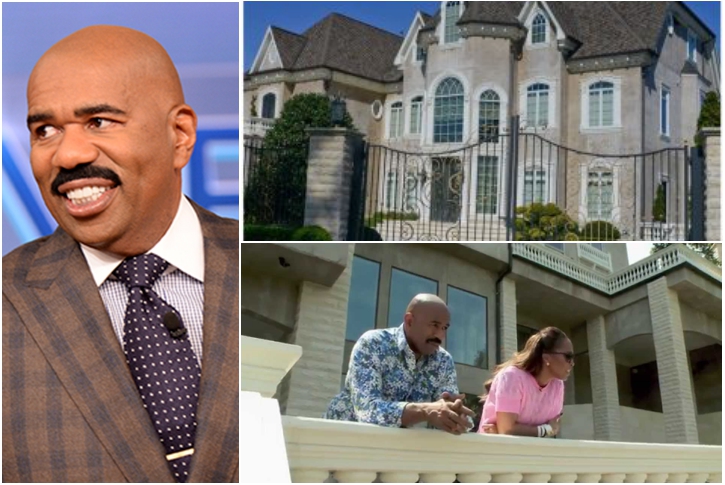
Harvey is the owner of a lavish five-story mansion that sits in Atlanta. The large home even features a man cave for Harvey on the first floor, where he and the boys can chill out at the bar. There are a golf course and a movie theatre that costs in the range of £4 million! Harvey also has a car collection of over seven different vehicles, one of them a stylish Pearl White Rolls Royce to the value of £450K!
Oprah Winfrey – $50 Million, California
Oprah Gail Winfrey is a popular actress, media executive, philanthropist, and American talk show host who needs no introduction. The 66-year-old began her career in 1973 and has since then been a household name. Her professional success translated into a massive fortune in her bank account and now her wealth stands at $3.5 billion and her annual salary stands at $300 million.
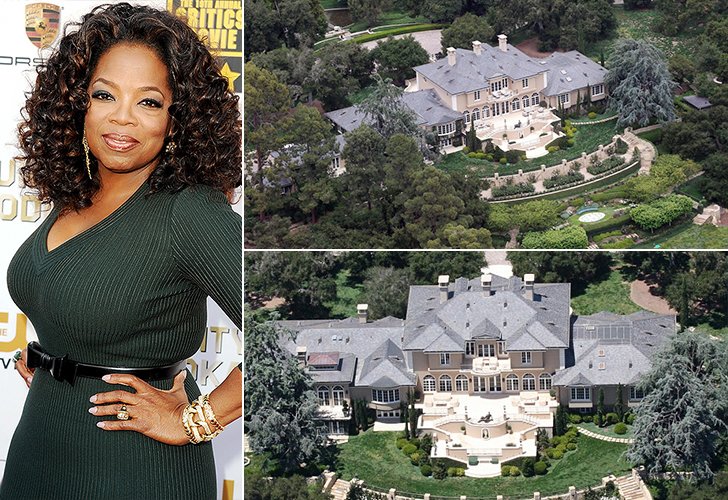
The queen of empowerment and an ultimate feminine symbol, Oprah Winfrey knows how to make the best out of her billionaire bank account. Though she owns many estates around the country, her biggest one is her California Mansion worth an incredible $50 million. With her amazing taste and sense of decoration, it is estimated that the mansion is worth $165 million with probably the biggest home insurance cost in the zone. Looking at the pictures, we are sure that it’s a perfect home for a celebrity of her stature.
Melissa Rivers – $5.223 million, Pacific Palisades
Melissa Warburg Rosenberg is a popular actress and television show host. She is popular by her stage name Melissa Rivers. Melissa Rivers is the daughter of the late Joan Rivers and Edgar Rosenberg. Melissa was seen on Beverly Hills, Silk Stalkings, 90210, The Comeback, and had other notable roles during her career which began in 1978.
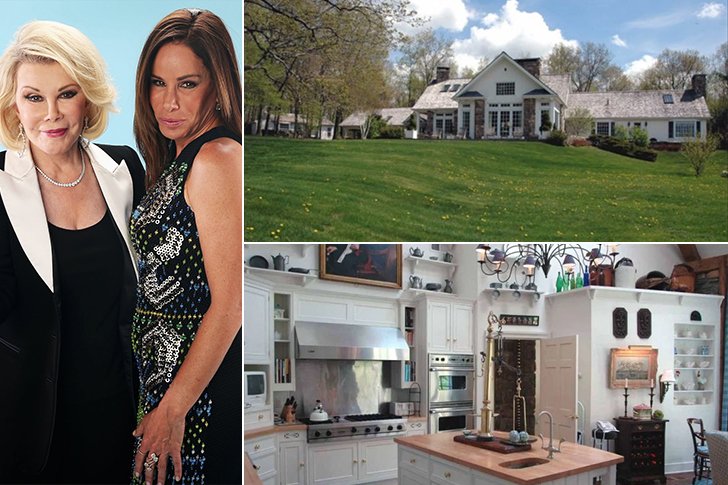
Her latest acting job was in 2015 in Joy, where she played the character of her mother. Reportedly, Melissa had around $100M in her private bank account in 2018. An only child, Melissa would often host red carpet shows with her mother and the two were honored in 2013 with a tour bus on the Ride of Fame named after them. She lives in a massive home in Pacific Palisades, which cost her a whopping $5.223 million. Dating back to 1953, the house has undergone a lot of renovation over the past few years.
Seth Meyers – $7 Million, Greenwich Village
The
Seth Adam Meyers is a popular actor, writer, comedian, producer, and television show host who needs no introduction. He made his debut in 2001 and has since then been a household name. Late Night host prefers the simple life and avoids the all-too-common luxury real estate ads that insist on selling prime land in some of the most populated places. Seth Meyers has settled for a duplex in Greenwich Village as the ideal home, not too far from Washington Square Park.
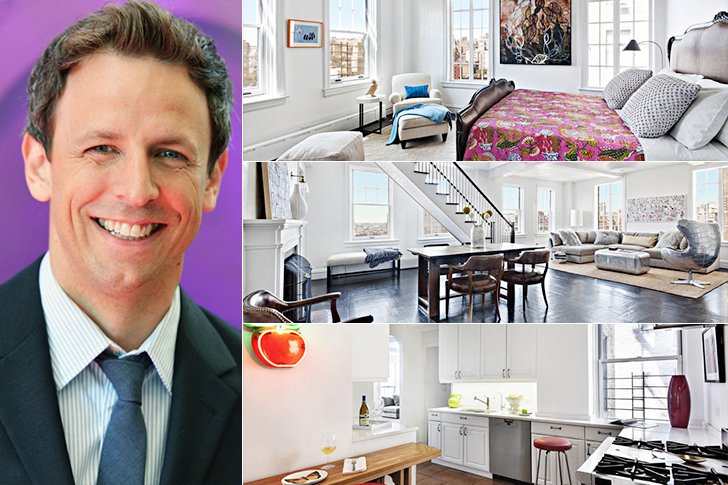
The 2-story, 3,000 square feet home has five bedrooms, four bathrooms, a home office, and last but not the least, a breathtaking view of the Empire State Building and the Hudson River. The house cost him a whopping $7 million but looks like it would not make much of an impact to his $12 million net worth.
Kate Hudson – $5.3 Million, Pacific Palisades
The 41-year old ravishing Kate became a prominent name in Hollywood after the film Almost Famous, which fetched her Golden Globe and also a nomination for the Academy Award for Best Supporting Actress. Alongside acting, she co-founded the fitness and membership program called ‘Fabletics’. Her books were equally popular that saw the light of day after 2016.
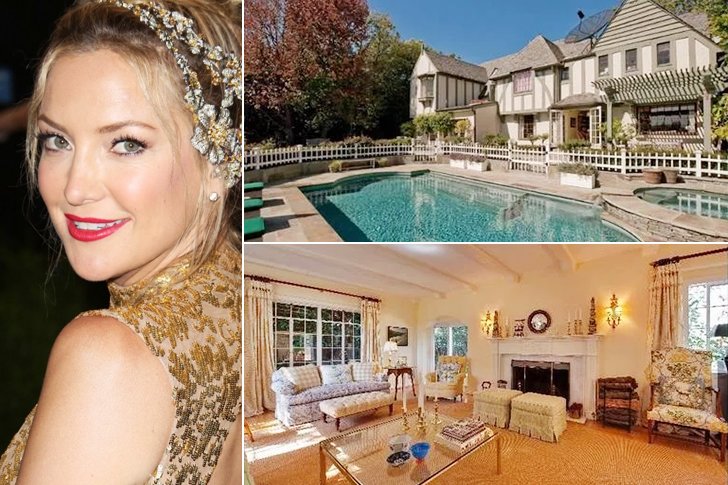
Hudson likes to own beautiful things, from the best designer gowns to the most beautiful mansions. It’s easy to tell by taking a look at her gorgeous home in LA. The property is situated in the Pacific Palisades and boasts many bedrooms and bathrooms to host other celebs. A pool and jacuzzi offer the perfect opportunity for enjoying time off, even with her busy acting schedules. Hudson has spent a lot of time forging her career so it’s only fair she gets to reap the rewards of a full bank account.
Wendy Williams – $2.2 Million, New Jersey
Wendy Williams made us sit up and take notice as the presenter of The Wendy Williams Show, the television talk program she has been associated with since 2008. She has also penned down an autobiography, a New York Times best-seller. Aside from that, she has also made investments in her jewelry collection and fashion line. Williams lives in an amazing house. The star surprised everyone with a tour of her home in 2012.
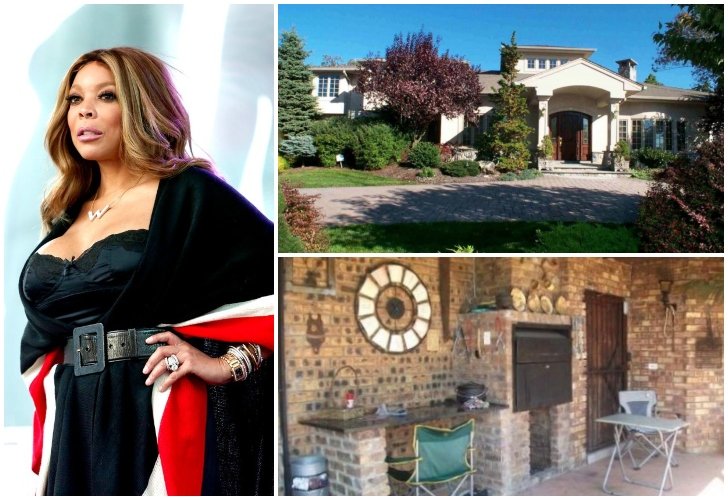
She decorated her house herself with the things that made her happy. Her house has all tones of black giving it a royal look. Although her house is set in a small town area. She managed to make it look beyond perfect through the decor and color scheme. She bought the house in 2009 for $2.2 million. The house does not have a massive gate or huge entrance rather there are shrubs and tall bushes surrounding the house. Wendy lives a rather modest life for the kind of star that she is.
Holly Willoughby – $3.85 Million, London

When buying a home, celebs like to splash a few million on it, of course, and English TV presenter Holly Willoughby is one of them. Judging by the photos of her house that we’ve seen in Hello magazine earlier in 2018, she undoubtedly has good taste when it comes to interior design. She lives with her family in a stylish London mansion featuring a lovely living room and a pretty spacious kitchen. Holly is known as the co-host of This Morning and Dancing on Ice and in November 2018, she also started co-presenting on I’m a Celebrity…Get Me Out of Here!
Stacey Solomon – Price Unknown, Essex

British singer and TV presenter Stacey Solomon was very excited to share the news that she and her boyfriend of three years Joe Swash, have decided to buy a house and move in together. The couple reportedly purchased a place in Essex where they will live with Stacey’s two sons, Zachary and Leighton. We don’t know how much the house had cost her (or if she took out a mortgage), but what is important is that they’re super thrilled about their new life together. Stacey has been pretty busy lately since she launched a clothing line with retail company Primark, in October 2018.
Ellen DeGeneres – Est. $18.6 Million, California
Ellen DeGeneres is a beloved host in the entertainment industry, having interviewed countless big-time celebrities in her world-renowned show, The Ellen DeGeneres Show. She has the gift of gab, and her charm and comedic timing make her one of the best in her field. Because of the roaring success of her show and various other ventures, Ellen has managed to earn big bucks and consequently enjoy quite a lavish lifestyle.
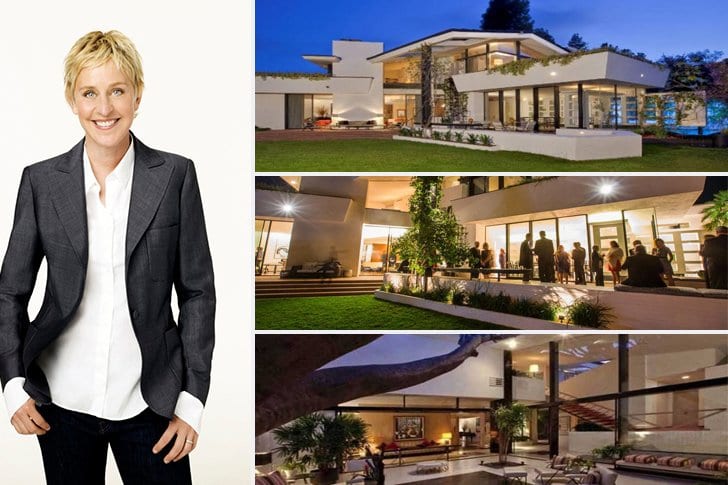
One of Ellen’s many properties that caught our attention is a mansion in Montecito. But what makes it so grand is the fact that she has TV host queen Oprah Winfrey as her neighbor. Imagine that! She and wife Portia de Rossi can live in peace and luxury and maybe pop in at Oprah’s abode for a Sunday hang-out. What a life.
This house was priced at $18.6 million, and while that’s a huge sum of money for regular folks like us, it was probably nothing for someone as big as Ellen. The house features floor-to-ceiling windows, ensuring natural light to illuminate the lovely spacious rooms, as well as a nice backyard where Ellen can entertain her guests.
Minnie Driver – $2.5 Million, Hollywood Hills
The British actress has wowed many with her portrayals in a host of films throughout her career. Driver has earned nominations for an Oscar in the Best Supporting Actress category for her performance in the 1997 film, Good Will Hunting. Her other major works include Barney’s Version, The Phantom of the Opera, and Big Night and Sleepers. Her career has already encompassed three decades and we are sure that she is more than eager to work for another three decades minimum.
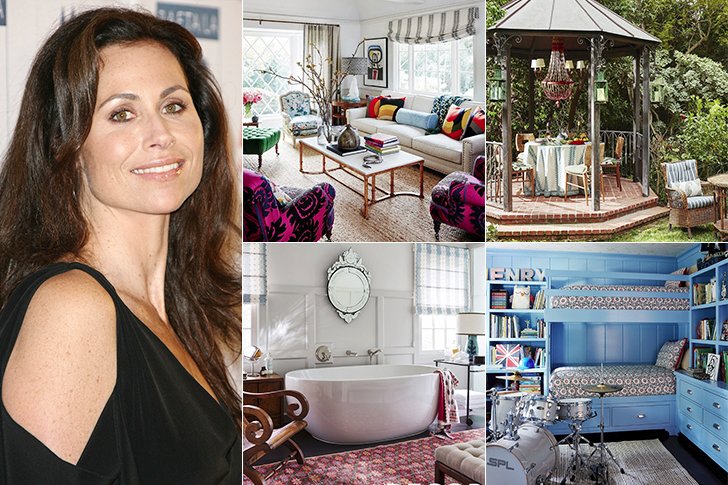
She bought herself a mansion worth $2.5 million in Los Angeles. With her exquisite English style, big bank account, and a great sense of interior design. Driver’s estate earned a spot in Elle Decor magazine. Her beautiful home includes three bedrooms, three bathrooms, and is very colorful and lively – just like the actress herself! We’re confident that she got suitable home insurance to match, too.
Tom Selleck – Sum Undisclosed, Bay Ridge
One of the most loved actors of his generation, Tom has been a part of a host of films and shows on television. His portrayal of Thomas Magnum in Magnum, P.I., the television series made him a superstar. Tom’s partnership with Jillie Mack has stood the test of time as the two have hitched to each other since 1987. The fortune he has earned for himself would easily keep him safe from bankruptcy.
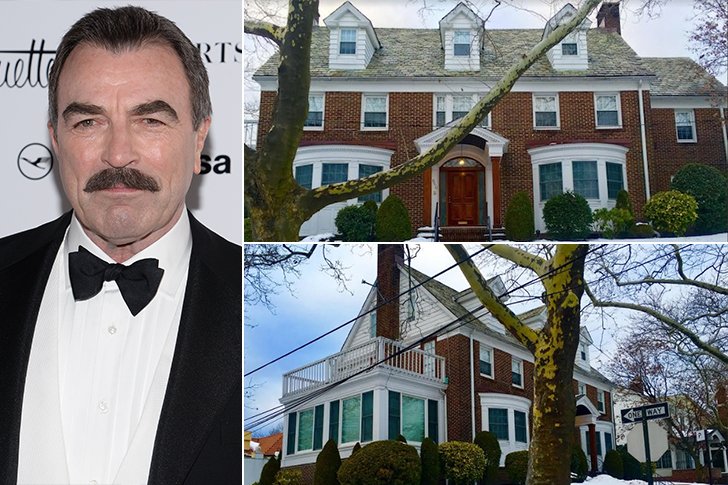
The house where Tom Selleck’s character, Frank Reagan, the NYPD Commissioner, lives in, in the show Blue Bloods has gained much attention due to its frequent appearance on the show, usually seen during dinner-time scenes. Fans of the show are well-acquainted with the interior of the house century-old house, which likely has significant property insurance. If you are a fan and want to visit the place, then the corner of 82nd Street in the Bay Ridge area is where you should be headed.
Bradley Cooper – $13.5 Million, Greenwich Village
Bradley Cooper had come a long way from the Actors Studio, where he was enrolled in 2000. He had some small roles then while his recognition came with his role on Alias and Wedding Crashers. His worldwide fame came after the highly praised The Hangover franchise, and Bradley catapulted into stardom afterward. Bradley’s latest appearance was in the 2018 version of A Star Is Born, a movie already greatly praised in Hollywood and the media.

The last estimate of Bradley’s bank account value was in 2017 when he was over $100 million. He has a close relationship with his mom and the two live together since his father’s passing in 2011. As for his property is concerned, Cooper owns one in Greenwich Village. According to the property reports, the actor had to shell out something in the ballpark of $13.5 million from his banks.
Dennis Quaid – Estimated $14 Million, Montana
Dennis Quaid is an American actor famous for a wide range of comedic and dramatic roles in films. He has acted in films like Dragonheart, The Day After Tomorrow, Vantage Point, and Footloose, among others. The Guardian named him as one of the finest actors never to have been nominated for an Academy Award. Dennis loves his ranch in Montana and it’s easy to see why.
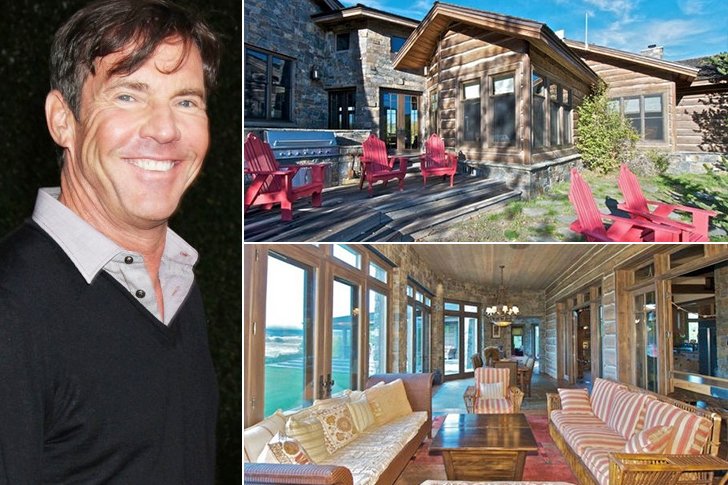
The property is decorated in an old-school ranch style with all the country essentials. There are guest residences for friends to stay over and many activities to be done around the estate. Other features include fishing ponds and horse stables, for people to have outdoor fun like horse riding. The house has an enormous area of land attached to it, so there’s enough privacy for Quaid to relax, safe from paparazzi-induced stress. We can’t imagine how much the insurance for this house must cost!
John Travolta – $12 Million, Florida
If you are a Hollywood aficionado, you must be well-conversant with the name of John Travolta. John has been an excellent performer and his suave demeanor has always attracted his fans to the theatres. He attained popularity during the 70s decade and went on to gift the audience with one stellar performance after the other in films viz. The Taking of Pelham 123, Pulp Fiction, Face/Off, Broken Arrow, and a lot more. He recently garnered attention as a producer of The People v. O.J. Simpson, the first season of American Crime Story.
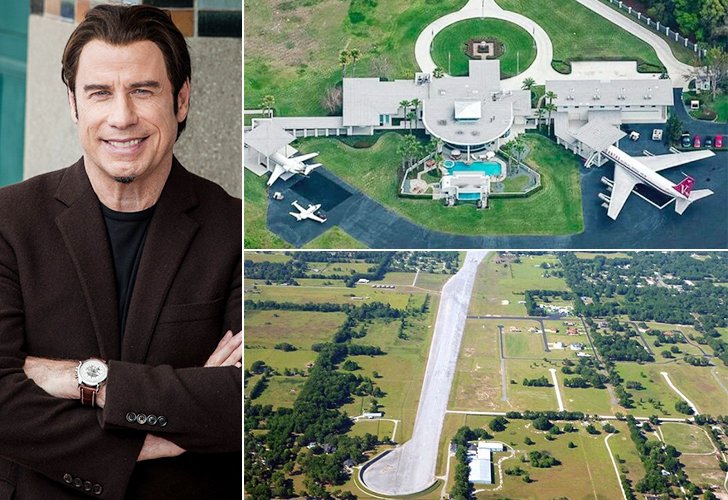
John Travolta sure earned big money throughout his career and with a bank account still growing. The movie star decided not just to build himself a mansion but an airport next to it, too. That’s right! Travolta has a $12-million Florida mansion/airport with airplane hangars, a landing strip, golf course, and pools and with a fantastic view to top it all. Does his home insurance cover airplane accidents we wonder?
Dwayne “The Rock” Johnson – Estimated $3.4 Million, Florida
Dwayne Douglas Johnson is a multifaceted personality who finds success in everything he does. From being a professional football to wrestling to business, and acting, he has done it all and has been successful. And the rewards soon came knocking at his door too. With $320 million, as his net worth, he need not think twice before buying all the luxuries in the world.
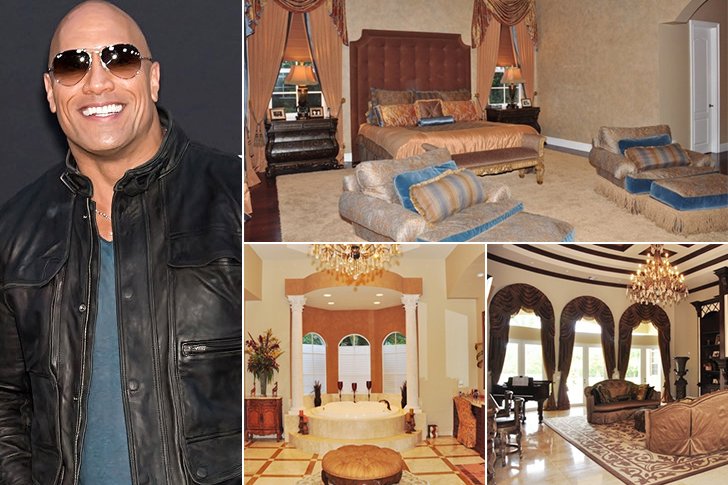
Dwayne Johnson may be popular as The Rock, but his property buying is far from rocky. He has exquisite taste in homes, as is easy to see from this stylish mansion, which cost him a massive $3.4 million. It looks more like a royal home than anything us mere mortals could wish for! There are rooms to relax in, such as a big jacuzzi and a movie theater, but also places to work out and stay fit, like his own private gym. The Rock can definitely rest assured that he’s got a palace to come home to after a hard-working day. Hopefully, he took out good home insurance just to be safe!
Joanne Woodward – Est. $7.499 Million, Connecticut
Born as Joanne Gignilliat Trimmier Woodward, Joanne Woodward is a popular actress, philanthropist, and producer who needs no introduction. In recognition of her talent, she has won three Primetime Emmy Awards and three Golden Globe Awards, and an Academy Award. She continues to entertain us even at the age of 90 and as her fans, we cannot complain. Joanne Woodward is a much-loved and highly appraised actress. She and her husband, Paul Newman, are an adored Hollywood couple.
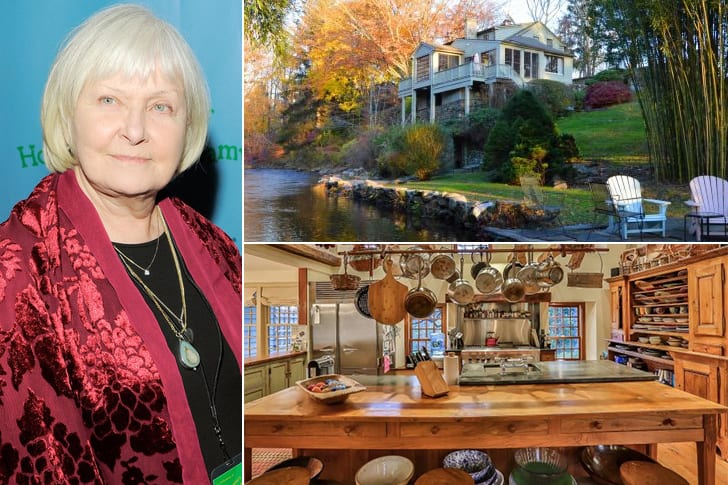
The couple lived happily on their 3 acres of paradise in Connecticut, a home that rests on a large estate of 20 acres that carries many memories over the many years the two of them lived in the home. The home was established about 250 years ago, so it is a piece of history for the land itself, not just this lovely couple. The house they lived in was a six-bedroom home that cost them all of $7.499 million. In 2008, Paul Newman died from a battle with lung cancer, and Joanne was left widowed.
Jennifer Lawrence – $8 Million, Beverly Hills
Jennifer Shrader Lawrence is a popular actress, who holds the credit of staring in movies that have globally grossed over $6 billion. Besides that, she was also the highest paid actress in the world in 2015 and 2016, which goes on to prove that she’s rolling in luxury. She is now 30 years old and thrives in a fortune of $130 million. We are confident that her wealth will continue to grow in the years ahead and she will be able to afford all the luxury in the world.

Jennifer Lawrence decided to spend some of her hard-earned money and treat herself by getting a private, 5,500 square feet, $8-million mansion which includes five bedrooms and six bathrooms. Spending additional money from her big bank account, Lawrence decorated her house with French elegance, with a touch of modern style and a private pool in a hidden backyard! Surely, she must have spent a lot of money on home insurance, too.
Katy Perry – $4 Million, LA
Born as Katheryn Elizabeth Hudson, she rose to fame by starting a career as a gospel music singer. She is now a singer, songwriter, and television show judge. The 35-year-old singer has a fortune of $330 million to her credit. Besides the wealth she gains from her immensely successful music career, her stint as a television show judge adds to her fortune too. She draws a salary of $25 million per annum, which only means one thing. There’s nothing in this world, that’s too expensive for her.
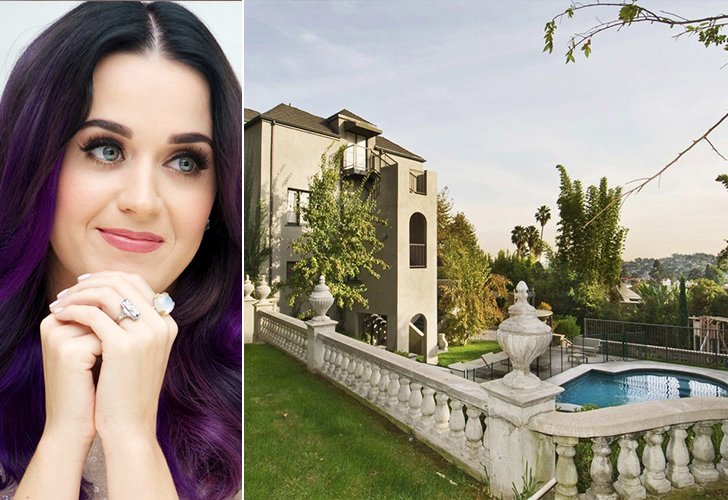
Famous singer Katy Perry purchased herself a home in Los Angeles worth $4 million and decided to spend some of her money from her impressive bank account. She decorated her new house in Mediterranean style with a huge outdoor pool. The mansion includes four bedrooms, five baths and, of course, has a walk-in closet! Her home insurance must be as big as the house!
Jane Fonda – $13 Million, Beverly Hills
Jane Seymour Fonda is an actress, former fashion model, and a political activist who is a household name. Her flawless acting won her numerous awards including seven Golden Globe Awards, two Academy Awards, two BAFTA Awards, and a Primetime Emmy Award. Besides that, she is also the recipient of the AFI Life Achievement Award, and the Honorary Golden Lion. Legendary actress Jane Fonda loves having her own personal style represented in her home!

Just take a look at her 7,102 square feet mansion; with four bedrooms, seven bathrooms, a glass elevator (wow, did her financial adviser look into this?), not to mention a giant walk-in closet. And whenever Jane wants to go for a dip, she dives into her solar-heated pool!. No doubt the swimming pool company went to extreme lengths to meet Jane’s personal needs. We are sure that the 82-year-old has a comfortable life from her $200 million net worth, even if she were to retire today.
Celine Dion – $65 Million, Florida
This musical sensation and diva needs no introduction. She stole a million hearts every time she set out to sing. And Céline Marie Claudette Dion CC OQ has a massive fan base across the globe. The recipient of five Grammy Awards is now 54 years and is nowhere close to retirement. And this means her wealth of $37.5 million will continue to increase and give her a life of luxury and comfort.

Celine Dion definitely knows how to enjoy her popularity and huge back account. With her net worth estimated at $380 million, the diva had an amazing Water Park Mansion built in Florida. The Bahamas-style mansion has eight bedrooms, a game room, a media room, a massage room, a kitchen, a dining area, and pools, water slides around the house, as well as tennis and basketball courts. With a private beach of its own, we hope this little paradise has great home insurance!
Max Baer Jr. – Est. $800,000, Paradise Palms
The famous Jethro Bodine of the comedy series “The Beverly Hillbillies” lives in a Mid-Century modern styled home in Paradise Palms, Nevada. Maximilian Baer Jr, the son of the boxing champion Max Baer to his wife, Mary Ellen Sullivan. Baer Jr. preferred to be called Jethro Bodine now as he said he would like to be a distinct personality away from his father’s image. Not because he does not like his father; on the contrary, he thinks that he could not live up to his father’s name.
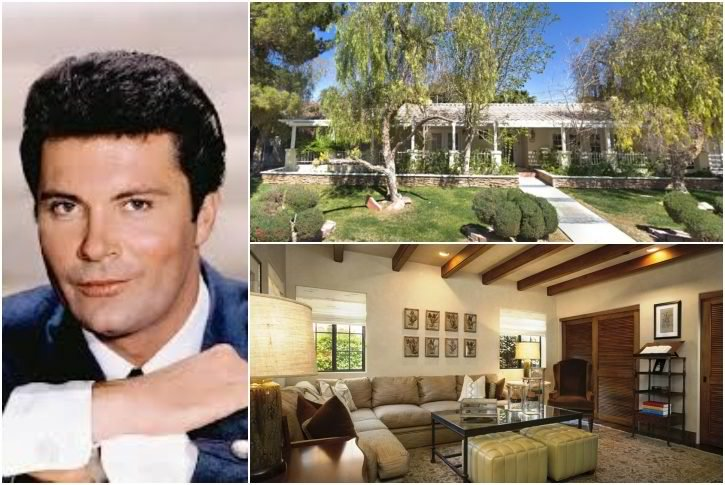
The actor, screenwriter, producer, and director bought this property along Pueblo Way street. The neighborhood in Paradise Palms also houses other big celebrity names like Debbie Reynolds and Johny Carson. Paradise Palms won the American Builder magazine award as a best-planned community in the country.
Kathie Lee Gifford – $7.8 million, Greenwich, Connecticut
Kathie Lee Gifford owns a house in Greenwich, Connecticut & likes to spend most of her time there. She says that the backyard is her favorite location in her huge estate. It’s located in Riverside, a luxurious part of Greenwich.

In the backyard there’s a large grass area with numerous seating areas and views of Long Island and Manhattan’s skyline can be seen in the distance. The house looks like a Spanish Revival style home and has a tennis court and a pool, plus parking spots for the staff.
Linda Evans – Est. $2,700,000 Million, Beverly Hills
Dynasty lead actress Linda Evans bought this house at Beverly Hills Post Office area in 1981. The ranch-style house is a one-story building sitting on 3,900 square feet area which dates back to 1937. It is fenced with tall hedges and a massive and elaborate gate. The house has four bedrooms and five and a half bathrooms. There is a detached space that serves as an office or guest house. There are an outdoor swimming pool and a circular motor court.
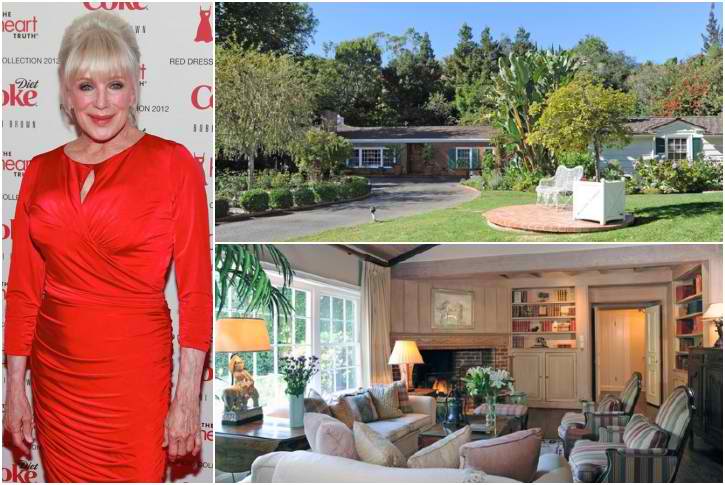
The house is very close to nature, being surrounded by different enormous ancient trees and a lush rose garden. However, Evans loved this house of hers in Beverly. She had to move to Washington. She initially posted the house for rent for $14,500 per month but later decided to sell it for good.
Rupert Grint – London, $2.71 Million
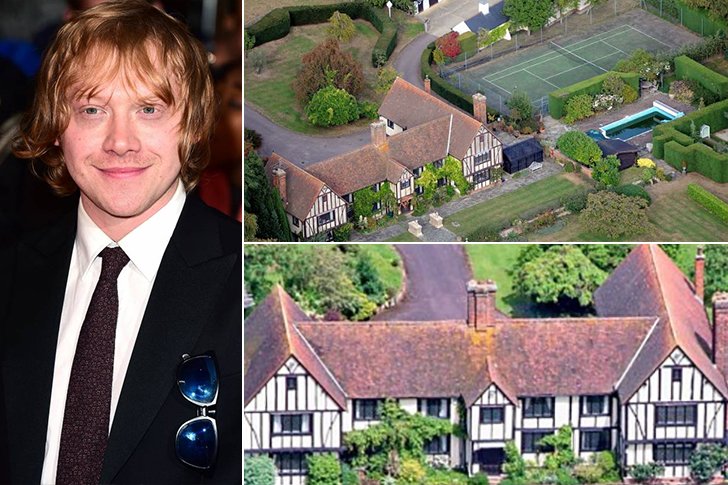
You sure know actor Rupert Grint for giving life to the role of Ron Weasley in all the Harry Potter films. Appearing in the whole movie franchise had helped him maintain a stable and an enormous income for so many years. With all the fortune he had accumulated, Grint got into real estate investing and has owned and sold several homes in England through the years. He owns a seven-bedroom 16th-century home in London which is reportedly worth around $2.71 million. His home comes with stables, a tennis court, and a pool. While he hasn’t starred in many big movies as of late, Grint has had the luxury of taking on passion projects and series that he’s interested in. Some of these include ABC Murders, Snatch, Servant, and Sick Note. While we do miss seeing him as Harry Potter’s sidekick, we can’t wait to see what more this talented Brit has to offer!
Pierce Brosnan – Malibu, $2.82 Million
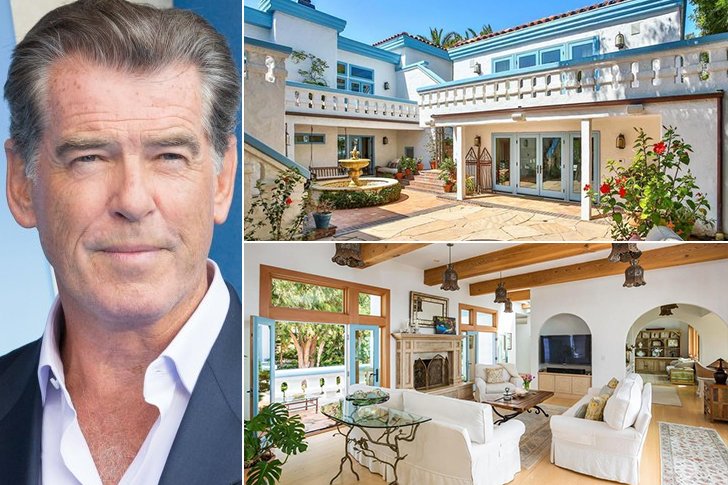
Pierce Brosnan has been quite successful in the acting scene since the 1980s, and he was best known as James Bond. Of course, with his dashing good looks and acting chops, he deserved that role and played it to perfection. He found immense success in that franchise alone, and Brosnan earned enough that he didn’t really have to work that much after his peak years in Hollywood. In fact, today, the fortune he has in the bank is said to be at $80 million. Back in the 1990s, he purchased a retreat in Malibu that had three bedrooms, a double-island kitchen, five fireplaces, and a breathtaking view of the ocean. The house was sold for $2.6 million back in 2011. In 2017, however, the house was sold to a new owner for $2.82 million. While we’re sure Brosnan has another enviable property elsewhere, this Malibu retreat was dazzling and fit for someone as talented as he is. In terms of his latest projects, Brosnan will be appearing in a new movie called The King’s Daughter.
Idris Elba – $3.4 Million, Hackney
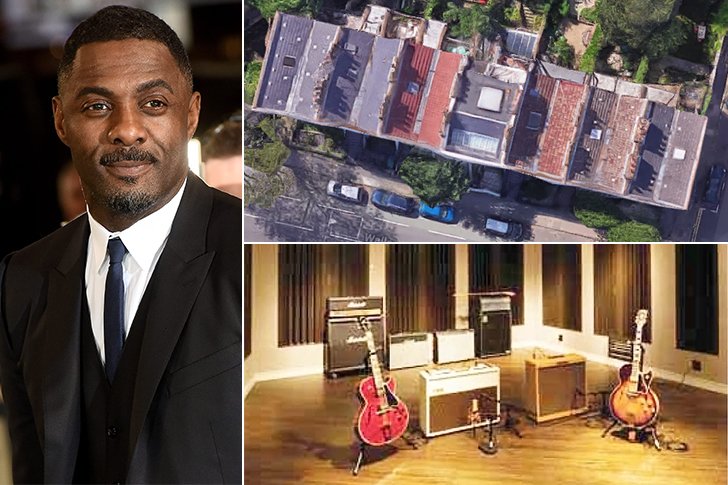
He was just named the hottest man on earth for 2018, according to People, and rumors about him becoming the next James Bond have been spreading more and more of late! Idris Elba is likely to be living the dream lately as his finances, business, love life, and career seem to be going according to plan. However, his relationship with his neighbors is quite tense as his new plans to add an underground music studio in his luxurious house has gotten the Hackney citizens furious! His house has already a worth of almost $3.5 million and we cannot possibly fathom what its insurance would be after the new addition!
Samuel L. Jackson – $13 Million, New York
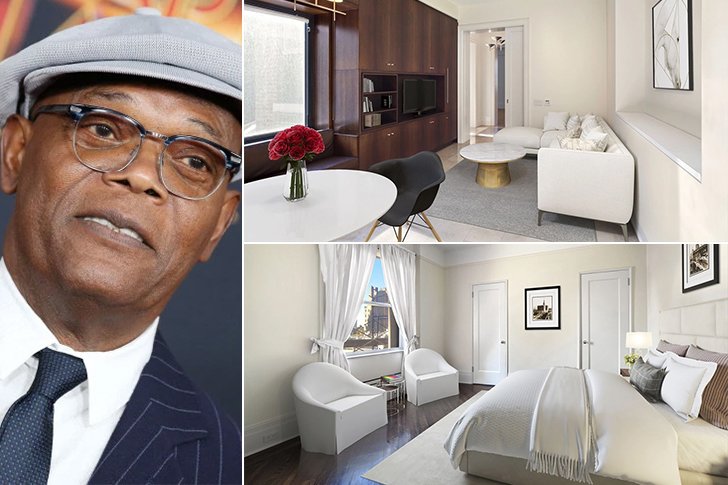
Aside from his amazing movie performances like playing Takoda in the 2019 film The Last Full Measure, actor Samuel L. Jackson has another skill that fans might not have known about. He’s now passionate about apartment flipping. In 2005, he purchased a beautiful $4.8M apartment in Manhattan’s Upper East Side and lived there for 13 years. He then decided that he would make some serious money selling it, so he gave the 4-bedroom, 3.5-bathroom property a total make-over. With his alterations, $13M became the asking price. Wow, those must be some very pricey renovations!
Sam Elliott – Undisclosed Amount, Malibu
Though known typically for starring in Westerns, Sam Elliott went a different route for the 2018 film A Star is Born. His role was the manager and brother of Bradley Cooper.
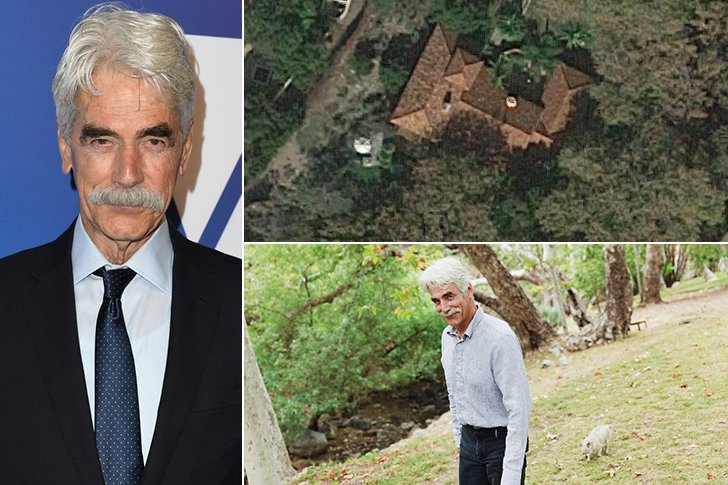
Since 2016, he has been a member of the cast of the Netflix series, The Ranch. However, Malibu is the site of his actual home. We don’t know the price, but all the signs are there that he’s in love with the place. While the wildfires raged in California in 2018, he assisted the firemen fighting it so as to try to prevent his real estate from being damaged. Elliott is the voice of Trusty in the 2019 film Lady and the Tramp.
Kristen Stewart – $70 Million
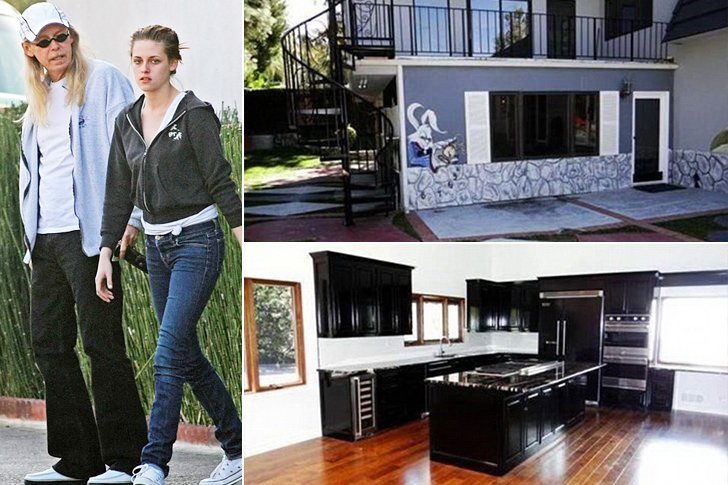
Kristen Steward is a symbol of beauty and is a world-famous actress, primarily for her role on The Twilight Saga, of course. She is also the first actress from the U.S. to receive the César Award, and the total amount of cash earned by the movies she was in was said to have reached $4.3B. Being the most expensive actress in 2010 and again in 2012, Kristen’s fortune is now an estimated at $70M. After her relationship with actor Robert Pattinson failed, Kristen returned to her parents’ home in Los Angeles, where she currently resides.
John Wayne – California
When he was still raising his kids, the late actor John Wayne owned a lovely ranch home in California situated far into the valley of San Fernando. Wayne’s vast property on the hills boasts a pool with a pool house and a racehorse track.
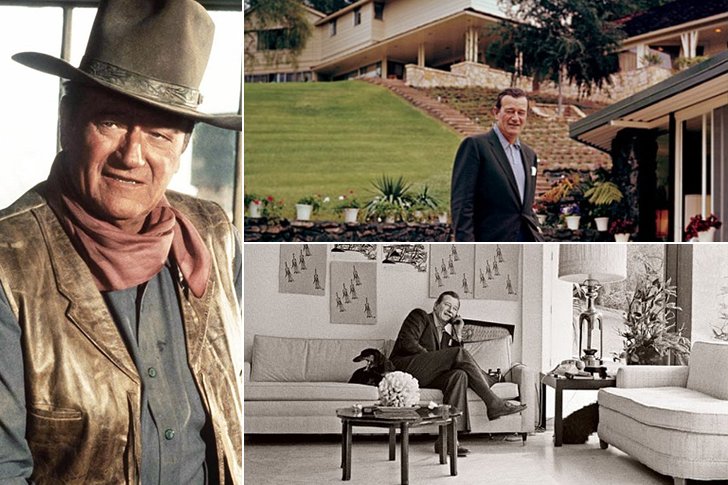
Instead of the main house, the pool-house was the favorite hangout spot for the family. It had a bar, a kitchen, bedrooms, and baths. The decor included marble floors and lava-rock walls in black. It also had floor-to-ceiling glass plates facing the pool. Asian furniture and art were also prominent.
Heidi Klum – $24 Million, LA
Famous supermodel Heidi Klum attained worldwide fame when she was chosen as Victoria’s Secret Angel. She was the first model from Germany to be so. She has grabbed a number of modeling assignments throughout her career and has also featured on the cover of the iconic Sports Illustrated Swimsuit Issue. In addition to that, Heidi has also starred in films like Ella Enchanted and Blow Dry and also happens to be a judge on America’s Got Talent, the reality show on NBC.
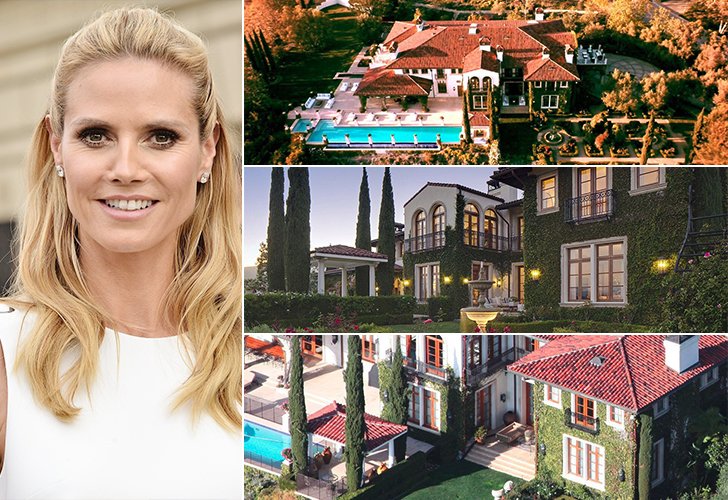
With a big bank account ready for spending, decided to buy herself an incredible $24-million Italian-style mansion in Los Angeles. Her huge home includes eight bedrooms, ten bathrooms, a children’s playhouse, pool, a spa, fountains, a golf court, and hiking trails. Decorated with a very refined taste and elegant touch, the supermodel took the wisest route and secured excellent home insurance as well.
Cher – Estimated $45 Million, Malibu
Singer Cher has made millions with her hit singles. Hailed by all and sundry as the Goddess of Pop, she made us swoon to her numbers like Half-Breed, Tramps & Thieves, Dark Lady, and Gypsys. She has also been quite a talented actress as well, gifting us with films such as The Witches of Eastwick, Silkwood, Moonstruck, and Mask. The 74-year-old is still going strong.
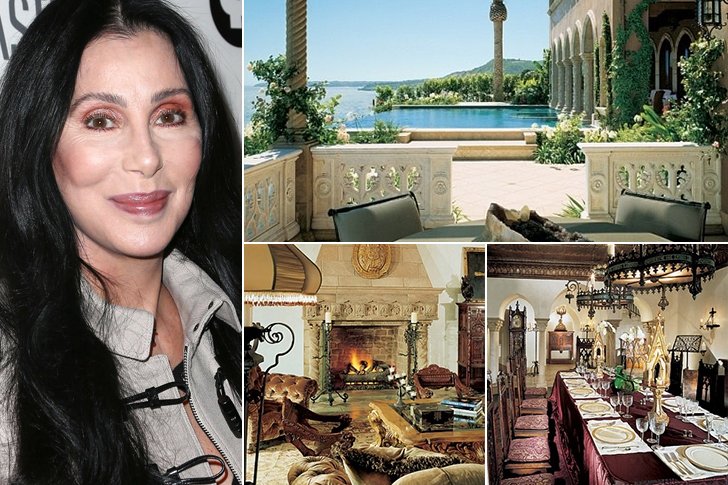
An amazing mansion was the logical result of a successful career. Cher opted for a Malibu mansion decorated in a traditional Italian style. The house almost looks like a palace, with shimmering chandeliers and glorious artifacts all over the place. This singer can lounge in her private pool with a view of the ocean. We’re sure her home insurance fees were quite steep. But who cares when you have a net worth of $320 million? This queen deserves her palace: good for you Cher!
Nicole Kidman – $4.8 Million, Australia
Kidman has been enthralling her fans with her gorgeous demeanor and astounding acting prowess ever since she made her debut in the show business in the year 1981. We have loved and adored her in films such as Far and Away, Cold Mountain, Eyes Wide Shut, and Aquaman. As per a current estimation, the Australian actress has something in the close proximity of $183 million in her banks.
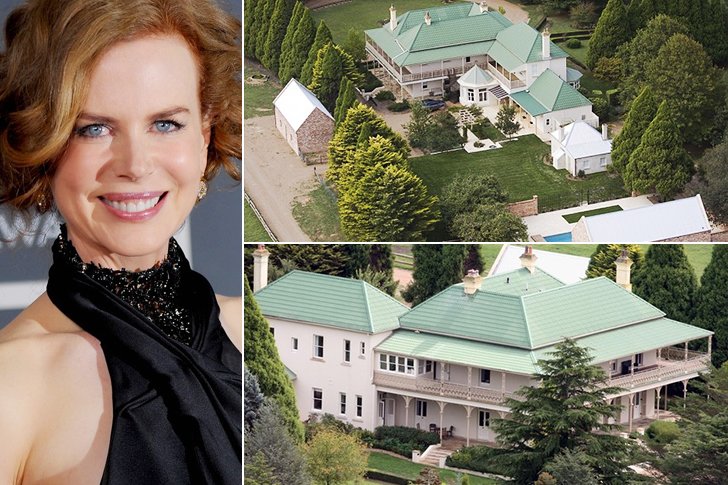
Kidman clearly agrees with Liam Hemsworth’s decision to stick to his roots. The gorgeous Australian redhead bought herself a big mansion in Australia, which she could easily afford with an estimated net worth of $300 million. Nevertheless, her work in the USA means she needs a home there too, so she also owns a villa in LA and a flat in – you guessed it – New York. We can only imagine that buying homes is as easy as doing groceries when you have this much money available to you!
Jessica Alba – $9.95 Million, Beverly Hills
Jessica Alba has done a great job making a career in Hollywood. She earned a breakthrough with the 2003 dance film, Honey. She has performed exceedingly well in other projects namely, Fantastic Surfer: Rise of the Silver Surfer, Spy Kids: All the Time in the World, Valentine’s Day, and Machete Kills. She has displayed some good entrepreneurship skills and has made investments in her own consumer goods company, The Honest Company.
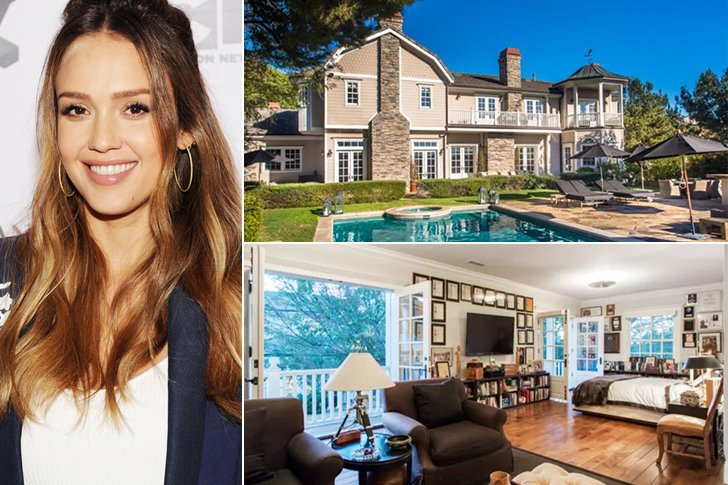
With such a career come celebrity perks, such as great deals on houses in Beverly Hills! Which realtor wouldn’t want to boast with a home owned by the famous Alba? Her property is a stunning mansion with lots of windows to enjoy the natural landscape around the house. There are a pool and seven bedrooms for her family and any guests to enjoy their time in. With $340 million as her net worth, the actress can probably afford the home without taking out any loans. Now isn’t that a great life?
Maria Menounos – $9 Million
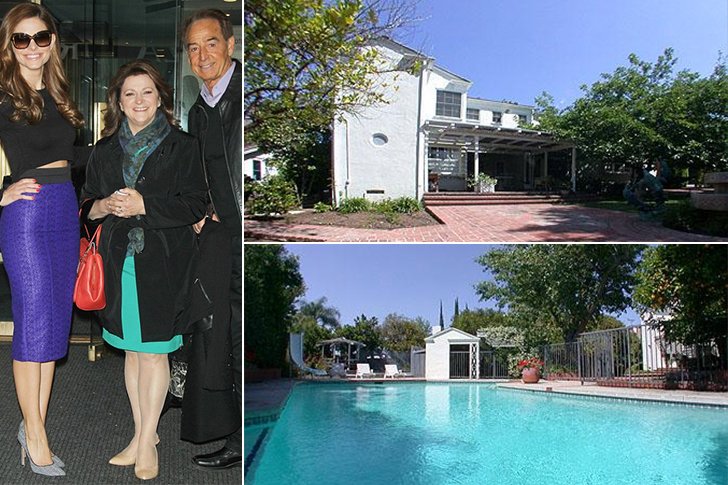
Maria Menounos has acting, journalism, TV hosting, and even pro wrestling in her portfolio, as she is signed to WWE currently and has also been an ambassador. Audiences may recognize her from Today, Access Hollywood where she corresponded, or from E! News and Extra shows, both of which she hosted. In 2018, it was estimated that Maria’s fortune was already around $9M. Maria, her boyfriend Keven, and her mom and dad all live together in a home featured on Chasing Maria Menounos reality TV show. As of 2017, Maria and Keven are married.
Kenny Smith – Encino – $3.6 million
Kenny Smith, aka Jet Smith, a popular NBA player and a basketball analyst. Along with his wife, model-actress Gwendolyn Osborne, he has put up their home in Encino for sale at $2.795 million.
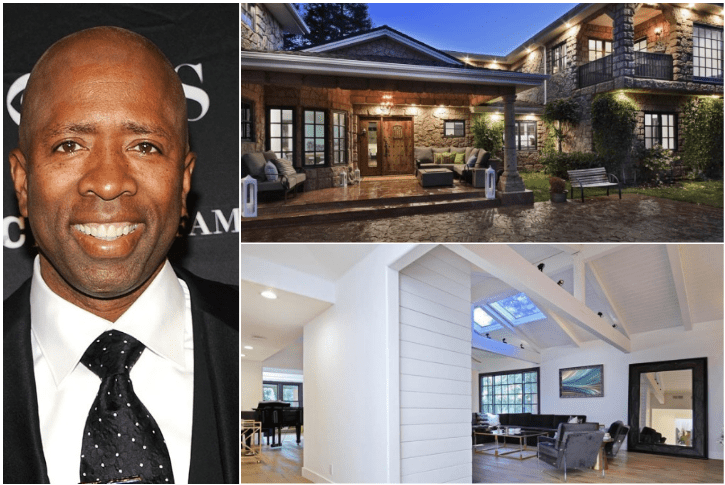
Sprawling over half-acre, the construction of this contemporary French country estate dates back to 1963. To remodel this property, Smith and his wife spent a whopping $1.85 million. While spending half a million dollars on renovating a property might seem high, it doesn’t matter given their enviable net worth. And one look at the luxuries this house now has will make you think the price is reasonable.
It has numerous enviable features like a guesthouse, a swimming pool, skylights, vaulted ceilings, a sunroom, an office, and a home theater. Besides that, the sprawling living space consists of six bedrooms, eight bathrooms, and massive living space. The indoors of this property measures around 6,106 square feet! We are sure that the place they call home next will be oozing with luxury too.
Sharon Stone – Est. $8.995 Million, Beverly Hills
This stunning celebrity made her way into the industry via TV commercials, printed advertisements, and modeling. From there, she expanded her prospects into acting, with her making her first film appearance in a comedy-drama movie. After sometime, she was able to finally get a film role in which she had lines to say. Stone eventually became a sultry goddess via a role in an erotic thriller movie.
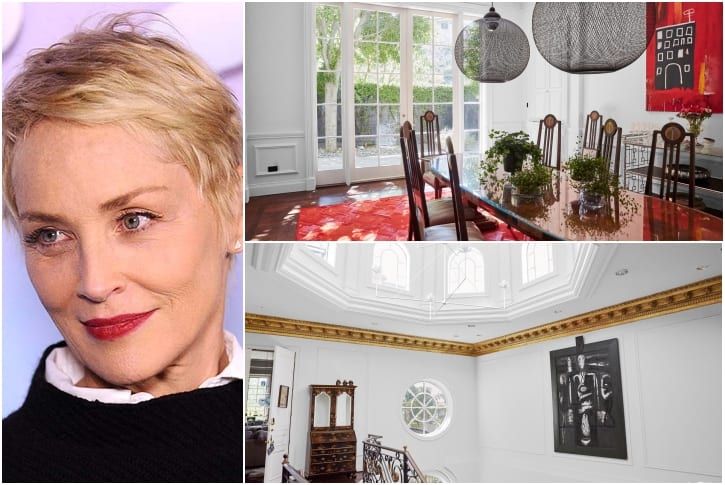
With all her years in the business, she has managed to gain around $60 million in net worth. This has allowed her to purchase a luxurious home in Beverly Hills in 1993. Around eight years ago, she put this property on sale. Stone was able to sell it for $6.6 million. In actuality, the final selling price was significantly lesser than what she had in mind, which was almost $11 million. Right now, Sharon lives in a contemporary design mansion in Los Angeles, along with her 3 sons.
Eddie Murphy – $85 Million, Hollywood Hills
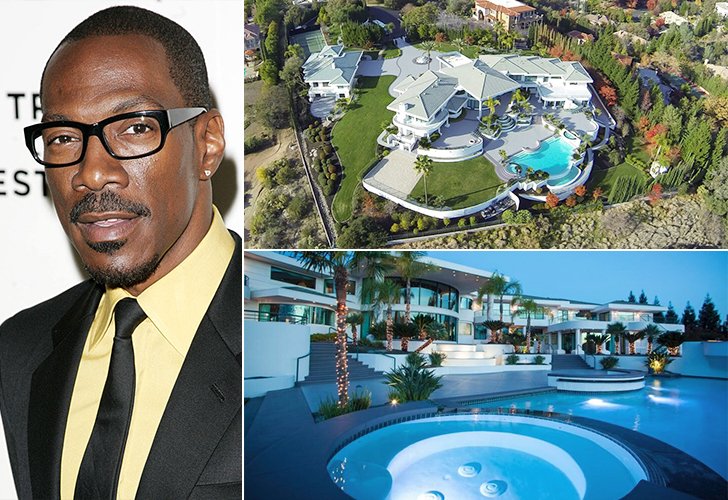
Eddie Murphy bought his Hollywood Hills dream mansion for $20 million and without really putting a dent in his bank account balance, turned his home into a $85-million worth estate with a total of thirty-two rooms, including nine bedrooms, nine bathrooms, and swimming pools, together with a tennis court and a guest house. His family home is also surrounded by riding and hiking trails. Hopefully, the actor has a suitable home insurance for his little paradise.
Rita Ora – Est. £1.3 Million, London
The generous pop music star, Rita Ora, gave her £1.3M house to her parents. The singer is very open to telling the crowd how she loves her family and how grateful she is for all the support they gave her through her career. Ora said that she doesn’t mind having her own space in the UK because she is always on tour and traveling anyways.
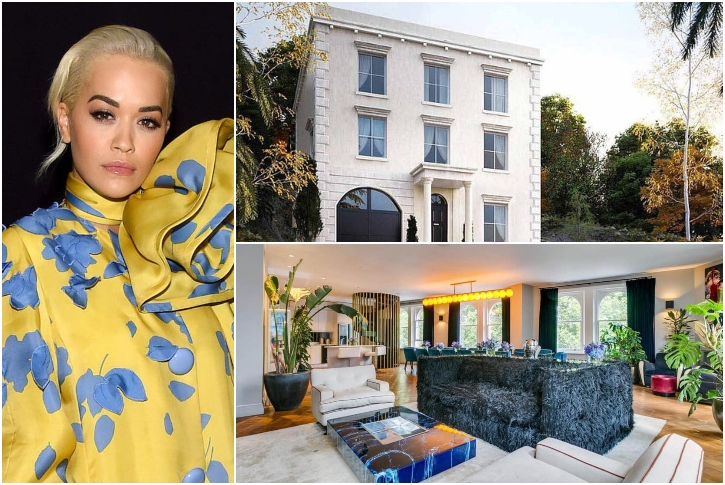
The mansion is in her native town Kosovo in Northern London. It has six big bedrooms. Her mother loved the interior design of this house and could not be any happier to reside in the lavish home. She did not spend so much time in the house as she knew the moment she bought it that the house would be her parents.
Alan Alda – Price Undisclosed, New York City
Alan Alda s a much-loved actor and screenwriter of many accomplishments, like six Golden Globe Awards! He is one of the best in the entertainment world, and he has had opportunities to participate in several of the most popular television shows, like The West Wing, M*A*S*H, and 30 Rock. Alda also has credits for starring in Bridge of Spies, Crimes and Misdemeanors, The Four Seasons, and Marriage Story, among other films.
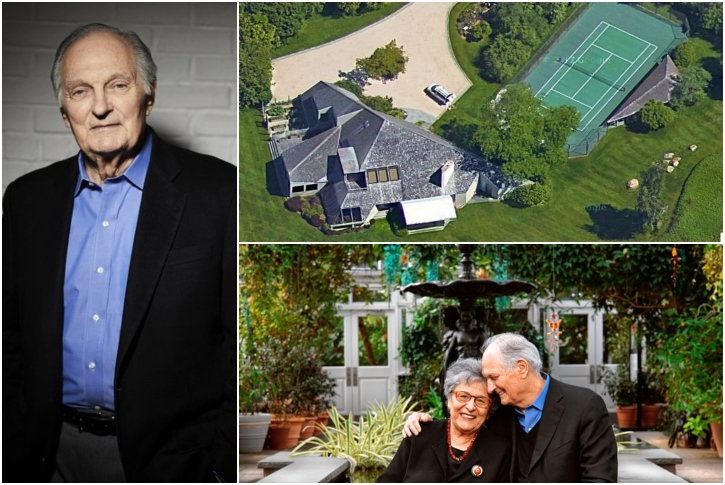
Alda’s home is in New York, tucked away in Water Mill. The house is a grand and lavish mansion with many alluring features. Lush, landscaped land surrounds the villa, and there’s even a tennis court in the front of the home. While the price hasn’t been disclosed, it is worth many millions! Alda’s lifestyle is one of comfort and class, with plenty of luxury, of course.
Rick Harrison – Est. $4 Million – Las Vegas
Richard Kevin Harrison is a businessman, co-owner of the World Famous Gold & Silver Pawn Shop, and a popular television personality. Rick Harrison is considered the wealthiest pawn star working on their family business. He has a net worth of 8 million dollars. His income usually comes from his reality TV shows and investments like real estate and the pawnshop business. He also owns several houses.
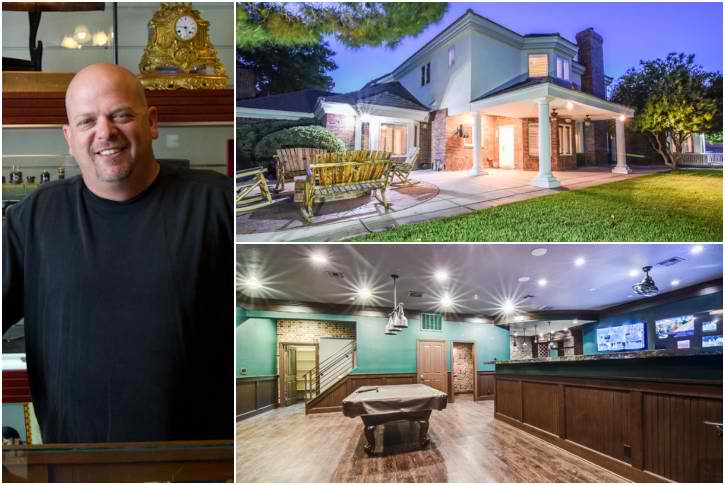
One of the houses he owns was sold for $3.9 million, which is a luxurious estate in Las Vegas. He also bought a house that costs $4 million. Though his wife did all the interior designing, he shared that he helped with the renovations. The house has a 1985 vibe that was built in 2005. He also has a massive car collection and horses which speak volumes about his fortune. Surely being rich has all its perks.
Jamie Lee Curtis – $4 Million, Santa Monica
Jamie Lee Curtis is a popular American actress, activist, and author who has been globally famous since her debut in 1977. Since then, until now, she has won numerous awards, many fans, and enviable net worth. Since 2002, Jamie Lee Curtis and her husband Christopher Guest have settled down in their 1924-built house in Santa Monica. The house has an interior of 4,108 square feet with a total of five bedrooms and four bathrooms.
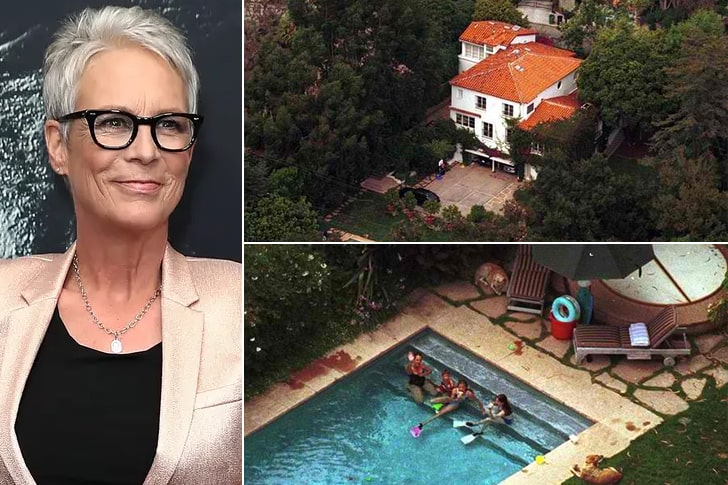
They’ve put in a lot of work into making the house the way it is today. In fact, they’ve landscaped the entire backyard themselves! The couple has done such a good job with it, that in 2016 their house was featured on Architectural Digest. They might have purchased it for approximately $2.2 million, but its current value is said to be over $4 million! Jamie is currently working on the much-anticipated Halloween Kills film.
George Strait – Est. $4 Million, San Antonio
George Harvey Strait Sr. is a 68-year-old singer, actor, music producer, and songwriter who needs no introduction. His popularity went on to earn him the title of “King of Country.”George Strait is a man who doesn’t have the word ‘bankruptcy’ in his vocabulary. He has accumulated a massive net worth for himself, and his fortune affords him a luxurious way of living. It comes as no surprise that he has a gorgeous home sitting in Texas, in San Antonio.

The home cost him $4 million and is worth every penny. This star country singer and his wife Norma sure do have impeccable taste. The style and the décor of their home are lovely, and it is warm, luxurious, and cozy all at the same time. The home sits on 7925 square feet of land, and the couple has invested a lot of time and money perfecting the details to their liking.
Kylie Jenner – $3.3 Million, California
Kylie Kristen Jenner is a reality television star, model, socialite, and businesswoman. She rose to fame by starring in the television series Keeping Up with the Kardashians. Besides being a reality television show star, she also owns a cosmetics company Kylie Cosmetics. The 23-year-old’s company is now valued at $900 million and her wealth stands at $700 million.
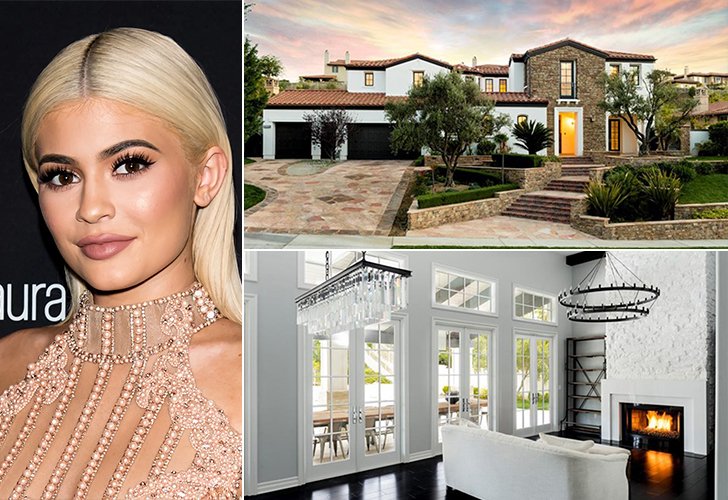
Socialite Kylie might be the youngest of the Kardashians, but her bank account has stacks of cash from her earnings! And to prove it, check out Kylie Jenner’s 4,851 square feet mansion with a beautiful swimming pool and many seating areas. And talk about loving the finer things in life – Kylie even got her own custom interior design, with the house having a breathtaking black and white theme! The house has three walk-in closets for her massive collection of clothes, shoes, and purses.
Kenny Chesney – Est. $11 Million, St. John U.S. Virgin Islands
Kenny Chesney made his wealth through his professional music career in the country genre. He is a country star today and has released more than 20 albums over his time in the music scene. All of Chesney’s collections have a minimum of gold certification or more. He has the honor of having been awarded the Entertainment of the Year Award for several years, in 2004, 2006, 2007 and even in 2008.

Chesney’s achievements are many, and it is all because of his undeniable talent. In 1997, Chesney took the New Male Vocalist of the Year title, and in 2002, he bagged the Top Male Vocalist of the Year title, too. In 2005, Chesney took the Triple Crown Award. He has a net worth amounting to $225 million, and so him owning a home in the range of $11 million isn’t a surprise.
Chuck Norris – Est. $3.5 Million, North Tustin
Chuck Norris is an actor and professional martial artist. He owns a rustic property tucked away in North Tustin. He purchased the estate in the 1980s when it carried a price tag of only $3.5 million. The house itself and the guest house add up to 5,500 square feet of living space! A steep gated driveway leads you to the exquisite home that lies on 2 acres of land. Norris installed a lake on his property, and a saltwater swimming pool. The property is surrounded by what the listing describes as “a million dollars’ worth of trees.”
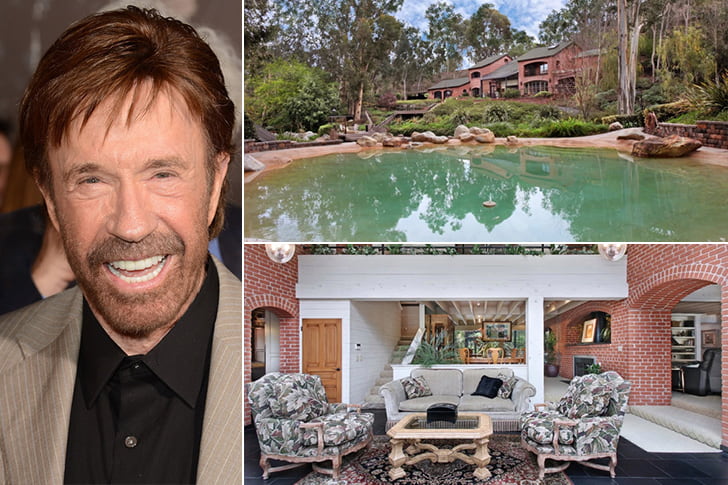
The main house is a two-story building with an entry foyer at its center. The foyer features floor-to-ceiling glass. Exposed brick is expertly used in the design, and wooden beams and posts introduce a more rustic element also o the brickwork. The home doesn’t feature an open floor plan layout, but it is still a gorgeous home nonetheless.
Guy Fieri – Est. $1.47 Million, Santa Rosa, California
Good old Guy Fieri is the man who makes your mouth water! No, we’re not talking about his physique, but we’re talking about his delicious TV shows that display the best and wildest foods across America. Fieri searches out the biggest plates of the greasiest, most comforting foods you could imagine! This is a celebrity chef who built an empire of his won from scratch.
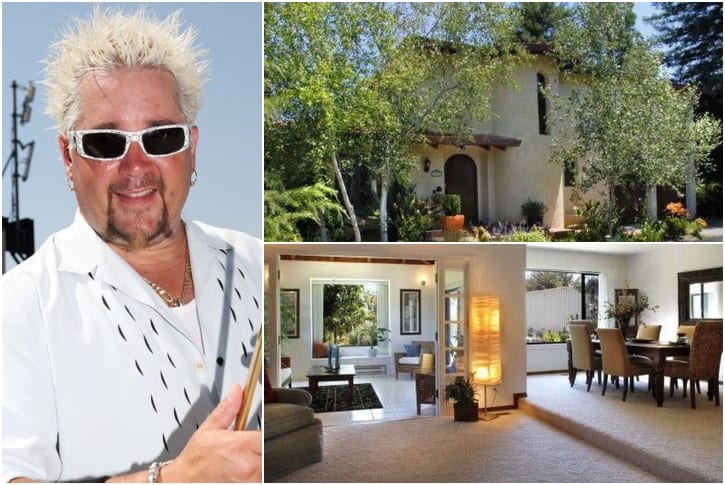
Guy didn’t always have a big bank account and a fancy car. But today he can afford whatever his heart desires! He owns a lavish and inviting home in Santa Rosa. We bet his kitchen is to die for! When Guy first saw the property, it was a dump, but he renovated and transformed the place into a palace of sorts! Guy owns three restaurants across California, and he is even an Emmy Award winner!
Robert Redford – Est. $7 Million, Napa Valley
The Golden Globe and Oscar-winning actor Robert Redford once abode in their family’s secluded mansion in Napa Valley Estate. The 5,255 square feet property has three bedrooms and 3.5 bathrooms. Redford and his wife, Sibyl Szaggars, bought this house in 2004, looking for a quiet place to settle in. The European-style house is called Danza del Sol, which means Sundance in Spanish. An elegantly styled fountain serves as the entrance of the house, and beautiful ancient oak trees surround the whole villa in the middle of the 10-acre land.
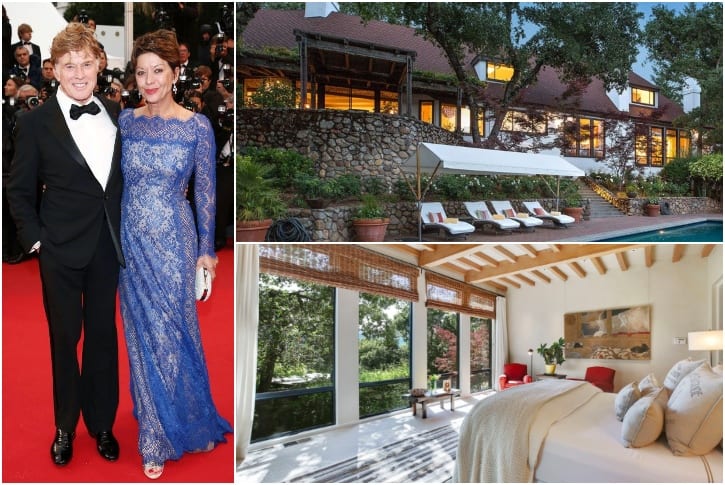
The property housed not only Redford’s family but also his wife’s artworks. Within the villa, there is a separate artist studio, a 907-square-foot house that has a bedroom and a bathroom in it. However, the couple moved their California base to the Bay Area and sold this Napa Valley estate.
Barry Williams – Est. $6.3 Million, Malibu
Barry Williams is a man we best remember form his role as ‘Greg Brady’ in the television series of mega-proportions – The Brady Bunch. He first appeared on the screen in Dragnet 1967, but he sure has come a long way since his debut. Williams’ bank account balance shows just how successful his acting career was!
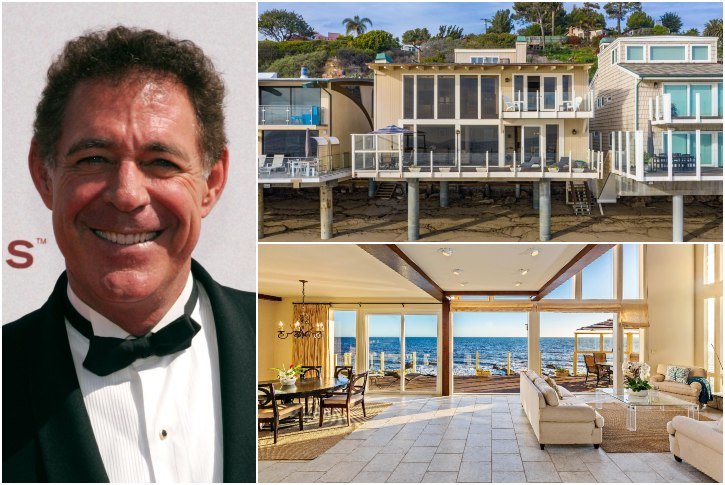
Barry once owned a glorious Malibu beach house that offered everything one could want from home, all for $6.3 million! Construction of this beach house dates back to the year 1974. It features a grand waterfront deck out in the front. While the back of the home has a neat little courtyard perfect for kicking back or for entertaining. It is a two-story building with magnificent views of the Pacific ocean.
Dennis Rodman – Est. $1.1 Million, Saddle Hill Ranch
Dennis Keith Rodman is a former professional basketball player who was famous professionally as “The Worm.” During his active playing years, he was playing on behalf of numerous NBA teams including the Detroit Pistons, San Antonio Spurs, Chicago Bulls, Los Angeles Lakers, and Dallas Mavericks. All his professional success earned him a massive fortune. The 59-year-old NBA player has a net worth of $500 thousand. NBA star forward Dennis Rodman owned this house in Orange County since the late 1990s before he sold it for $1.1 million.
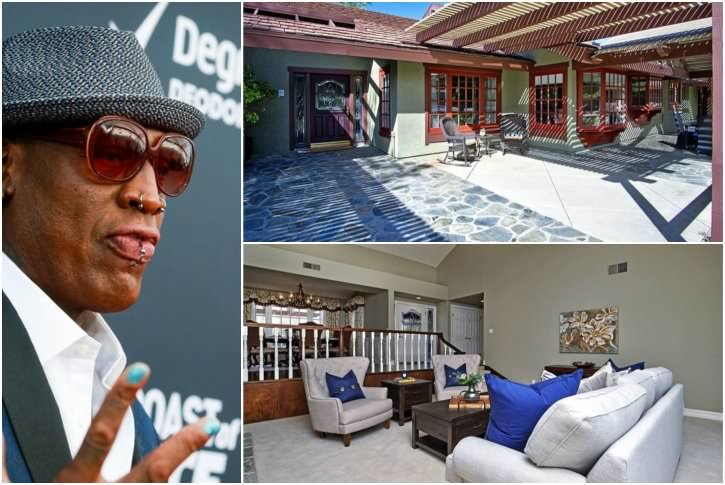
The house was built in 1976, featuring an enormous double door entry that gives a ranch house vibe. The property is 5,000 square feet with five bedrooms and 4.5 bathrooms. The luxurious master bedroom has a steam shower and a sauna. The house also has three garage parks and a pool. To complete the ranch vibe, there is also a storage barn and horse corral within the fence of the house.
Blake Shelton – $3 Million, Nashville
Blake Tollison Shelton is a popular country music singer and television personality whose charming smile stole every person’s heart. He holds the record for staying at the top of Billboard Hot Country Songs chart for five weeks. With a net worth of $31.5 million, he was ranked by Forbes as the highest paid country music stars. Doesn’t that speak volumes about his skills as a musician? Blake Tollison is popular for using his finances the right way and investing in his future.
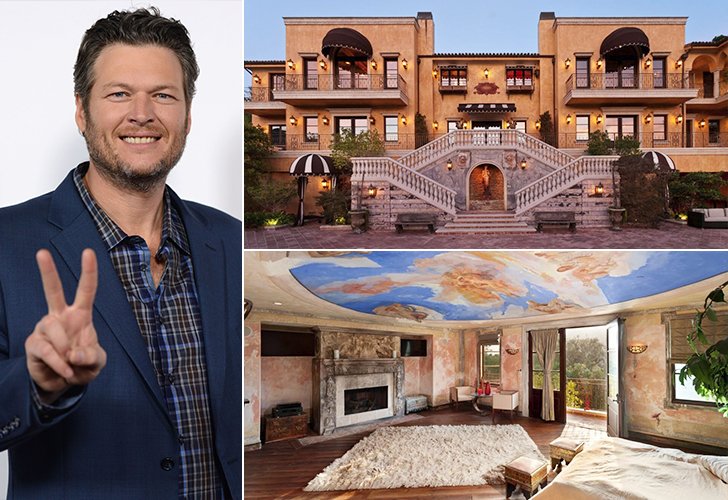
Blake Shelton and his ex-wife, Miranda Lambert, once decided to buy a mansion in Nashville that includes five bedrooms and eight bathrooms – each one of them decorated with art pieces from different centuries. After their divorce, they sold the estate and boosted their bank account with $3 million, so Shelton now lives in a beautiful Hawaiian-style house along with his girlfriend, the world-famous pop icon Gwen Stefani!
Gene Hackman – Price Undisclosed, Santa Fe
Gene Hackman has been a famous name in the world of entertainment for over sixty years. He is someone who you can safely say has been all over and done it all. He has delivered exceptionally in his roles in I Never Sang for My Father, The French Connection, Mississippi Burning, and I The Royal Tenenbaums. Gene has quite a collection of accolades as well, which includes two BAFTA awards and three Golden Globes.
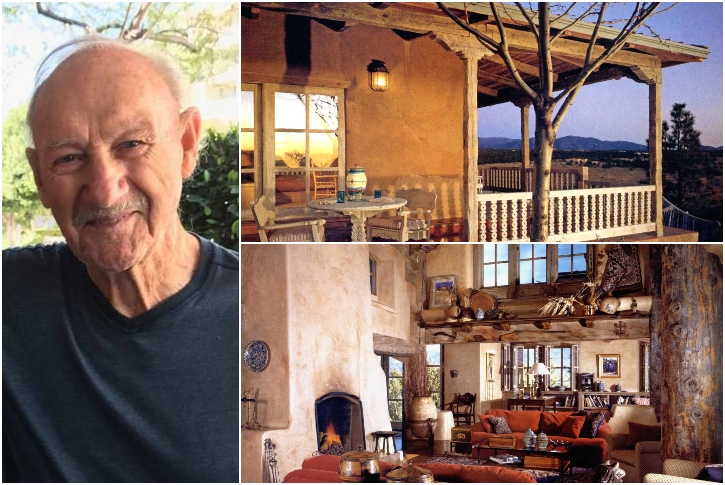
Hackman’s home in Santa Fe is a rustic estate that rests on 12 acres upon a hilltop. The house is positioned such that it offers exquisite 360-degree views of the Colorado mountains and the surrounding area. Hackman has had the building remodeled into an artistic and character-filled piece.
Aaron Rodgers – $28 Million, Malibu
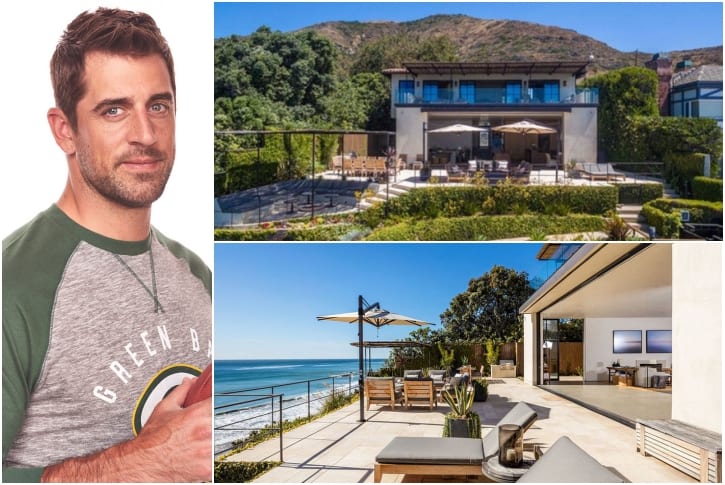
Aaron Rodgers’ career with the Green Bay Packers is looking better than ever so it comes as no surprise that this star athlete has a $100-million net worth. In fact, on December 2019, he figured he’d make one of the biggest real estate deals of that year, buying a $29-million villa in Malibu. The lot has two different structures, a 4-bedroom, 4-bathroom, 2-story main house and a guesthouse with two bedrooms and a garage. One of the most notable features of the main house are the glass walls that are facing the ocean. It becomes complete with its backyard sitting area and swimming pool. Given Aaron’s $120-million fortune, he probably didn’t blink twice before buying it!
Dr. Phil — Est. $6.25 Million, Beverly Hills
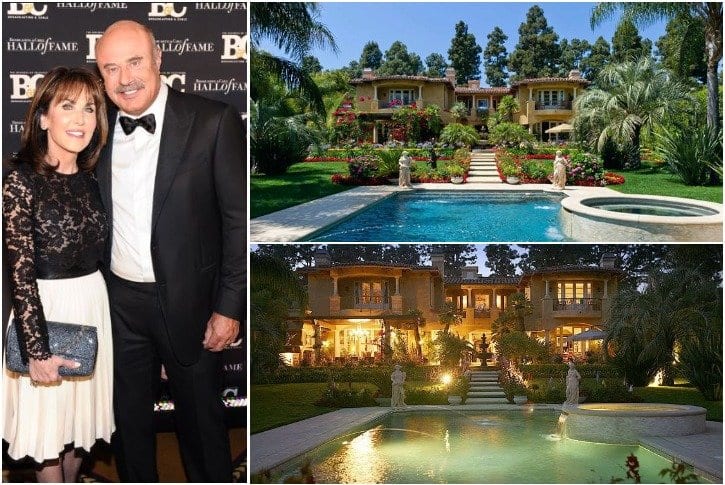
It is hard to find someone who has not heard of Dr. Phil! His talk show deals with all kinds of mental health issues and it has caught the fancy of many viewers around the globe. Married to his childhood sweetheart, Robin, Dr. Phil experienced phenomenal success with his show, and one reason behind his success could be his own happy married life (no need for a couples counseling session for them, we guess!). As his career took off, his success made him extremely rich, and now, he owns gorgeous mansions and high-end cars. His Beverly Hills house cost a staggering $6.25 million and looks absolutely opulent. The eight-bedroom house is tastefully decorated and looks like this will be their home for the next few years!
Rachael Ray — Est. $4.7 Million, The Hamptons
Rachael Domenica Ray is a famous television personality, businesswoman, author, and celebrity cook who needs no introduction. The television personality is now 51 years old and is married to John M. Cusimano. She has a fortune of $60 million to her name and lives a life of style and luxury. Celebrity chef Rachel Ray brings happiness wherever she goes because food brings happiness to most of us.
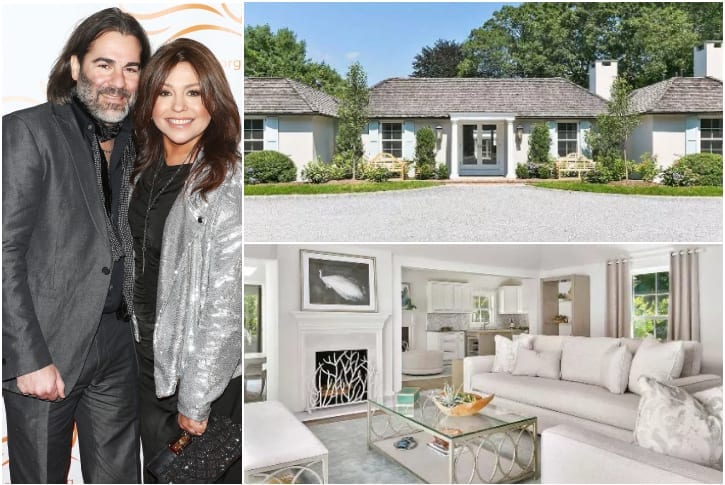
Her famous show titled 30 Minute Meals and her infectious smile have made her immensely popular as a chef and TV personality. That is probably the reason why she chooses to buy houses that are airy and sunny and give off a cheerful vibe. Her Southampton house was exactly that! Despite being a gorgeous estate, Ray eventually decided to sell it off for $4.7 million. More real estate investments on the cards maybe?
Alan Jackson – $28 Million, Tennessee
Alan Eugene Jackson is a popular singer and songwriter who made his debut in 1983. Since then, he has won two Grammy Awards and received 20 nominations in recognition of his talent. However, he not just received awards, he also found a massive fan base and great wealth from his successful career. He is now 61 years old and has a net worth of $95 million, which makes it possible for him to enjoy all the luxuries in the world.
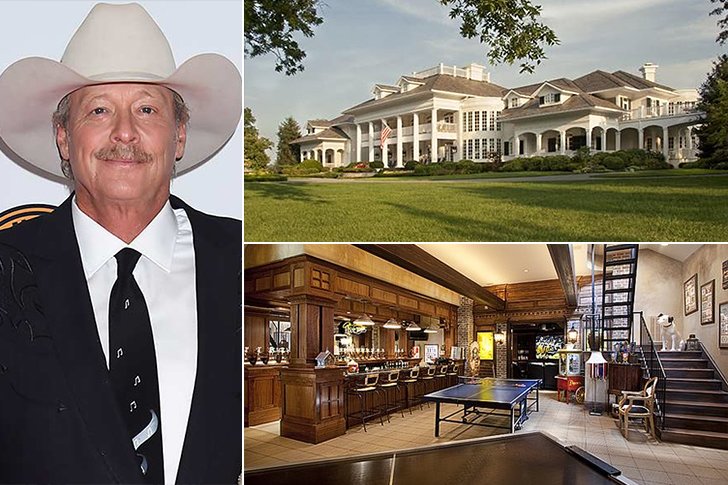
American country singer and songwriter Alan Jackson shot to stardom and afforded himself a luxury home in Tennessee. The luxury estate is situated at the lakeside of a rural community and spans 135 acres. It features a family room with 22-foot ceilings, a formal living room, and dining room, and even a custom-made pub, among DRother amenities. What’s more, outside, you’ll see three ponds, a boathouse, 10-acre lake, a swimming pool, basketball court, and a tennis court! Affluence at its finest, indeed!
John Elway – Estimated $7 Million, Colorado
John Albert Elway Jr. has a special place in the heart of every American football fan. He had a successful career spanning over 16 years where he was playing for the Denver Broncos for the entire duration. John Elway was a gifted quarterback indeed, but after becoming the general manager of the Broncos, he’s become even wealthier. Even if he was later criticized for struggling to find a prolific quarterback for his team, his financials are in top shape, and in 2017.
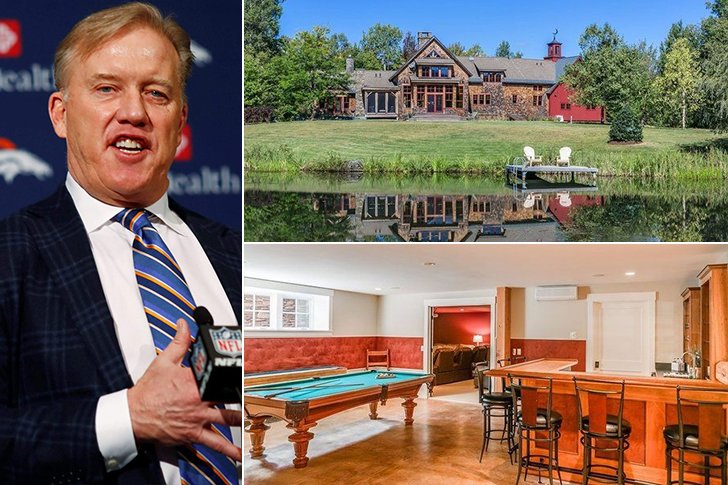
He splashed an estimated $7 million on a new mansion in Colorado, which is right next to the mountains, surrounded by trees, and featuring nine bedrooms and five and a half bathrooms. Elway’s new house comes with its own small private deck and a breathtaking view, and we’re pretty sure it also comes with a pretty costly home insurance!
Jean-Claude Van Damme – $10 Million, California
Jean-Claude Camille François Van Varenberg is a popular Belgian actor and a former martial artist. He is famous by his initials JCVD and his stage name Jean-Claude Van Damme. Jean is now 59 years old and has a fortune of $40 million to her credit. French actor and retired martial artist Jean-Claude Van Damme is selling his beautiful mansion in California.
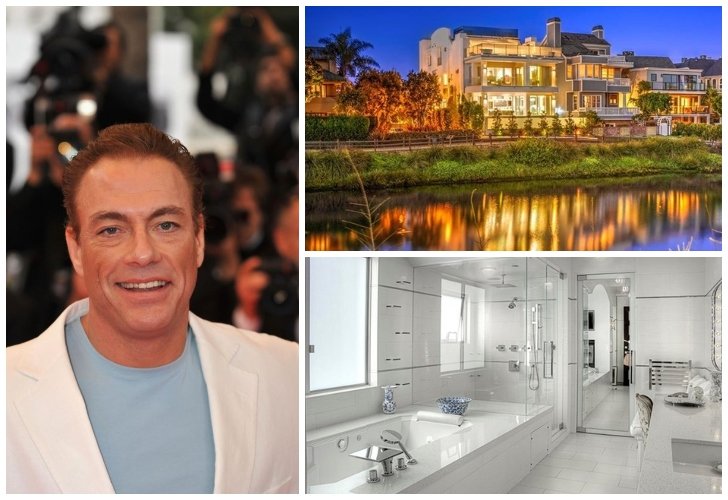
The star gained fame through his martial action films like Kickboxer and Hard Target. He has lived in this California house for years and made beautiful memories here. The interior decoration and color scheme are all in accordance with his taste but he is putting up the house for auction. Looks like the star wants to live in a different place for a change! Whichever place he chooses as his home, we are sure it would be an epitome of style and elegance.
Kirk Cousins – $50-55 Million
Kirk Daniel Cousins is a popular American football player who has been playing for the Minnesota Vikings of the NFL as their quarterback. His career began while playing in college at the Michigan State, and he was soon drafted by the >Washington Redskins of the NFL. He was drafted to be a backup to Robert Griffin III. After Griffin got injured, Kirk got his chance and remained in the team as a regular that whole 2017 season.
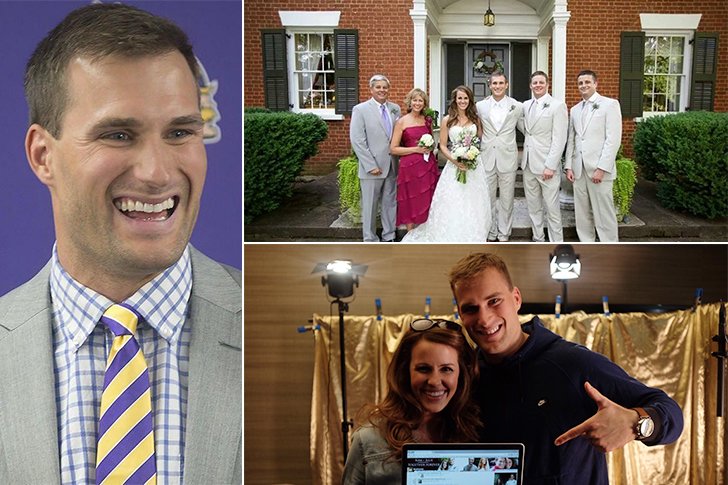
He had set multiple franchise records in 2017 and in 2018 signed an $84-million contract with the Minnesota Vikings/ The team made him the highest annual salary for a player in the history of the NFL. Nicknamed ‘Captain Kirk’ by the media, Cousins has recently stated that Minnesota will always be his home. He spends his summers and all free time at his estate with his family. He is now 31 years old and has a net worth of $70 million, which will give him a great life even if were to retire today.
Ronda Rousey – $5 Million, Venice, California
Ronda Jean Rousey is a popular actress, author, former professional mixed martial artist and judoka, and a professional wrestler who needs no introduction. She is famous by her nickname “Rowdy,” which she inherited from the late professional wrestler Roddy Piper. She is now 33 years old and hasn’t retired yet, but it’s been a few years since her fans saw her fight it out in the ring.
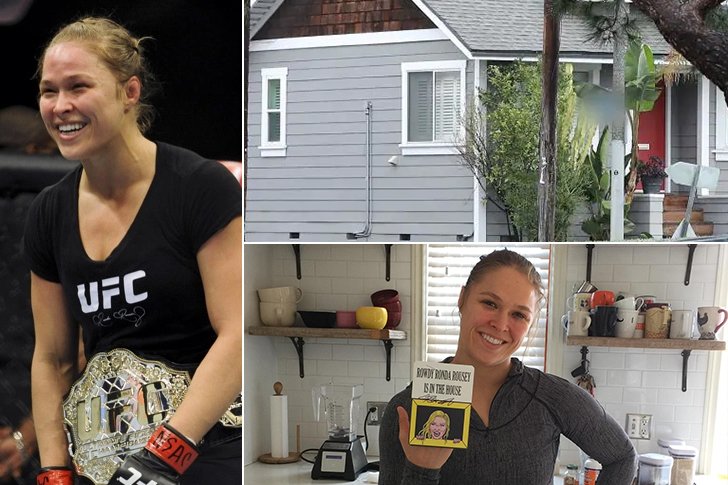
When she was an MMA fighter, Ronda Rousey was so serious about the sport that she garnered a lot of popular support and interest in UFC for women. Her earnings for her last UFC match was $3M, and mind you, she was paid that just to show up. In early 2018 she signed up with WWE and is now among the best-paid female athletes worldwide (including endorsements of course). In 2017 she went to live in Venice in California. One day, thieves broke in her house and robbed the place while she was out. You know they were lucky she wasn’t there! Ronda married UFC fighter Travis Brown in August 2017 in Hawaii, Travis’ home state.
Mike Ditka – Estimated $3 Million, Florida
Michael Keller Ditka has a mention in the Pro Footfall Halls of Fame and was the UPI NFL Rookie of Year in the year 1961. However, don’t be surprised if you do not recognize him by this name. That’s probably because you know him by his professional name Mike Ditka or his nickname “Iron Mike.” Mike Ditka was a popular football star from the 1960s.
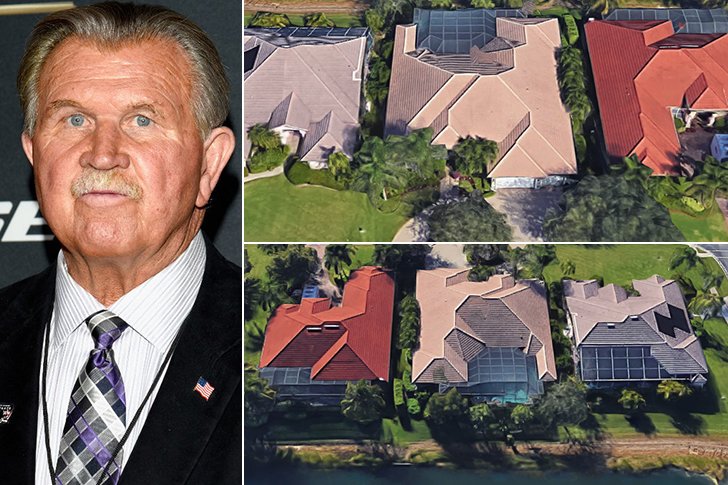
He is best remembered for playing for the Dallas Cowboys, Philadelphia Eagles, and Chicago Bears. Ditka won the Super Bowl once and was part of the Pro Bowl five times. After retiring from playing, Ditka pursued a career as a coach. Thanks to his hard work over the years, Ditka was able to buy himself a deluxe house in Florida. It did not come cheap for the house cost him around $3 million. Ditka was hospitalized in November 2018 after he suffered a heart attack while he was playing golf.
Stephen Fry & Elliott Spencer – $2.38 Million, Hollywood Hills
Stephen Fry is a popular actor and comedian, who is celebrated for his performances in Jeeves and Wooster and A Bit of Fry & Laurie as part of the Fry and Laurie comic duo. He also has many praised acting roles in such films as Gosford Park, V for Vendetta, Wilde, Guy Richie’s Sherlock Holmes movies, and numerous others. Stephen also voiced characters in Destiny 2 and Dr. Grordbort’s Invaders video games.
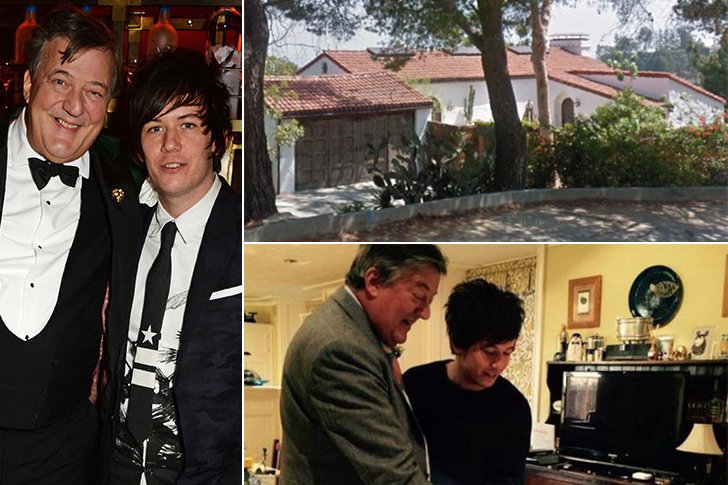
He currently voices a character on the Danger Mouse TV series. Stephen John Fry is now 62 years old and is in a relationship with the 33-year-old comedian Elliott Spencer. Stephen married Elliott Spencer in 2015, and they reportedly live in Hollywood, in a $2.38 million worth home. The house is 3800 square feet large, has three bedrooms, and three bathrooms. We are hoping that the couple has a happy life there and make lots of memories together in their beautiful home.
Katie Price – $2.58 Million, West Sussex
Katrina Amy Alexandra Alexis Price rose to fame by her pseudonym Jordan. She is a model, actress, businesswoman, singer, and media personality who is popular by the name Katie Price. She is now 42 years old and lives in a huge mansion in Sussex. Her net worth stands at $ million, which means she can afford all the luxuries in the world.
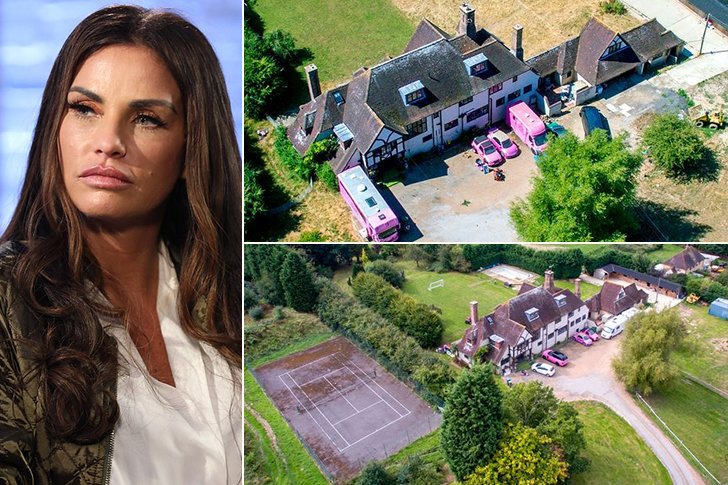
The English television personality Katie Price purchased this West Sussex home in 2014 and she has reportedly been hoping to sell it recently for $2.5 million. However, the house might not be worth that much once the potential buyers see the photos of the inside. Katie’s house has reportedly been neglected and filthy while there is rubbish all around her garden, too. She is also rumored to have spent her vast fortune and faced bankruptcy. In August 2018, she was given three months to pay off her debts which were huge.
McKenna – Price Undisclosed, Essex
Megan Elizabeth McKenna is a popular singer, businesswoman, and television personality who needs no introduction. She rose to fame by appearing in numerous reality television shows and has been a household name in 2009. Country music star and English television personality Megan McKenna, who became famous for her appearance on The Only Way Is Essex reality TV show, settled into a new and beautiful home. Where?
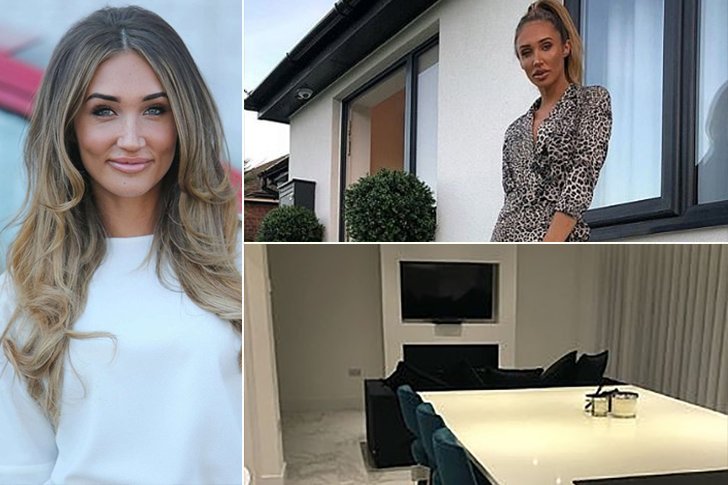
Well, in Essex of course. Mckenna’s real estate was built in 2018 and it is truly stunning. In the photos she shared with her followers, we could see her state-of-the-art kitchen and the lovely decor. The house features an open space plan and marble floors. McKenna has released her first clothing range in 2018 as well as her autobiography. She is now 27 years old and has a net worth of $million. So, we are sure she is going to add more comforts to her home, which gives her a luxurious life.
Chloe Ferry – Price Undisclosed, Newcastle
Chloe Ferry is a popular television personality who rose to fame by appearing in the reality television show Geordie Shore in MTV. Born as Chloe West Etherington she is now 24 years old and has a net worth of £1 million. Apparently, she earns around £3,000 for every post that she makes on her social media platform. Banking on her popularity, she also signed up for numerous reality television shows including Celebs Go Virtual Dating.
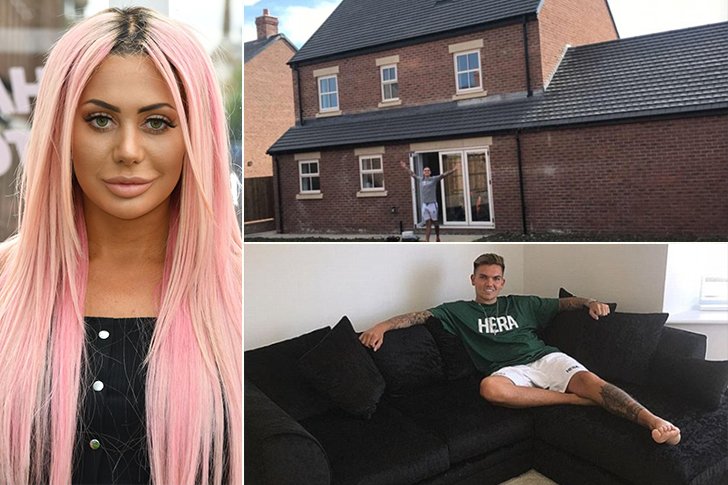
We are sure you remember from Geordie Shore recently showed off her new home and it is stunning. Chloe Ferry and Sam Gowland purchased a second real estate overlooking the river and were proud to show it off together in late 2018. The couple showed off their second home on Instagram and reportedly even announced getting a third one sometime soon. We don’t know how much the couple spent on this lovely residence but we know they were involved in the process of building every step of the way.
Adam Levine – $18.9 Million, Los Angeles
Adam Noah Levine is a popular record producer, actor, songwriter, and lead singer of the band Maroon 5. This 41-year-old singer holds a special place in the heart of every girl, courtesy of his adorable and charming smile. Banking on his skills he went on to win three Grammy Awards of the 13 nominations that he received. Besides the fan base and awards, he has a massive fortune of $90 million to his credit too.
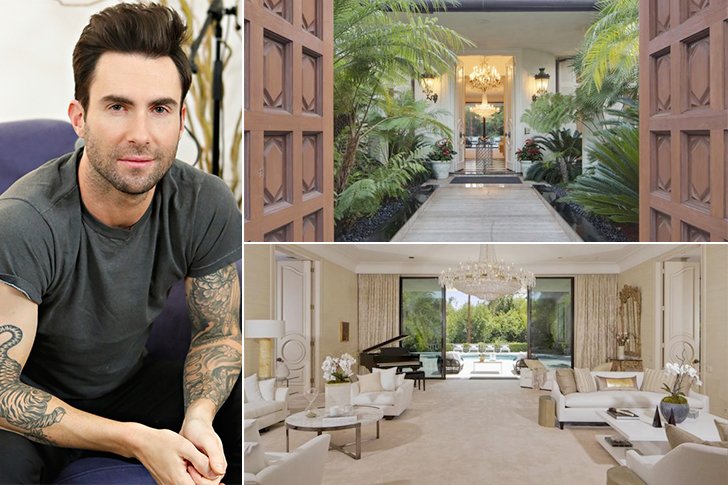
Adam Levine is truly living with the style in his $18 million-worth real estate property in Los Angeles. This property was actually a ’60s French Regency residence that was remodeled and renovated to his liking. His house is the definition of “paradise” and its backyard – which is dubbed an outdoor oasis – comes with a pool that’s quatrefoil-shaped, a poolside cabana, and a stone terrace.
Kim Kardashian & Kanye West – $20 Million, Hidden Hills
Kimberly Noel Kardashian West or Kim Kardashian is the darling of the internet. She rules the roost and is one of the most popular celebrities of the millennium. While her husband Kanye West is a successful rapper and a musical genius. When a power couple like this comes together, it’s not just a treat for their fans, but their bank balance too. Together, they have a net worth of $370 million.
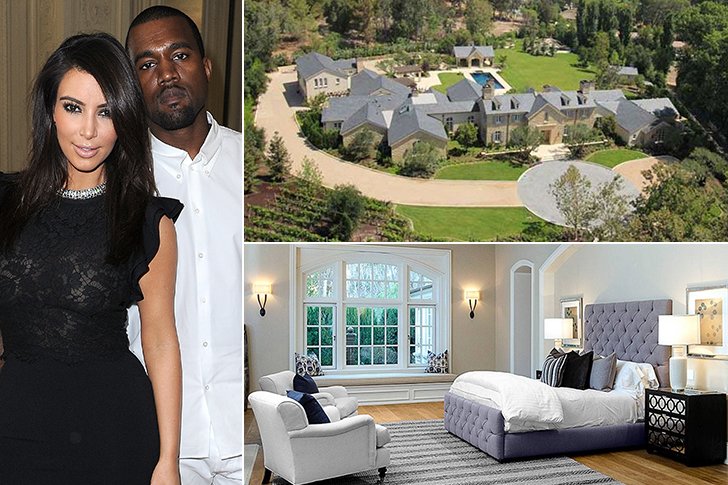
Reality TV star Kim Kardashian and hubby-rapper Kanye West definitely deserve to be called a power couple; they just keep on finding success in every venture they take on. They decided to give themselves a reward, especially now that they have three kids, and they did this by purchasing another cool mansion. They bought a spectacular mansion in Hidden Hills sitting on three acres of land – definitely to keep the paparazzi at bay. The house features eight fireplaces, two spas, and a master bedroom with two bathrooms. It also has two pools and a vineyard.
Jon Bon Jovi – $42 Million, New York
Jon Bon Jovi or Bon Jovi is a popular singer, songwriter, actor, philanthropist, record producer, and musician who needs no introduction. He made his debut in 1975 and has since struck a chord with almost every person across the globe. His successful career comes not just with a massive fan base, but a lot of wealth and awards too.
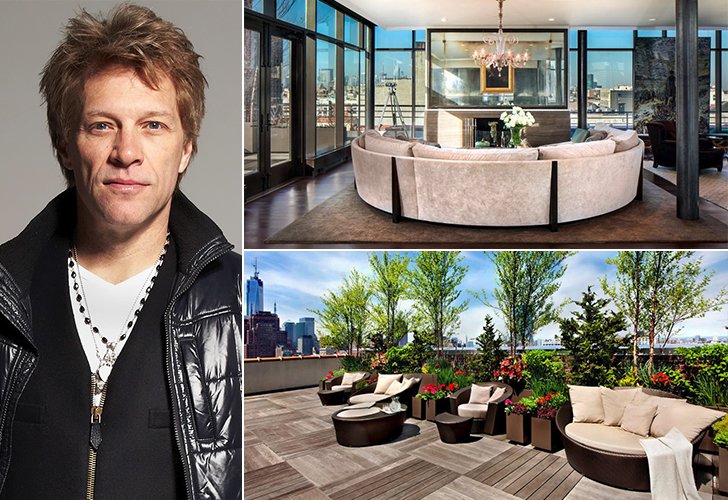
Want to know what affluence looks like? Then take a look at singer Jon Bon Jovi’s famous Soho house – a 7,452 square feet duplex going for a whopping $42 million! Talk about breaking the bank! This apartment (or shall we say the presidential suite of a 5-star luxury hotel) is located on the top floor of the New Museum’s 158 Mercer Street building and has five bedrooms and seven baths. And adding icing to the cake, the 11-foot ceiling really gives you that palatial feeling!
Trevor Lawrence – Price Undisclosed, Knoxville
Trevor Lawrence the popular quarterback professional footballer is still in college. However, he is already a global sensation at the age of 20. One could only imagine how popular he would be a decade from now. He is already a “once in a generation” kind of player. Lawrence has the future in front of him and it seems to be a bright one too.

Lawrence has the future in front of him and it seems to be a bright one too. He is currently a collegiate American football quarterback who plays for the Clemson Tigers. He began his career with Clemson University in 2016 and is regarded as the best quarterback prospect by Rivals’ Mike Farrell. Trevor still reportedly lives in his family home in his hometown but he’ll soon be able to afford a house on his own. With a talent like that, he will definitely need help managing his future wealth!
Michael Phelps – $2.5 Million, Scottsdale
Michael Fred Phelps II or Michael Phelps as he is popular is a former Olympic swimmer. He holds the record of being the most decorated Olympic swimmer with 28 medal wins. In fact, one could also say that he currently holds the record for the highest number of Olympic medals of all-time in numerous categories.

Whenever swimmer Michael Phelps isn’t smashing records and bagging Olympic Gold Medals, he blows off some steam in his new home in Scottsdale! This impressive property sits on 6,000 square feet on one acre of prime land, with five bedrooms, six baths, a king’s kitchen, formal dining room, and 4 fireplaces to keep the ‘human fish’ warm in winter! For Phelps, no house is complete without a luxury swimming pool of course. The swimming pool company must be thrilled to have Michael Phelps as their client!
Tim Armstrong – Price Undisclosed, LA
Timothy Ross Armstrong is a popular singer, musician, record producer, music video editor, filmmaker, and actor who needs no introduction. He made his debut in 1985 and has been active since then. He is now 54 years old and has a net worth of $450 million. Musician Tim Armstrong is famous for being the brain behind the successful punk-rock band Rancid. But before he rose to stardom in the music business.
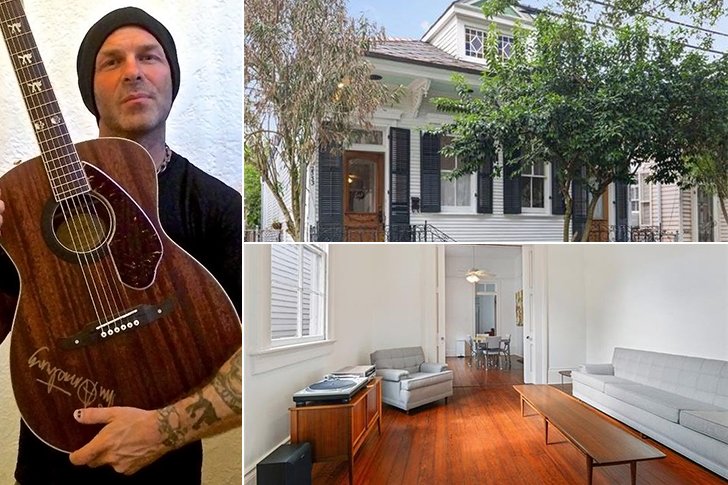
He lived modestly and didn’t have a lot of money. He had a humble beginning and his family didn’t have a lot of money growing up. But when he finally got his big break, the talented guitar player bought a luxurious house in Los Angeles. It’s not an estate but has many lavish features, like wooden floors, a garden, vintage furniture, and a lot more. While the cost of the property isn’t the information that’s available to the public, going by the features we could guess that it was quite a bit. However, considering Tim Amstrong’s net worth, that shouldn’t have been a problem.
Justin Bieber – $20 Million, Hollywood Hills
Justin Drew Bieber, the Canadian singer needs no introduction. He has been entertaining his fans since across the globe since the tender age of 13. At 26, he is now a global phenomenon with ten nominations for the Grammy and a winner of one. Justin Bieber, a teen celebrity with a bank account so big that he could definitely buy more than one house, surprisingly prefers to pay rent for his home.

Currently, the popular singer lives in a glass house that costs $20 million, renting it for about $60,000 a month. Though he claims he needs some private alone time, it must come as a surprise he lives in a home almost entirely made of glass. His place includes six bedrooms, seven bathrooms, and a seven-car garage. He surely doesn’t worry about home insurance, though – he has a landlord for that!
Naomi Campbell – Estimated $390 Million, Turkey
$100Naomi Elaine Campbell the English model, businesswoman, and actress needs no introduction. She made her debut in the entertainment world at the age of 15 and has never had to look back. Supermodel Naomi Campbell’s ex-boyfriend was a billionaire if you can’t tell from these pictures of his gift to her. He didn’t just buy her some nice jewelry, instead, he bought her a private island with an environmentally friendly holiday home built on it.
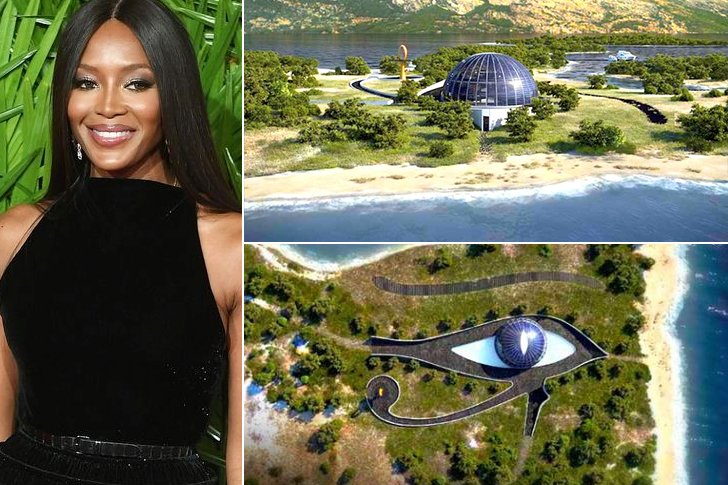
This island was designed by architects to make a special home that would provide its own energy. The black tiles are actually all solar energy panels, and the home is built so that it can regulate its own temperature. The island comes with a price tag of something around $390 million. Luckily, she doesn’t have to worry about homeowners’ insurance. Can you imagine owning a place like this?
Michael Jordan – $15 Million, Chicago
Michael Jeffrey Jordan is a popular American basketball player who was playing for 15 seasons of the NBA. He went on to win six championships of the Chicago Bulls. He is famous by his initials MJ and has a massive fortune of $2.2 Billion. He is now 57 years old and has a great life in retirement.
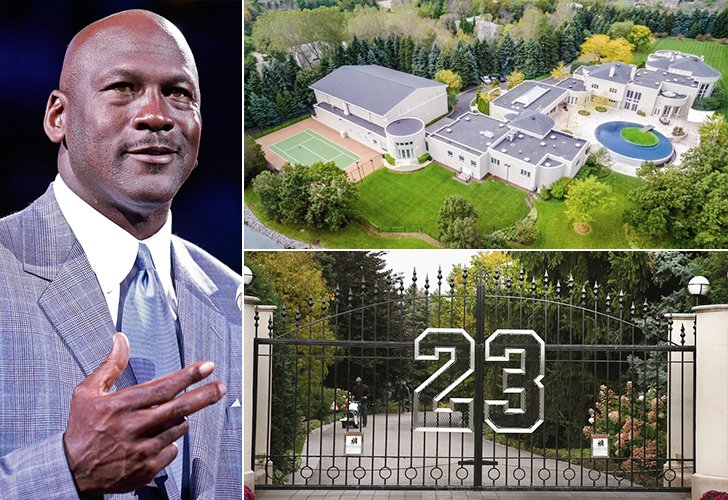
The iconic NBA player Michael Jordan has one of the most beautiful mansions in the world. With his huge bank account and profound style, Jordan has a $15-million mansion that includes nine bedrooms, twelve bathrooms, a gym and even a wooden man cave with card games tables. What makes his mansion different to others and attracts tourists on a daily basis is his NBA jersey number 23 on his gates! Talk about living life king-size and enjoying all the luxuries in the world.
Kate & Prince William – $$ Priceless, Kensington Palace
When the handsome Prince William and the beautiful Catherine Middleton walked down the aisle in 2011, they made every head turn and take notice of them. Prince William, Duke of Cambridge is second in line to the throne, which makes Kate the most possible future queen consort for the United Kingdom and 15 other countries in the Commonwealth realms. The couple has three children Princess Charlotte of Cambridge, Prince George of Cambridge, and Prince Louis of Cambridge.
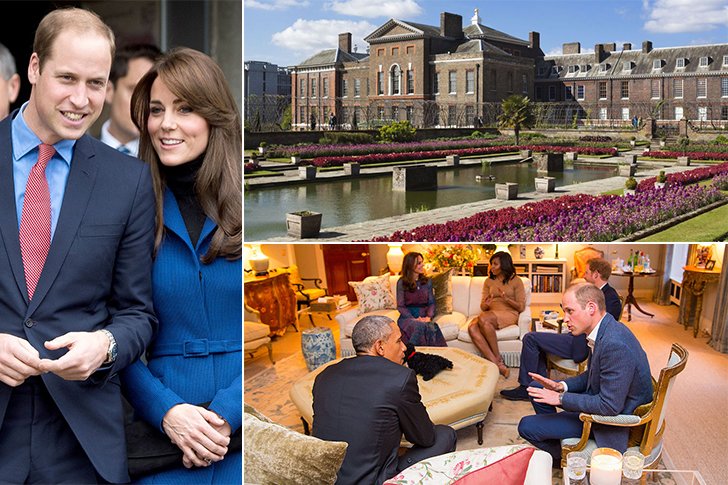
The Duke and Duchess of Cambridge recently completed a $6.02-million refurbishment of Apartment 1A at the Kensington Palace. Their property was formerly the house of the royal couple, Princess Margaret and Lord Snowdon. The couple, together with their brood, has finally settled into the apartment since mid-2017. Their place has four stories and spacious rooms. The renovation also knocked some rooms reducing it from 30 down to 20.
Cuba Gooding Jr. – Est. $2.75 million, Los Angeles
This actor has been grinding away at the industry to the point where he’s made his name popular all over the world. His appearances in tv shows like American Crime Story and American Horror Story have made it clear that he has the makings of a great actor. He has proven that by regularly appearing in movies and shows that have earned him more than he knows how to spend.
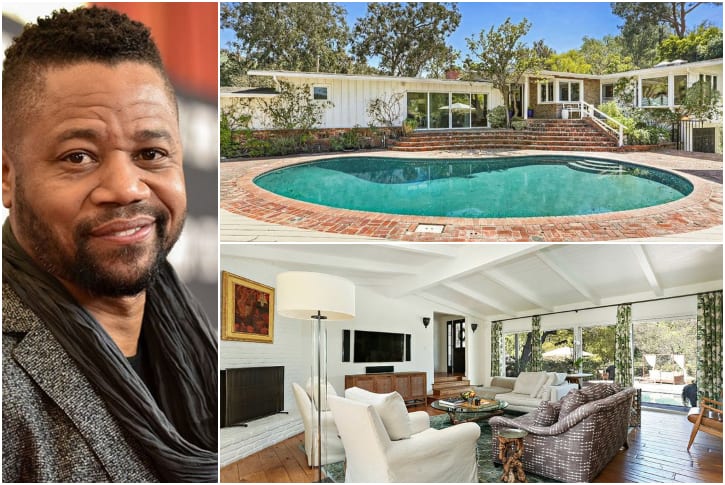
His house in Los Angeles was the one that he bought first when he started making property investments. He just sold it now, after 9 years of owning it. It covers an area of 3,396 sqft and has four bedrooms for all the comfort you need. We hope he managed to make some money off of it!
Stacey Dash – Undisclosed Amount, Los Angeles
We remember Stacey Dash from her most famous role in the 1995 film Clueless, but she had numerous other roles since then. Stacey lives in a wonderful deluxe house in Los Angeles but we don’t know how much it cost her to purchase it.
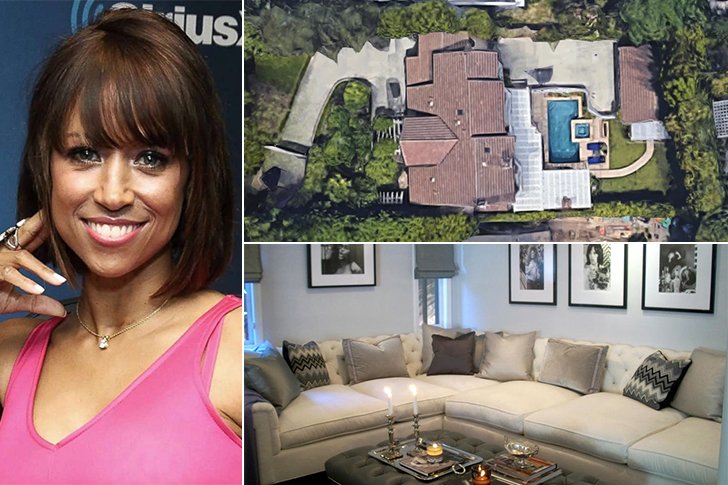
But we do know that she can afford it thanks to her successful career. Stacey published her memoir titled There Goes My Social Life: From Clueless to Conservative in 2016 in which she openly spoke about her life. In February 2018, it was announced that Dash would run for Congress. But about five weeks after announcing that, she withdrew from the congressional race.
Neil Patrick Harris & David Burtka – $5.5 Million East Hampton
Neil Patrick Harris is a popular actor, comedian, singer, writer, magician, and producer. He rose to fame with the television sitcom How I Met Your Mother. Since then, he went on to feature in numerous movies and television shows. He walked down the aisle with actor David Burtka in 2014 and continues to have a dream-like life together. They have adopted twins Harper Grace Burtka-Harris and Gideon Scott Burtka-Harris.
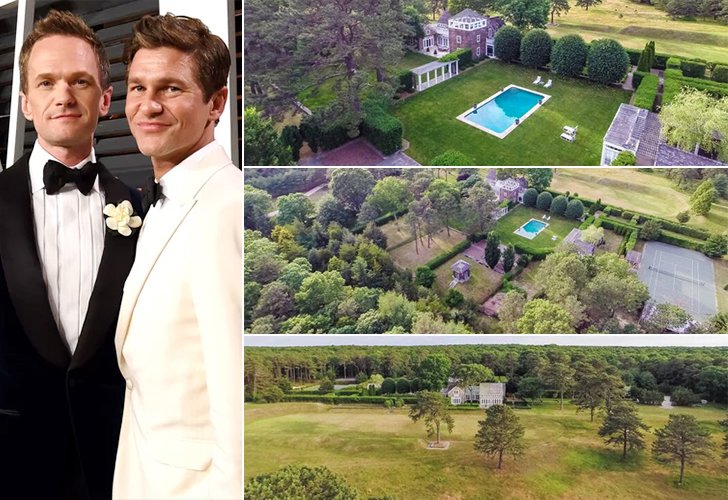
Famous couple Neil Patrick Harris and David Burtka decided recently to treat themselves with a new $5.5 million mansion in East Hampton. With their joint bank account, the couple can surely figure out many ways on how to decorate their new home! It now includes four bedrooms, six bathrooms, a wine cellar, library and even a marvelous roof-top hot tub. With a property like this, we hope they thought about home insurance as well.
Tiger Woods – $60 Million, Florida
Eldrick Tont “Tiger” Woods is a professional golfer whose career began in 1996. Since then, until now, this 44 years old golfer has been at the top of his career. He went on to win numerous awards, wealth, and great fame from his immensely successful professional career. With a fortune of $800 million, he is the world’s richest golfer. He makes something around $50 to $60 million per year.
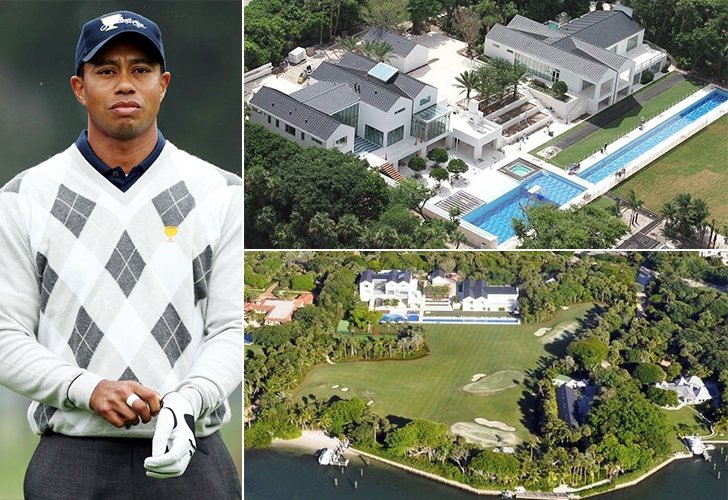
One of the most successful golf players ever, Tiger Woods decided to treat himself with a $60-million Jupiter Island estate in Florida just after his divorce that was widely covered by Social Media. This fabulous mansion includes a gym, four-hole golf course, and a running track. He probably has the largest home insurance cost in the area with the impressive size of the grounds. Talk about living the dream life!
Hayden Panettiere – $2.1 Million, Nashville
Hayden Lesley Panettiere is a popular model, singer, and actress who needs no introduction. She rose to fame by starring in the superhero series of NBC Heroes and Juliette Barnes. She is now 30 years old and already has a two and a half decades of career in the entertainment industry. Hayden Panettiere is popular for putting her earnings to good use, she has invested her $15 million worth of wealth on numerous properties and real estate.
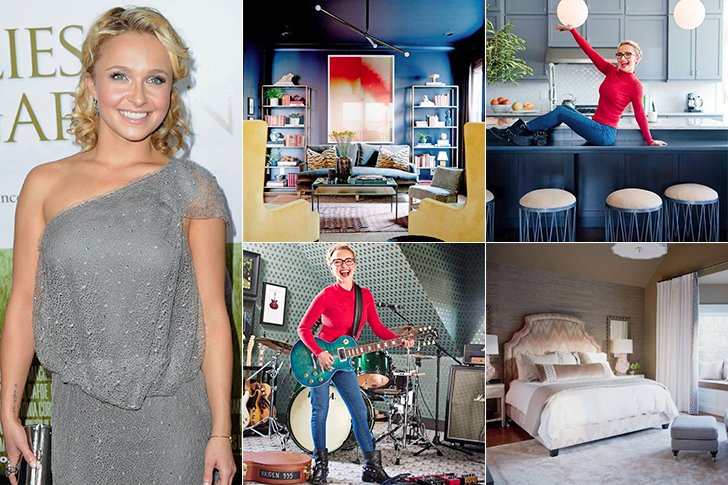
Nashville Star Hayden Panettiere loves her dream home in Nashville! This house is filled with memorabilia from her childhood, including gifts and personal items she grew up with. And what’s great is that the home comes with its very own music room with her own guitars. Designed by Benjamin Vandiver, Hayden got everything she bargained for buying in this property that showcases her opulence!
Meghan Markle – Two-Storey Home in Toronto, $2 Million

Meghan’s Toronto home is where Prince Harry uttered the magical four words – “Will You Marry Me?” probably for the first time. It’s a two-story home which has been put on sale in Toronto real estate listings, as Meghan will soon be moving to the Nottingham Cottage with her husband. The three-bedroom, two-bathroom home comes with a garage and a terrace. The kitchen is complete with contemporary white cabinetry paired with steel appliances and white and gray colors dominate the interiors. Last May, when the romance between Meghan and her royal beau was brewing up, she posted a photo of herself on Instagram holding a bunch of flowers and enjoying the sunshine in the backyard, which gave us just another opportunity to take a sneak peek into her apartment. And it’s wonderful!
Bob Barker – $2.1 Million, Los Angeles
Robert William Barker rose to fame as a television show host in 1950. Since then until hire retirement in 2007, he was a household name. He is now 96 years old and is currently an animal rights activist with a net worth of $70 million. When you’re a nineteen-times Emmy Award winner like the dear Bob Barker, you can certainly afford a hefty house insurance, which is why Mr. Barker pulled out all stops when he got his L.A. home worth $2.1 million.
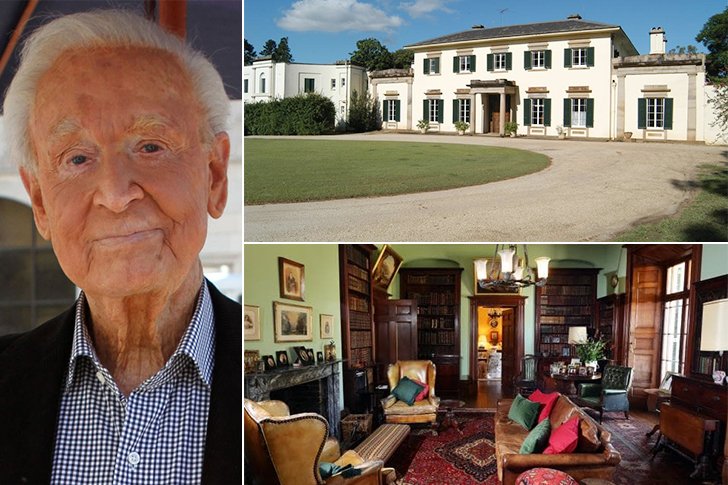
Looking at the humble ancient-Greek influenced architecture is quite deceiving because inside is a custom chef’s kitchen, middle-eastern style spa room complete with automated heating rooms and a relaxing zone with hot stones. Amazing! One look at the pictures of the house and we are sure you would agree that it’s a perfect place for a star like him to retire and relax.
Kendall Jenner – $6.5 Million, Hollywood Hills
Having the last names Jenner and Kardashian means you are already a celebrity. Kendall Nicole Jenner is one such socialite, model, and television personality who rose to fame by featuring in the reality television show Keeping Up with the Kardashians. She began her career in modeling when she was just 14 years old and now ten years since her debut continues to look charming and beautiful!
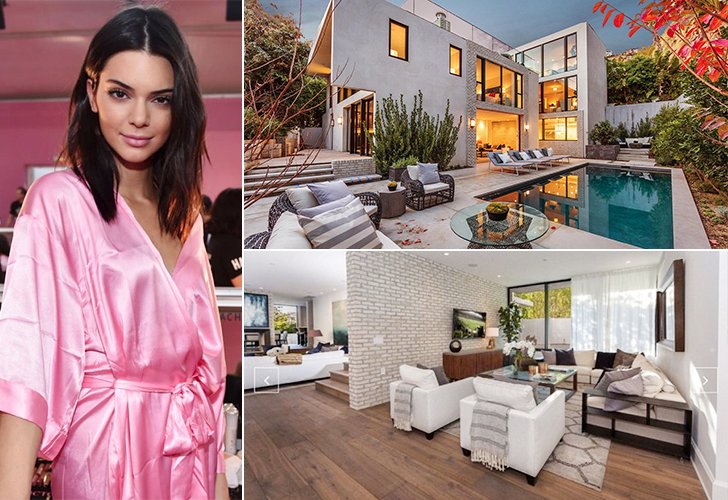
Model and Social Media icon, Kendall Jenner may only be 21, but she’s definitely playing in the A-league when it comes to purchasing the best luxury real estate property. Just have a look at her newly acquired $6.5-million luxury mansion that has six bedrooms, five baths, a massive walk-in closet, gym, and a massage room, of course, it’s Kendell. When it comes to the exterior, there is a massive swimming pool, an outdoor fireplace, and quite a number of entertainment areas might we add.
Kate Upton – $5.5 Million, Benedict Canyon
Katherine Elizabeth Upton is a popular model and actress who rose to fame in the year 2011. Sports Illustrated swimsuit model Kate Upton and her beau Justin Verlander own one of the most breathtaking homes in Benedict Canyon. The house goes for a whopping $5.5 million and sits pleasantly on 5,550 square feet. Money isn’t a problem for these two, considering how massive their net worth is! She is now 28 years old and has a net worth of $20 million.
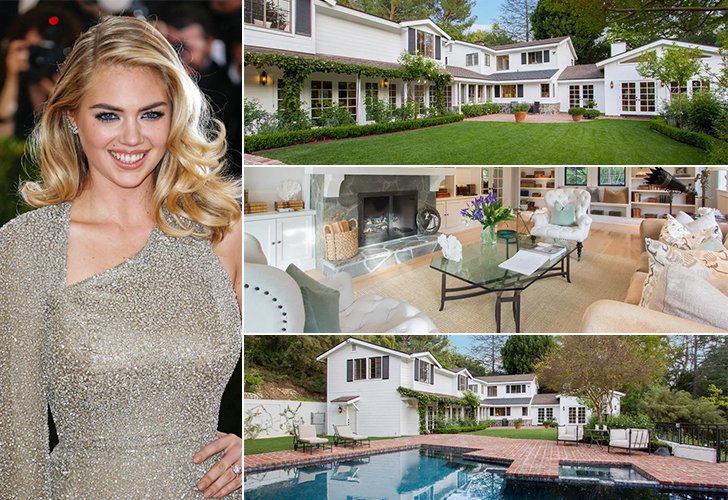
We are sure that she is far from her retirement, so we are sure it will increase her fortune significantly. Some of the gorgeous amenities of this villa include a gourmet chef’s kitchen, a master suite, three additional bedroom suites. Besides that, it also has a huge private office, don’t you just envy the life of affluence?
Keira Knightley – $6 Million, New York
Keira Christina Knightley is a popular British actress who made her mark in the entertainment industry by starring in period dramas and independent film. She went on to become a household name and won a massive net worth too from her popularity. What we love about actress Keira Knightley’s stunning apartment is the location
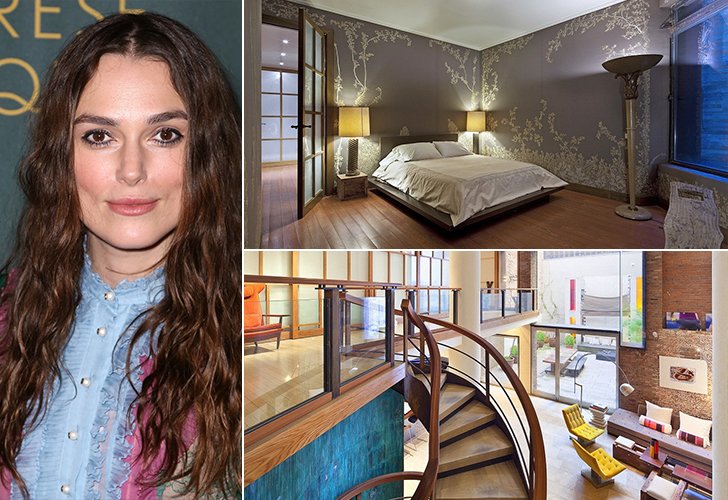
! Her real estate agent recommended the trendy TriBeCa neighborhood in Manhattan; which means that Keira lives among the crème de la crème of American society. She’s a big shot too so we guess it makes sense). The apartment has two floors, three bedrooms, and three bathrooms! It’s quite spacious at 3,820 square feet with 23-foot ceilings! And whenever Keira feels like watching the sunrise, say hello to her 900-square-foot private patio! We are sure that Keira Knightley has a comfortable life with all the luxuries in this dream home of her.
Miley Cyrus – $2.5 Million, Malibu
Miley Ray Cyrus is one of those few people born with the genes of an entertainer. The daughter of Billy Ray Cyrus and Tish Cyrus made her debut at the tender age of 12 on the popular Disney Channel Show Hannah Montana. She soon became a household name and began signing numerous projects. ALl of this went on to increase the net worth of the 27-year-old singer to a whopping $160 million.
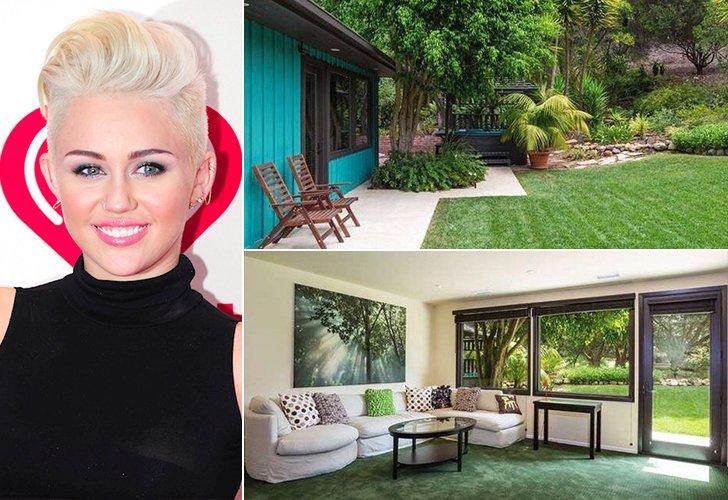
Being only 27 years old and holding an already impressive bank account, Miley Cyrus also knows how to spend her money well. She recently decided to splurge on a beautiful $2.5-million mansion in Malibu. The rustic property is surrounded by a lot of green plants and earth colors as well as outdoor jacuzzi and gazebo. Inside, you can find a master suite, a cook’s kitchen, and heated stone floors. Let’s hope the young star has thought of a good home insurance plan to secure her mansion!
June Shannon – $149K, Georgia
Mama June Shannon is well-remembered as the mother of Alana Thompson, famous as Honey Boo Boo of the reality show Toddlers & Tiaras. After some time, the family was also graced with their own spin-off, earning them millions of cash.
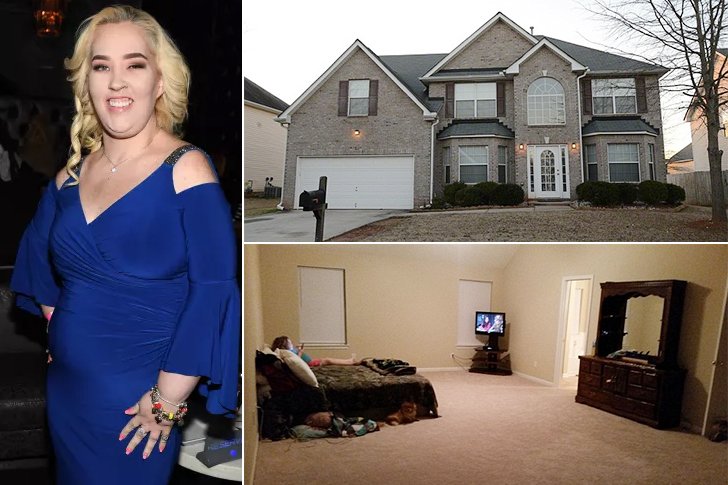
Unfortunately, the show reached its end when reports about June sharing a relationship with a man accused of serious crimes started to make rounds on the news. Since then, she started to change emotionally and physically forthe sake of her children. She even moved to a bigger home with her family. The four-bedroom property located in Georgia was purchased for $149K.
Zach & Tori Roloff – $560K, Oregon
Reality television stars Zachary Roloff and Tori Patton rose to fame by appearing on numerous television shows. The star of reality TV series Little People, Big World, Zachary Roloff is definitely living the dream. After marrying his long-time girlfriend Tori Patton in a beautiful private wedding ceremony in 2015 and welcoming their first child just two years later, he decided to move into something a little bigger for his growing family.
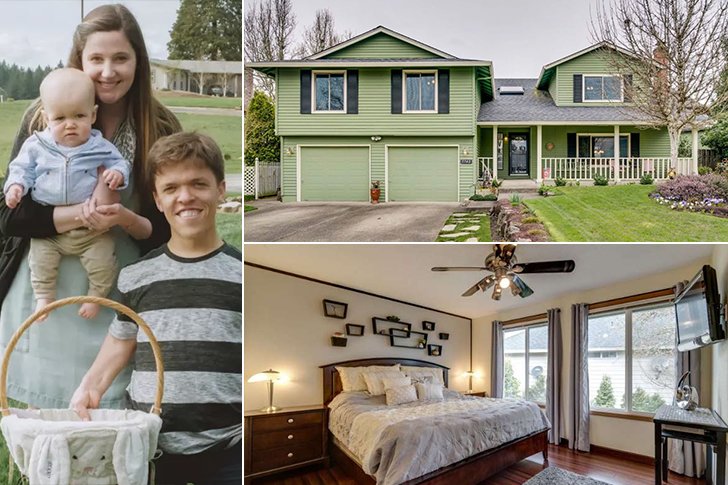
Roloff gave $560K from his bank account to acquire a beautiful house in Oregon and the home includes three bathrooms and six bedrooms, among many other amenities. Going by the pictures of his new abode, we can without an iota of doubt say that he is one of those guys who makes sure his family gets nothing but the best. The house looks breathtakingly beautiful and has all the amenities that would give them a comfortable life.
Courteney Cox – $33 Million, Malibu
Most of us probably recognize her better as the Monica Geller who is a great chef and a person with OCD. However, Courteney Cox is more than just that. She is a phenomenal actor who has been part of numerous films and television shows. Her popularity from the sitcom FRIENDS meant that she was one of the highest-paid television actresses at that point in time.

Actor Courteney Cox is living the lavish lifestyle, thanks to owning a whopping $33-million seafront home in Malibu. The lovely home is seated on 4,486 square feet of space, has four bedrooms, five bathrooms, and a magnificent saltwater swimming pool. Let’s not forget to mention that there’s a screening room as well so that Courteney can watch reruns of her show Friends anytime she likes. To have such a lovely home, we bet it has been secured by one of the best burglary alarm systems and home insurance policies.
Taylor Swift – $17 Million, Rhode Island
Taylor Alison Swift is a singer who needs no introduction. She is popular for writing songs that revolve around her personal life incidents. She has received more Grammy nominations than her age. The Love Story singer has received 35 Grammy nominations so far and has won ten of them! Her fortune stands at a whopping $390 million, most of which comes from her music career which began in 2008.
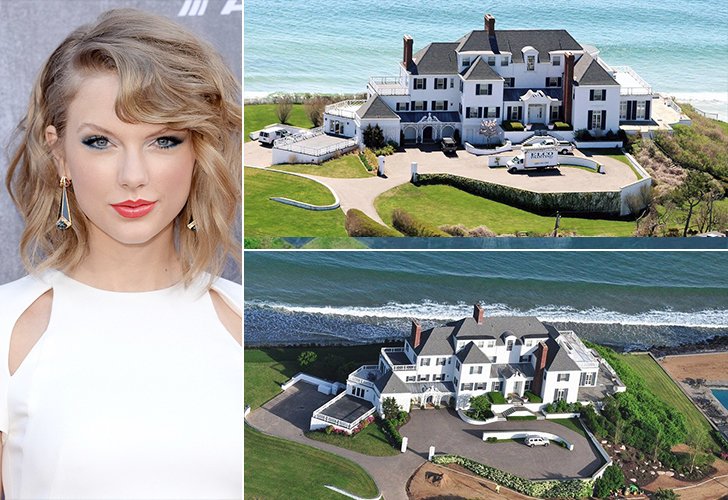
Being only 30 years old with a shining career and a bank account growing by the minute, Taylor Swift sure knows how to treat herself and think smart. Even though the famous singer has properties all over the United States, her favorite one is a $17 million 8-bedroom mansion in Watch Hill. The gorgeous mansion has a beautiful view of the shoreline and the bay. Considering Swift is famous for her legendary parties, she was smart enough to back the estate with an outstanding home insurance policy. Smart girl Taylor!
Ciara – Estimated $6.7 Million, Meydenbauer Bay
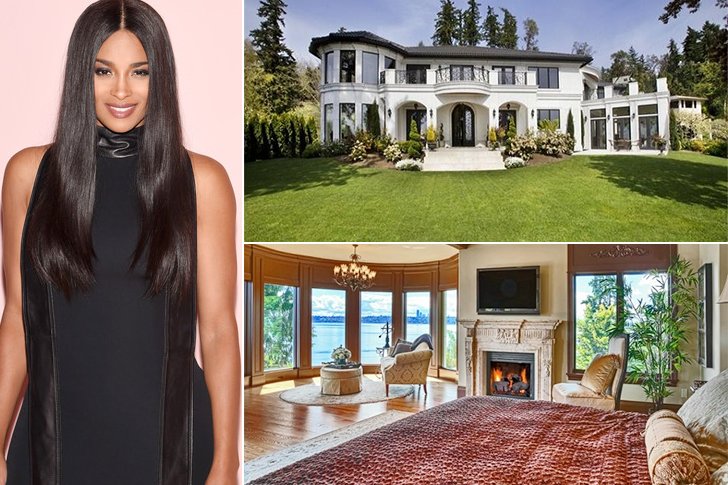
aiu
Cameron Diaz – $4.25 Million, Manhattan
Cameron Michelle Diaz is a popular actress, model, producer, and author who rose to fame by appearing in numerous comedies throughout her career. She made her debut in 1990 and has since then been a household name. Despite having an immensely successful career, she decided to retire in 2016.
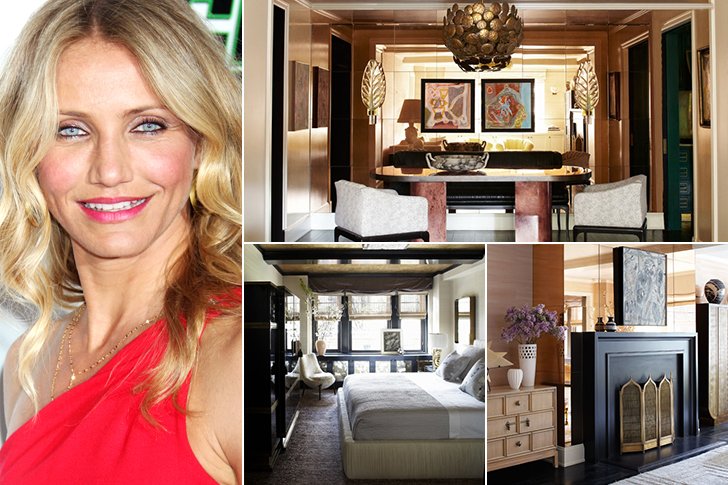
Cameron Diaz’s career has been a fantastic one so far. The blonde with the big smile really made a name for herself in features like The Mask and Charlie’s Angels, and her infectious laugh has made her a staple in Hollywood. The actress also proved she has great decorating skills as photos of her $4.25 million Manhattan property show. Diaz won’t have any trouble with mortgage repayments, as her bank account was big enough to also provide for another mansion in Miami. This way she always has somewhere warm to go when snow hits the Big Apple!
Jared Leto – $2 Million, Hollywood Hills
Jared Joseph Leto is a popular singer, songwriter, and actor whose career began in the early 90s. Since then, he has been a household name with ample success in both acting and music. He is the recipient of numerous awards including an Academy Award, a Golden Globe Award, and a Screen Actors Guild Award. However, it’s not just awards and fame that came from his professional success. He also earned a massive fortune of $90 million and the actor makes sure he puts every penny that he earns to great use.
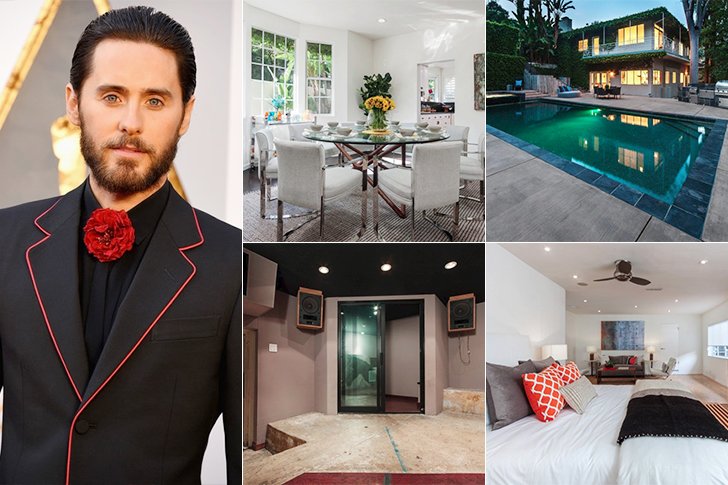
Jared Leto is living like the true rock star he is! His luxury home (that beats any 5-star luxury hotel in the world) comes fully equipped with an entertainment room, fireplace, huge pool, and some of the best tropical landscaping we have ever seen! Sitting on 4,000 square feet, we can only imagine the kind of house insurance premiums that Leto must be paying!
Jeff Franklin – $4 Million, San Francisco
Jeffrey Steven Franklin is a popular director, screenwriter, and producer who needs no introduction. He made his debut in 1976 and has a successful career for over four decades now. If you grew up in the ’90s, then you must have heard about living in the Full House (the famous Tanner House in San Francisco).
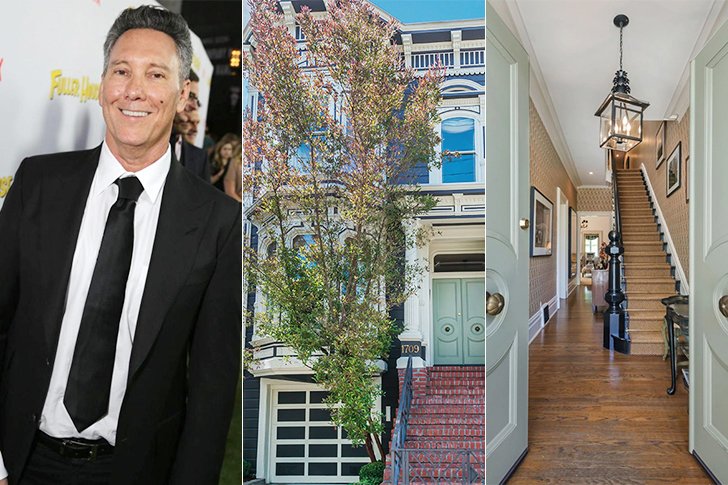
Just ask the creator of the show, Jeff Franklin, who bought the classic home and renovated it back to its glory days! And boy does it look great! We even bet that the mortgage prices on this home will shoot up in case Jeff Franklin ever thinks of selling it. The actor is now 65 years old and has a fortune of $180 million. So, we are guessing that the next property he invests would be something that he could call his retirement home.
Britney Spears – $9 Million, California
Britney Jean Spears is popular as the Princess of Pop, and why not. Since her debut in 1992, she has entertained us with numerous albums and songs, which made her a sensational teen icon. Besides finding success in the music industry, she also found great fame as an actress by featuring in many movies and television shows. Her professional success went on to increase her net worth to a whopping $216 million.
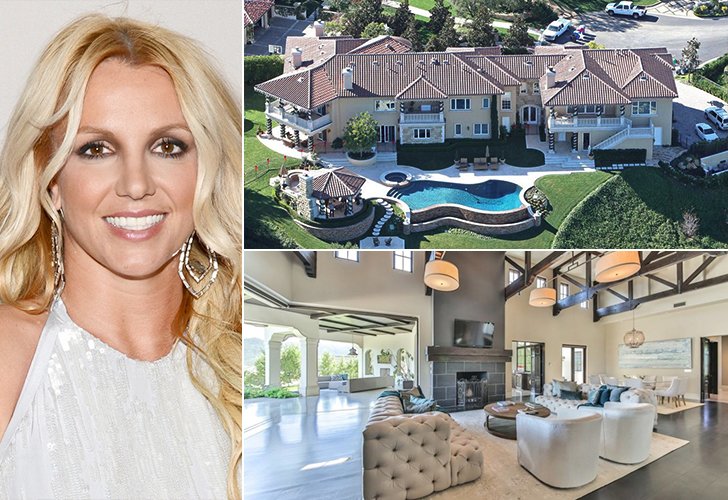
With a growing bank account since an early age, pop diva Britney Spears now lives in a $9 million California mansion. Her beautiful Italian Villa has five bedrooms, eight bathrooms, three kitchens, and a huge guest area, and is surrounded by gorgeous gardens, fountains, terraces, and pools. The popular singer also has an outdoor spa as well as golf and tennis courts! – We wonder how much home insurance premium she pays.
Novak Djokovic – $15 Million, Miami
Novak Djokovic is a Serbian professional tennis player who is currently holding the top rank in the world men’s single tennis. He got this ranking from the Association of Tennis Professionals and going by the laurels he’s won, we are sure that the 33-year-old will retain the title for many more years to come.
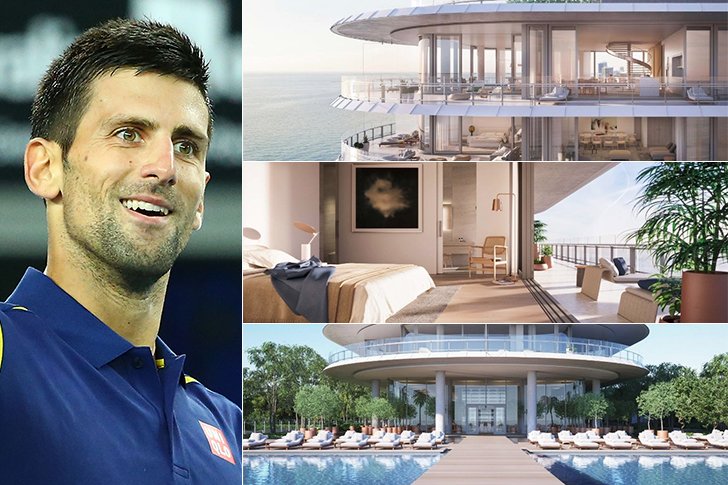
He has earned quite a bank account and decided to finally taste the fruits of his success with one of the most beautiful mansions in Miami worth $15 million. The property includes five bedrooms and a huge dining area, as well as a big terrace with an ocean view surrounded by a private garden, pools, spa, and gym. Thrown in reliable home insurance, and Novak can rest and enjoy. While he has no plans of retiring any time soon, we are sure that this place would be a great retirement home for him!
Matthew McConaughey – $4 Million, Austin
Matthew David McConaughey, the actor, and producer rose to fame by appearing in the television show Dazed and Confused. He made his debut in 1991 and has found great success since then. He even went on to win an Academy Award in recognition of his skills. His wealth stands at a whopping $100, and given his talent, we think it is justified.
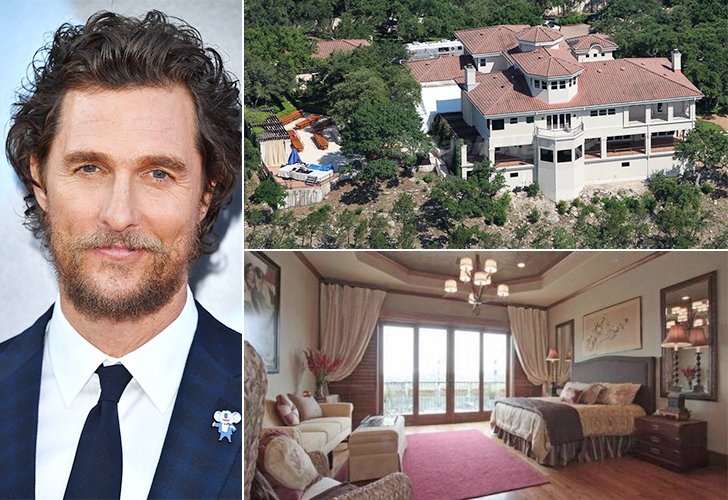
Actor Matthew McConaughey’s palatial home (which we bet has the best home security system in the world!) is located in the Rivercrest area in Austin, a place widely popular for its breathtaking scenery – what with Lake Austin nearby! And Matthew certainly has all the space in the world to stretch his tall frame! With over 10,000 square feet, seven bedrooms, eight bathrooms, and an elevator, this is balling on a whole new level. Whenever Matthew feels like having a sail, he’s got his own docking area for his luxury yacht, too!
Halle Berry – $8 Million, Malibu
Halle Maria Berry, the gorgeous Academy Award-winning actress needs no introduction. She made her debut in 1989 and has been a sensation in the entertainment world since then. She is now 53 years old and is the mother of two beautiful children. Her net worth currently stands at a whopping $90 million which helps her give her little ones all the luxury they desire.
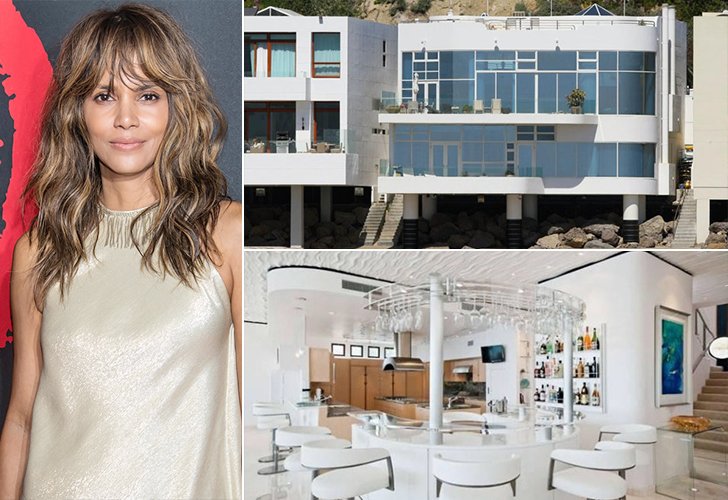
Actress Halle Berry’s Malibu Beach house is like a slice out of paradise. She’s owned it for the past 13 years. By having a look at it, we can clearly tell why 5,000 square feet is all a girl needs, not to mention easy and direct access to the beach (for whenever she feels like going for a jog or a swim).The interior can beat any luxury hotel in the world, hands down. With four bedrooms, five baths, and an outdoor Jacuzzi spa, can a house get any better than this?
David Letterman – $10 Million, North Salem
Probably one of the most popular late-night talk show hosts of all time, David Letterman lives in North Salem and does he do it in style! He lives in a $10-million mansion which makes a perfect garage for his luxury cars, as Letterman enjoys the good life even in retirement.
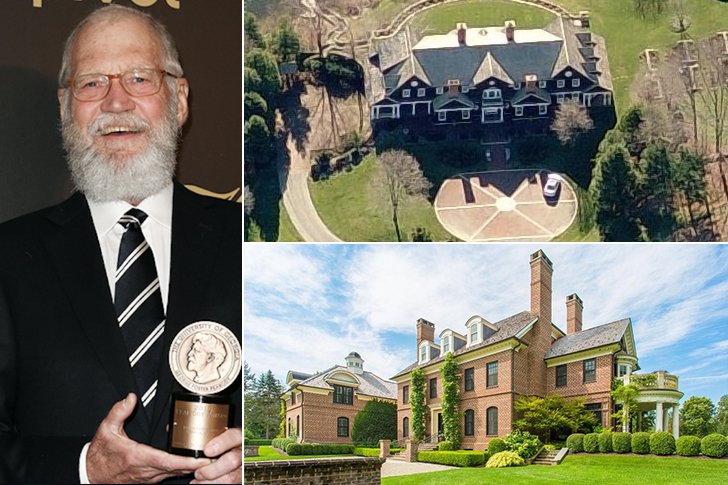
Now with a fortune of over $400 million, he bought the most part of the current property back in 1994 and its value just keeps going up, with many famous neighbors including Bill Clinton and his family. Letterman’s deluxe house was built in colonial style and includes eight bedrooms with seven bathrooms, a pool, spa, and even a tennis court!
John Krasinski and Emily Blunt – $6 Million, Brooklyn
Fairytales seldom happen in the celebrity world. While most of them seem to meet their Mr or Ms right in life, they often end up parting ways within a short span. However, the story of John Krasinski and Emily Blunt is different. The couple has been together for almost a decade now and has two children together. Together the couple has a net worth of $55 million and they devote all their time and wealth into raising their loving children in a luxurious way.
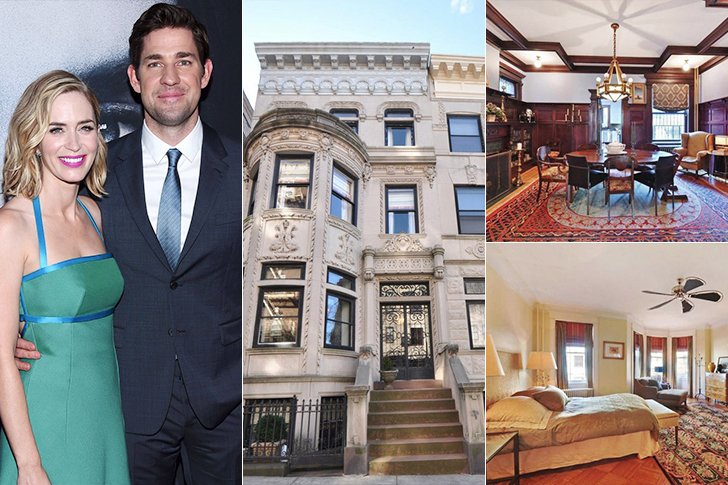
Actor John Krasinski and wife Emily Blunt have a beautiful home in Brooklyn’s Park Slope that sits on 3,990 square feet of land, not to mention having six suite-like bedrooms, a wooden dining room, and a fully modern kitchen. Before moving into their new luxury home, the couple invested over $300K to renovate it to suit their needs! Having a look at it, you can tell their bank accounts took a small dent, but it was worth it.
Scarlett Johansson – Estimated $3.8 Million, L.A.
Scarlett Ingrid Johansson is a popular actor and singer who needs no introduction. She was the world’s highest-paid actress in 2018 and made it to Forbes Celebrity 100 lists several times. She is just 35 years old and movies featuring her have already made over $14.3 billion globally. This went on to increase her net worth to $165 million.
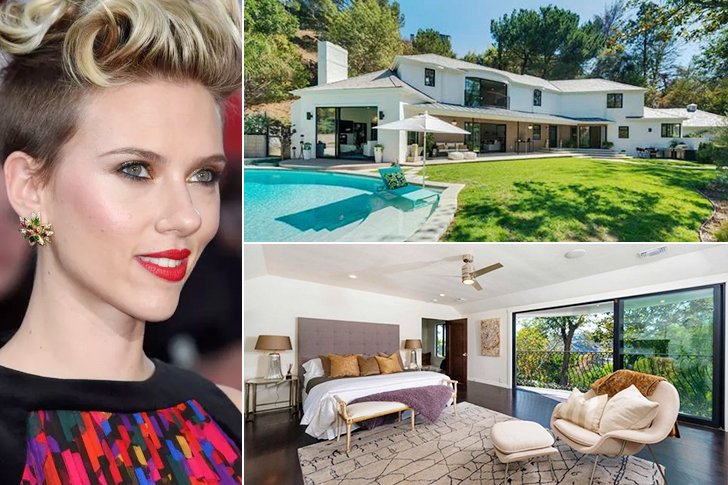
Scarlet Johannson’s star shines brightly. The Ghost In The Shell star asked her financial advisor for approval and made the decision to buy a property in Los Feliz with some of her many millions. The actress bought a property with amazing views and lots of natural light. She can invite her friends for spa dates, as her own personal spa can accommodate up to 8 guests. Johansson also has a pool with a pool house and an outdoor eating space with a grill for summer barbecues. There’s even a big walk-in closet. Sounds fabulous!
Khloe Kardashian – Unknown – Los Angeles
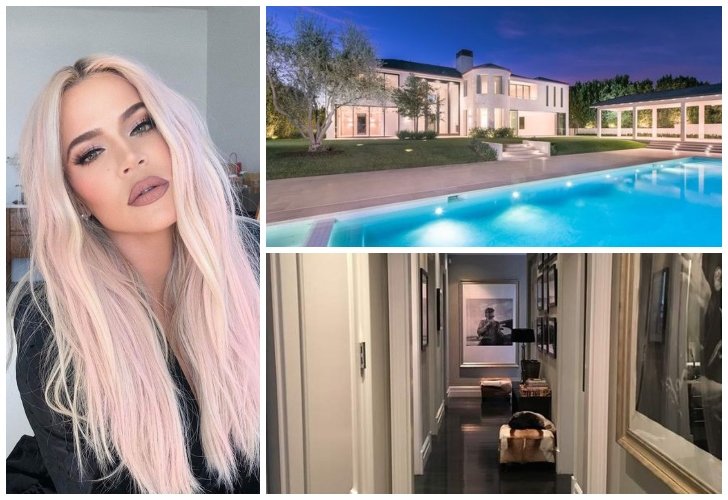
Khloe Kardashian is a name that needs no introduction because we all know a lot about the Kardashians. The star has recently been in the news all the time because of her split with Tristan and we all wonder where is she living now that Tristan is gone. Khloe Kardashian is currently living in the most amazing mansion in Los Angeles. The house looks like a gigantic villa from the outside and the inside is equally gorgeous. Khloe has used different color schemes for all the rooms and the entire decor is breathtakingly beautiful. The attraction of her house is the pristine couch put in the hallway which catches everyone’s attention. Khloe lives in this house with her lovely daughter.
DJ Khaled – $10 Million, Beverly Hills
Khaled Mohamed Khaled is a man of many skills. He is a popular DJ, author, media personality, and songwriter who is popular by the names DJ Khaled, Beat Novacane, and Arab Attack. The 44-year-old record producer has a net worth of $65 million. He walked down the aisle with Nicole Tuck and has two children from his marriage. DJ Khaled is someone famous for living the dream kind of life. And his wealth surely lets him do that!
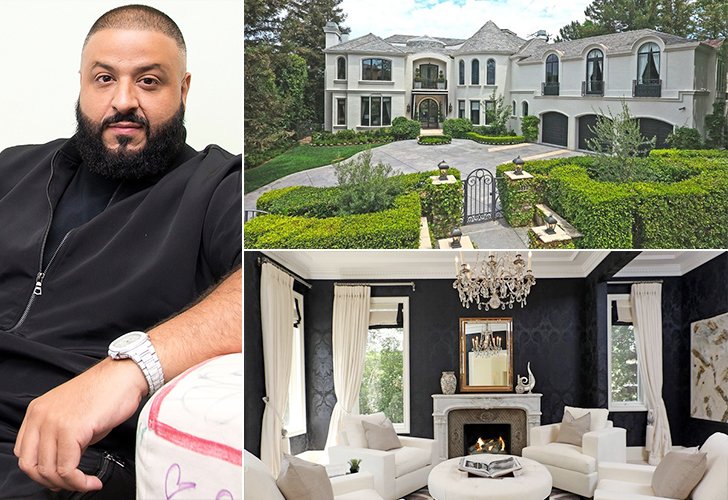
This hip-hop entertainer knows where to find the best luxury houses for sale in California! We wonder what luxury real estate ads he must have been looking at before he came to this beautiful home. Sitting on 10,681 square feet, the house has seven oversized bedrooms, eleven bathrooms, and a gym (yes, looks can be deceiving). The outdoor is pretty awesome too: with a pool, spa, outdoor kitchen, living area, two terraced patios, and a sprawling lawn!
Harvey Weinstein – $12.4 Million, New York
Harvey Weinstein is a popular film producer who made his debut in the entertainment world in 1979 and had an immensely successful career. He is also an author of the book The ART OF MIRAMAX. Harvey Weinstein walked down the aisle twice and has five children from his wedding. His wealth stands at $25 million.
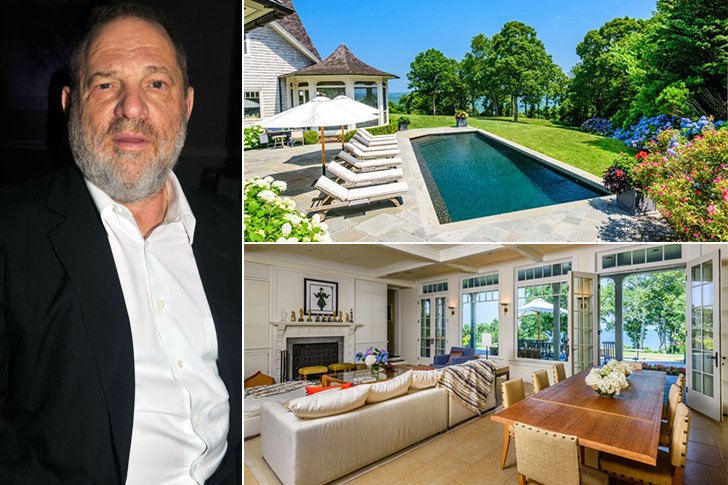
However, this wasn’t his wealth always, and he had tasted great success until life took him downhill. His net worth was going through the roof and he had a gorgeous wife and many properties. One of their homes is this stunning New York property, which set them back about $12.4 million. They also own houses in Westport and the Hamptons. We’re sure Weinstein had a great financial advisor to help him with his wealth management. Hopefully, the couple will also manage to divide their assets with minimal friction!
Lea Michele – $3.3 Million, Los Angeles
Lea Michele Sarfati is a popular actress, singer, and author who made her stage debut as a child artist on Broadway. The 33 years old recently walked down the aisle with entrepreneur Zandy Reich. The couple is expecting their first child together. With $12 million as her net worth, we are sure that Lea Michele can give her child all the comforts and luxuries in the world.

Here’s another actress who is connected with a real estate agent that knows where to find the best Los Angeles real estate luxury. Located in West L.A, it is miles away from noisy tourists and popular party spots! For her, it was all about finding her personal haven and sanctuary in the busy city of Los Angeles. With four bedrooms, a living room, dining room, kitchen, and an all-share space, it is ideal for her taste. And to complete her stunning paradise, there is a spacious backyard with a lovely swimming pool.
Mandy Moore – $2.5 Million, Pasadena
Amanda Leigh Moore is a popular actress, singer, voice actor, and songwriter who is popular by her stage name Many Moore. She won a platinum certificate from RIAA honoring her contribution to the entertainment industry. The 36-year-old singer made her debut in 1988 and has been active since then. However, she has taken a break from singing over the past few years. But her net worth and popularity continue to remain unaffected.
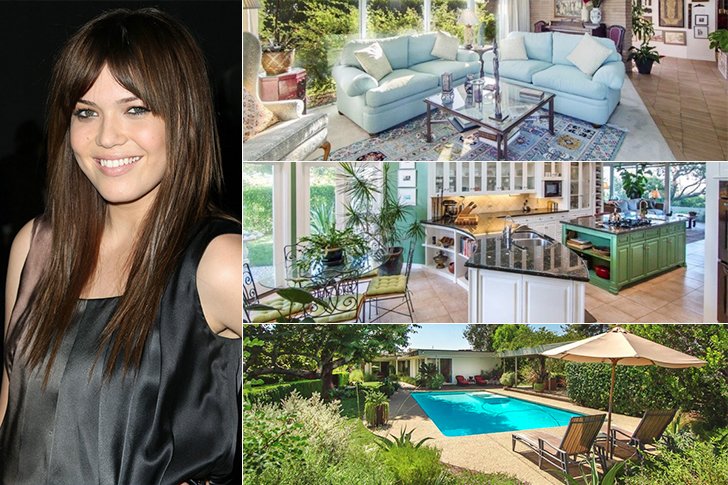
The singer/songwriter recently did an upgrade by buying 3,551 square feet of a property with three bedrooms, three bathrooms, a walk-in closet (is there a trend here?), and an extra-large kitchen. And to add icing to the cake, the backyard offers private access to the pool and multiple patios. Her real estate agent got her a great deal for this lovely home!
Bill Gates – $147.5 Million, Washington
William Henry Gates III or Bill Gates as the world knows him is a business magnate, software developer, philanthropist, and investor who needs no introduction. The 64-year-old has a net worth of $120 billion. This makes him the second richest person in the whole world. He held the title of the richest person on earth for several years in a row from 1995 to 2017.
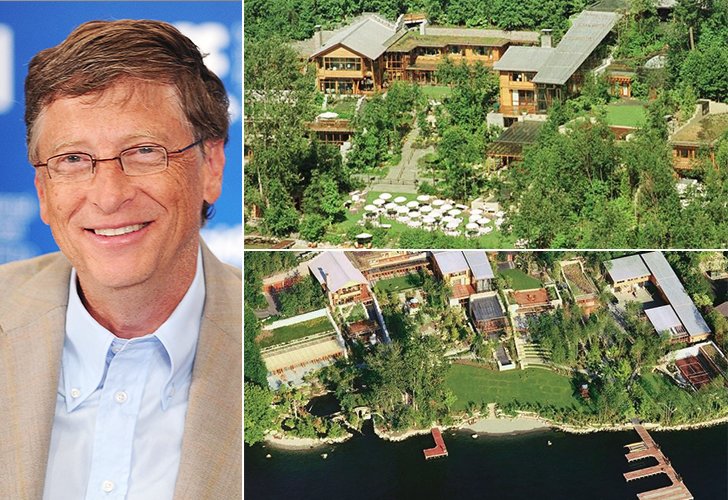
Bill Gates, the creator of Microsoft, has built himself a mansion in Washington worth a whopping $147.5 million. Besides his immense bank account, Gates has reportedly integrated great technology and even his own library inside the house! Of course, as you can expect, he has secured the biggest home insurance policy he could find. The house also features an underwater music system in its pool and a gym measured at 2,500 square feet! Well, we aren’t surprised, given his wealth!
Drake – $7.7 Million, Hidden Hills
Aubrey Drake Graham is a popular actor, entrepreneur, rapper, and singer who is popular by his stage name Drake. He is the winner of four Grammy Awards and has received 44 nominations so far. Speak about being blessed with musical genes! He has a net worth of $150 million, which he used to bring to life his dreams.

Drake’s dream house is a gorgeous mansion in the Hidden Hills, and even though the initial price was $27 million, the famous singer waited for some time and managed to get the property for the price of only $7.7 million. The amazing mansion looks like a little slice of heaven, surrounded by pools with waterfalls and hidden caves. Inside, there are man-cave-type rooms as well as a few passageways. We hope the rapper got himself some home insurance despite buying it under-priced.
Reese Witherspoon – $20 Million, L.A.
Laura Jeanne Reese Witherspoon is a winner of two Golden Globe Awards, a Primetime Emmy Award, and an Academy Award, which speaks volumes about her skill as an actress. This made her one of the highest-paid actresses in the year 2019. This means the Legally Blonde actress can afford all the luxury in the world.

Reese Witherspoon’s Pacific Palisades home in L.A is to die for! In fact, we think it goes toe to toe with any luxury hotel resort around the world, thanks to its luxurious setup that showcases a full gym, professional screening room, and an infinity-edged swimming pool. As a plus, the property also comes with a state-of-the-art security system that makes sure our favorite celebrity is safe and secure! The house cost her a whopping $20 million but given that the actress has a net worth of $240 million, this price doesn’t seem like a lot!
Prince Harry & Meghan Markle – Nottingham Cottage, Estimated $4 Million (Actually, Priceless)

As they gear up for their wedding next year, Prince Harry and his bride-to-be Meghan Markle are already making themselves comfortable in the Nottingham Cottage, an ideal starter nest for the lovebirds. It’s one of the very few cottages inside the royal compound, and Prince Harry has been dwelling here for the past four years. Before he moved in there, the 1300 square feet property was home to Marion Crawford, Queen Victoria’s Nanny. Nottingham Cottage is where Prince Diana spent the last few years of her life. It comes with its own heliport and is surrounded by beautiful gardens along with all the other amenities that the Royals would usually expect.
Chris Evans – $3.5 Million, Hollywood Hills
Christopher Robert Evans, Chris Evans, or Captain America, this guy needs no introduction. He has fans across the world and age groups. The actor is 39 years old and already has a net worth of $80 million. We are sure his net worth will sore significantly in the years ahead as he is not just a great looker but a phenomenal actor too.
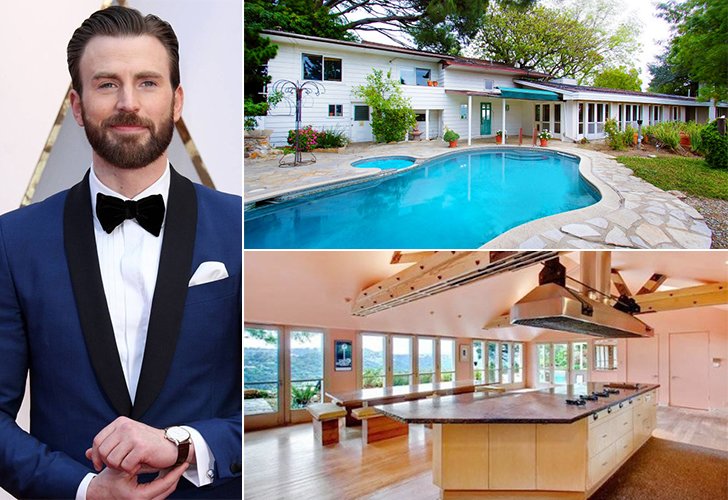
Captain America, Chris Evans, lives an enviable lifestyle! First of all, take a look at the recently renovated, 4,599 square feet home in Laurel Canyon neighborhood located in Hollywood Hills. The house’s master bedroom comes with a dressing room, steam shower, and large floor-to-ceiling windows. And if that’s not enough, it’s got a large fire pit, pool, and spa. It sure makes us wonder how much house insurance Chris Evans is paying.
Tommy Hilfiger – $27.5 Million, Florida
Thomas Jacob Hilfiger is the man who redefined fashion. The 69-year-old entrepreneur sits on a massive net worth of $425 million. He has been instrumental in changing the way people look and live their life. So, it is only obvious that he would embrace the same in his life too. Don’t believe us?
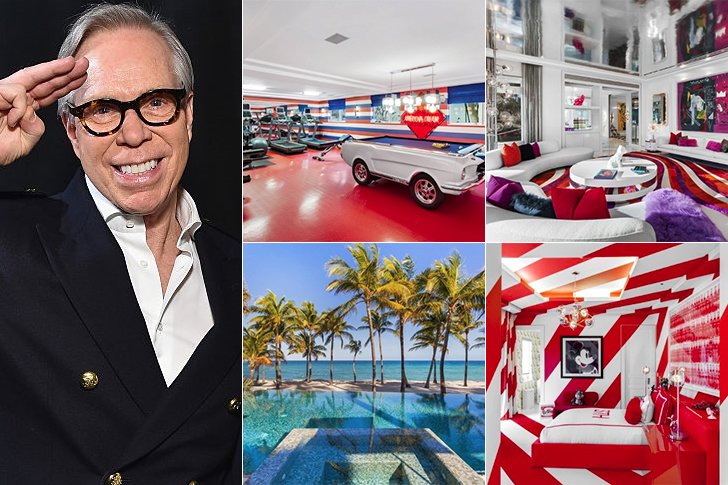
Take a look at fashion designer Tommy Hilfiger’s Golden Beach estate. It’s decorated with colorful furniture, art pieces, and some of the loveliest memorabilia around (ever seen the awesome giant Mickey Mouse statue?). The mansion measures 14,079 square feet and has seven bedrooms, eight bathrooms, four entertainment rooms, and finishes off with a screening room and a game room! This shows that the clothing designer does know a thing or two about real estate and home design as well!
Selena Gomez – $4 Million, Texas
Selena Marie Gomez, the 28-year-old singer, actress, television producer, and songwriter needs no introduction. She made her debut in the entertainment world at the tender age of 7 and has since then been a hot favorite to everyone. She has already built a fortune for herself with a net worth of $75 million.

Pop singer and icon Selena Gomez is dead serious when it comes to purchasing the best high-end real estate luxury homes that money can buy! Just take a look at her 10,000 square feet mansion in Fort Worth (check out the tennis court/ basketball court!). Going into the specifics of this property, the house has five bedrooms, seven bathrooms, two kitchens, and a luxurious home theatre (where she can re-run 13 reasons why). Truly, she has the eye for seeing class when she comes across it!
Lady Gaga $5.25 Million, Hollywood Hills
Stefani Joanne Angelina Germanotta is a Grammy Award-winning singer with 11 Awards to her credit from the 27 nominations that she received. She has also won two Golden Globe Awards. Her net worth stands at a $275 million which comes from her royalties, endorsements, and album sales. Surprised that you don’t know her? Well, you probably recognize her by her stage name Lady Gaga.
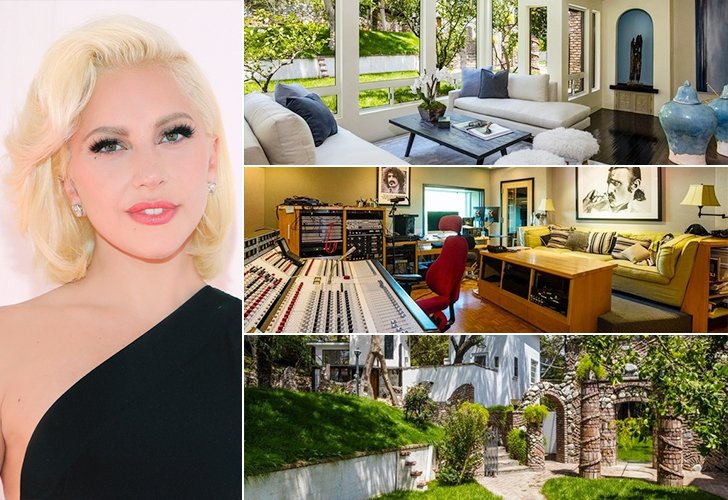
Singer Lady Gaga might be under the radar lately, but you can give her a call in Frank Zappa’s Old House in Laurel Canyon, which she purchased for $5.25 million. And just by checking out the stats, you can tell that the real estate company involved in the construction meant serious business! The house has seven bedrooms, six bathrooms, a staff apartment, and two guesthouses. We don’t even think Lady Gaga needs to vacation in a foreign luxury hotel because she is living in one right now.
Ryan Lewis – $8 Million, Seattle
Ryan S. Lewis is a popular record producer, videographer, DJ, photographer, rapper, and songwriter. He is just years old, but has already won four Grammy Awards of the seven nominations and has a net worth of $ million. We are sure his wealth lets him indulge in all the luxuries he fancies. Ryan S. Lewis isn’t someone who shies away from flaunting his wealth too.
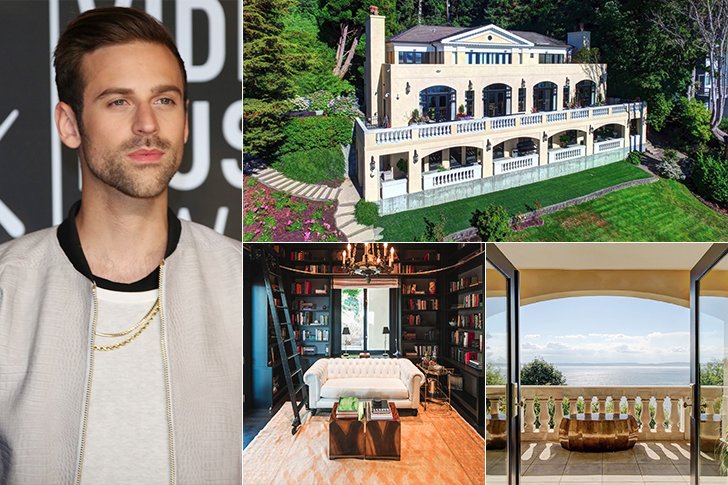
The famous DJ undoubtedly has an eclectic taste in selecting the finest homes to live in. His villa-inspired home in Seattle is a sight to behold! Spread across 7,610 square feet, it has four bedrooms and five bathrooms – all adorned with luxurious Venetian plaster, gold leaf ceilings, and marble floors. If that’s not enough, his personal palace even has a music studio. You can only imagine the mortgage rates he has to be paying for this baby!
Robbie Williams – $17 Million, London
Born as Robert Peter Williams, this English singer and songwriter have been a sensational entertainer for several decades now. He has been growing immensely popular since the start of his solo career and increased his wealth to a whopping $300 million. Former boyband member Robbie Williams went on to have a successful solo career and with that venture came a new pad. He stayed close to home and bought a house in London, rather than in Hollywood.
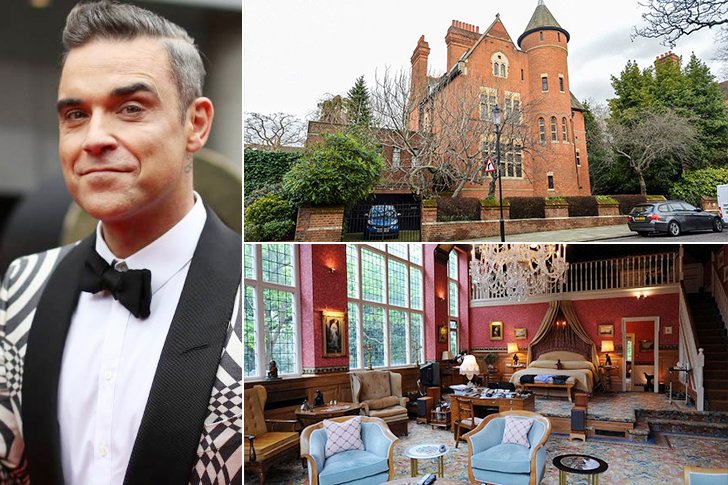
The house – well, more like a castle – was completely refurbished into a luxury stay for Williams. Features are a gigantic swimming pool, a fitness room, and a giant private viewing theater. The house has around 46 rooms, a private garden, and ample space to host the guests who visit the star. His taxes might be quite high, but the singer has a bank account that can definitely take it.
Christina Aguilera – $13.5 Million, LA
Christina María Aguilera the popular actress, singer, and television personality needs no introduction. She made her debut in 1992 and has won five Grammy Awards and one Latin Grammy Award. Besides that, she also had the honor of getting a star on the Hollywood Walk of Fame. All this popularity went on to increase her net worth to a whopping $130 million. We are sure the diva lives her life like one too. And going by her house, we are sure we are not wrong.
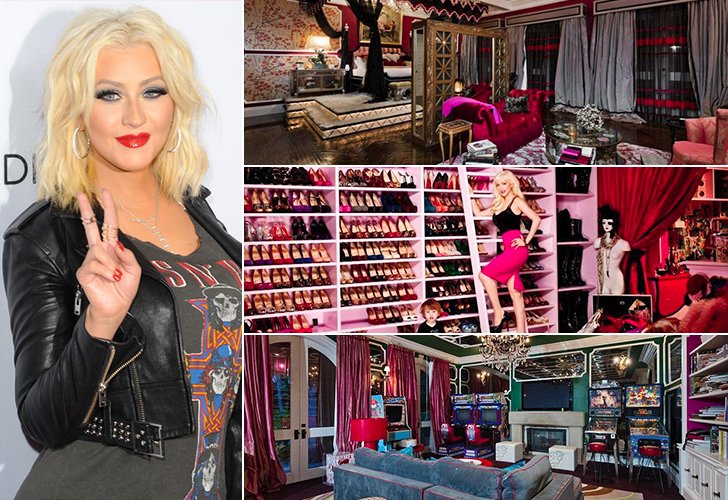
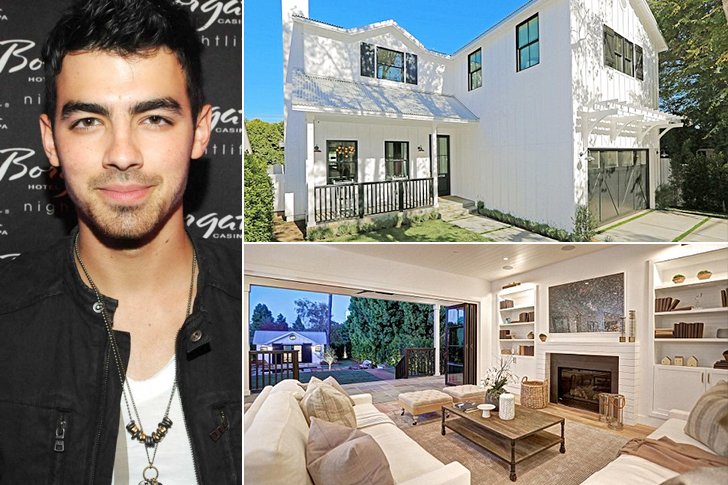
Pop diva Christina Aguilera sure loves beautifully decorated houses. With the constant makeover of her $13.5 million mansions, her house has been featured in many design magazines. With her fat bank account and eccentric taste, the popular singer built a game room for her and her children, a personal recording studio and, what every girl dreams of – a walk-in closet with a wall-full of designer shoes. We hope she has great home insurance if nothing because of the shoes.
Joe Jonas – $3.7 Million, Sherman Oaks
Joe Jonas has managed to rake up a fortune as a child star with his brothers. After he left Disney he became an artist in his own right, creating music with his band DNCE. The singer is all grown up now and has used his earnings to buy a wonderful property in Sherman Oaks. It boasts some amazing features, like a jacuzzi, a pool, a gorgeous movie theater, and a walk-in wardrobe for all his amazing fashion buys.
Jonas got tired of wasting money on rent, so his financial advisor told him to go for acquisition instead. Now he can cozy up to the fireplace in his own home, which also doubles as a real estate investment.
Joseph Adam Jonas is an immensely successful singer, actor, and songwriter who rose to fame as a member of the pop-rock band Jonas Brothers. The 30-year-old singer got three Grammy nominations.
The Weeknd – $20 Million, Hidden Hills
Abel Makkonen Tesfaye is popular to the general public as musician The Weeknd. His many hits and sensational live performances have given him an enviable fortune. This, he happily spent on a home in Hidden Hills, with everything anyone could ever possibly want. He didn’t need to take out any loans, instead, he had money to spare to decorate his home the way he wanted to.
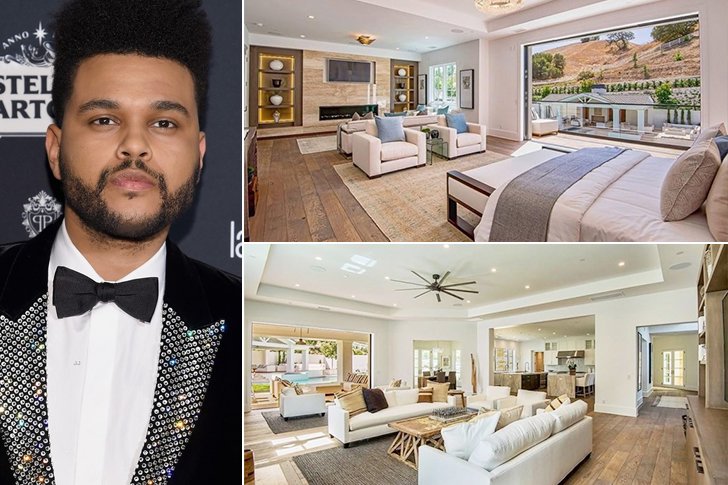
There is a home studio, a special music room, a movie theater, and a saltwater pool. Just in case he wants to wind down, there are a private spa and even some stables, to have some relaxing time with horses. We wonder whether he’ll throw some wild parties in this pad! This property cost him a massive $20 million, but we are sure with his net worth of $90 million. We are sure his fortune will immensely increase in the years ahead and he will get to experience all the luxury in the world.